D8210 is the CDT code for a removable appliance that controls a harmful oral habit, such as thumb sucking or tongue thrusting.
- When to use: The patient can take the habit appliance in and out, whichever arch it sits in.
- When not to use: A cemented or bonded habit appliance is D8220, and active tooth movement is a comprehensive or limited ortho code such as D8080.
- Billing note: Many plans pay habit appliances under the ortho benefit with its age limits, or exclude them, so verify coverage and name the habit in the narrative.
What D8210 covers
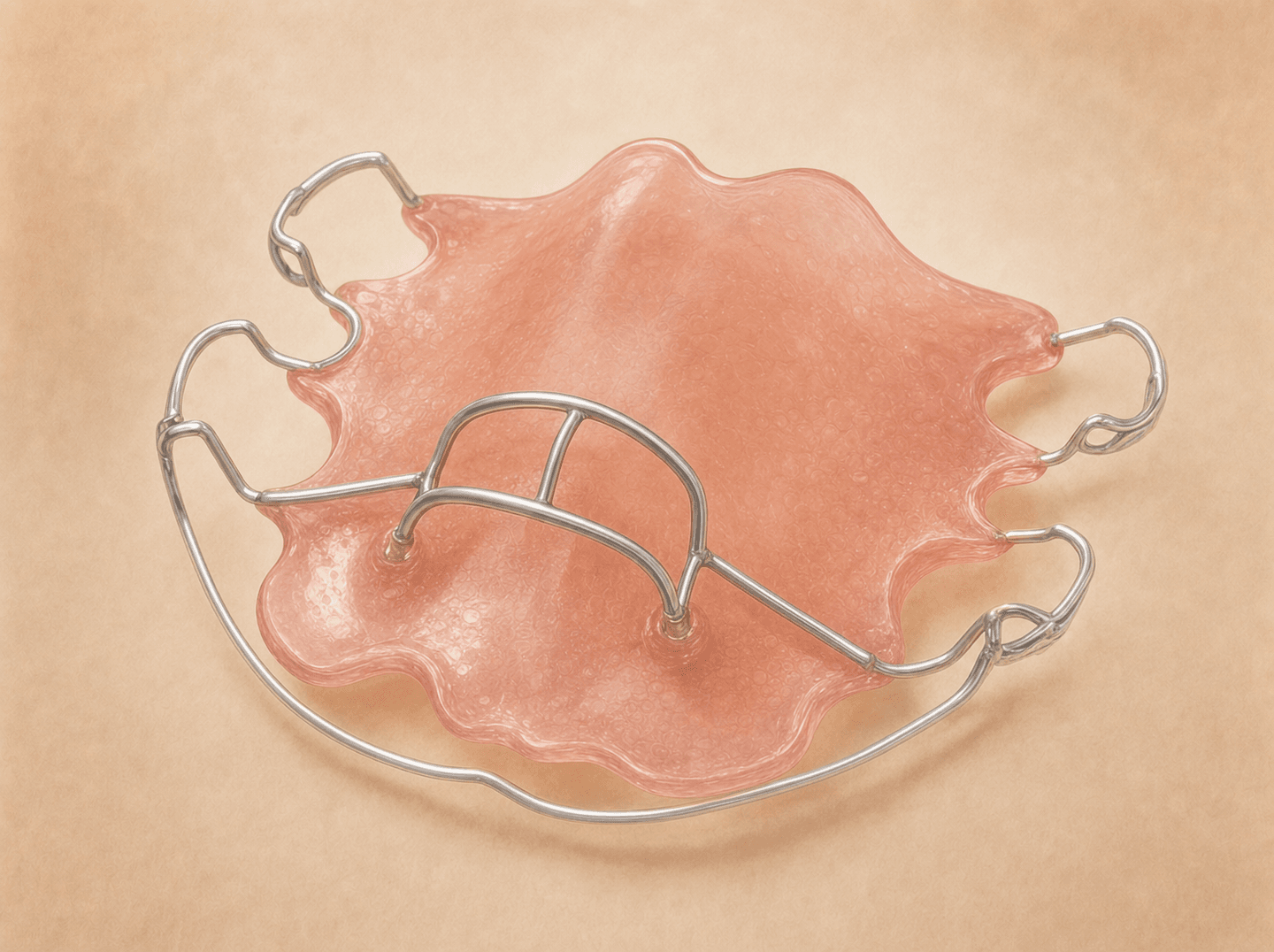
D8210 reports removable appliance therapy to control a harmful oral habit. The classic cases are thumb or finger sucking and tongue thrusting, habits that can push teeth out of position or open the bite if they continue. The appliance is removable: the patient or the office can take it in and out.
The code is for habit control, not active alignment. It does not cover:
- A fixed habit appliance the patient cannot remove. That is D8220.
- Orthodontic treatment that actively moves teeth (see below).
- A space maintainer placed only to hold space after early tooth loss. Space maintainers have their own codes.
- A routine retainer or a purely preventive device with no habit being treated.
When to bill D8210
Bill D8210 when a removable appliance is delivered to control a harmful oral habit, the patient can take it in and out, and the record names the habit and the clinical reason for treating it.
The removable versus fixed line
The only distinction between D8210 and D8220 is the appliance:
- D8210 is removable. The patient takes it in and out.
- D8220 is fixed. It is cemented or bonded and stays in.
Both treat the same problem, a harmful oral habit. Several code-lookup sites describe D8210 as a maxillary appliance and D8220 as mandibular. That is a propagated error: the CDT descriptors carry no arch designation. A removable lower habit appliance is D8210, and a fixed upper habit appliance is D8220. Coding by arch bills the wrong code roughly half the time, and a removable appliance should never be billed per arch as if the arch determined the code.
D8210 versus comprehensive orthodontics
A habit appliance is not braces. It does not actively align teeth across the arch. Comprehensive orthodontic treatment of the adolescent dentition is D8080, and other comprehensive and limited codes cover active tooth movement at other stages. Those codes report a course of treatment that moves teeth into position. D8210 is the narrower service: stop the habit, often before comprehensive treatment becomes necessary or instead of it.
Coding a habit appliance as comprehensive ortho, or the reverse, misrepresents the treatment and invites a denial when the carrier compares the code to the clinical record.
Documentation that supports the claim
The claim needs:
- A narrative naming the habit, such as digit sucking or tongue thrusting.
- A statement that the appliance is removable.
- The appliance type and the arch it sits in.
- The clinical reason, ideally tied to a developing problem such as an anterior open bite from a non-nutritive sucking habit.
Carriers that scrutinize these claims look for evidence that the habit is causing or threatening a real problem, not just that a device was made. A narrative connecting the appliance to the consequence of the habit is the strongest support.
Plan-dependent coverage
Some plans pay D8210 under the orthodontic benefit, which often has its own lifetime maximum, age limits, and waiting periods separate from the basic dental benefit. Some treat habit appliances as preventive and cover them differently. Some exclude them entirely.
Age limits are the common trap. An orthodontic benefit that ends at a certain age denies a habit appliance for an older patient regardless of clinical merit. Verify the orthodontic benefit, the age cutoff, and any waiting period before treatment, and tell the patient before delivery what they owe if the appliance is not covered.
An ortho case is billed across its whole lifecycle. For how verification, the initial claim, continuation claims, and debond fit together, see the orthodontic insurance billing guide.
FAQs
- What is the difference between D8210 and D8220?
- Whether the appliance is removable or fixed. D8210 is a removable habit appliance the patient takes in and out; D8220 is cemented or bonded in place. Both treat a harmful oral habit, and the code follows the appliance, not the arch.
- Is D8210 only for the upper arch?
- No. Some code-lookup sites claim D8210 is maxillary and D8220 is mandibular, but the descriptors carry no arch designation. Either code can apply to an upper or lower appliance; the split is whether the patient can remove it.
- Is D8210 the same as braces or comprehensive orthodontics?
- No. D8210 is a removable appliance that controls a habit like thumb sucking or tongue thrusting, not active tooth movement. Active alignment is reported with the comprehensive and limited ortho codes, such as D8080 for comprehensive treatment of the adolescent dentition.
- Does insurance cover D8210?
- It depends on the plan. Some cover habit appliances under the orthodontic benefit, with its own lifetime maximum, age limits, and waiting periods separate from the medical or basic dental benefit. Others exclude them entirely. Verify the orthodontic benefit and any age cutoff before treatment, because a denied habit appliance becomes the patient's responsibility.
- What documentation supports a D8210 claim?
- A narrative naming the habit and stating that the appliance is removable, with the appliance type, the arch, and the clinical reason. Many carriers want to see that the habit is causing or risking a problem, such as an anterior open bite from non-nutritive sucking, rather than a routine preventive device.
Related codes
Need help billing this code?
We handle D8210 claims daily.
If your team is spending time on denials, narratives, or carrier follow-up for this code, our outsourced dental insurance billing service can take it off your plate. We submit the claims, post what comes back, and follow up on anything unpaid. Already sitting on older claims that never paid? Our AR cleanup project works the backlog. Working the whole claim yourself? Start with our orthodontic insurance billing guide.
“Clear handles our verification, claims, and continuation billing, and they follow up on anything that doesn't pay. Nothing slips between visits anymore, and my team always knows who to reach.”
CDT codes are maintained by the American Dental Association. This page is an editorial billing guide, not the official ADA code descriptor. Verify current coverage policies with each carrier before submitting claims.