D0120 is the CDT code for the routine recall exam a patient of record gets at each regular checkup, usually every six months.
- When to use: An established patient comes in for a scheduled checkup with no specific complaint driving the visit.
- When not to use: A new patient or one away three or more years is D0150, a problem visit is D0140, and a child under three is D0145.
- Billing note: Most plans count D0120 and D0150 toward one frequency limit, so check the date of the last exam of either kind before scheduling.
What D0120 covers
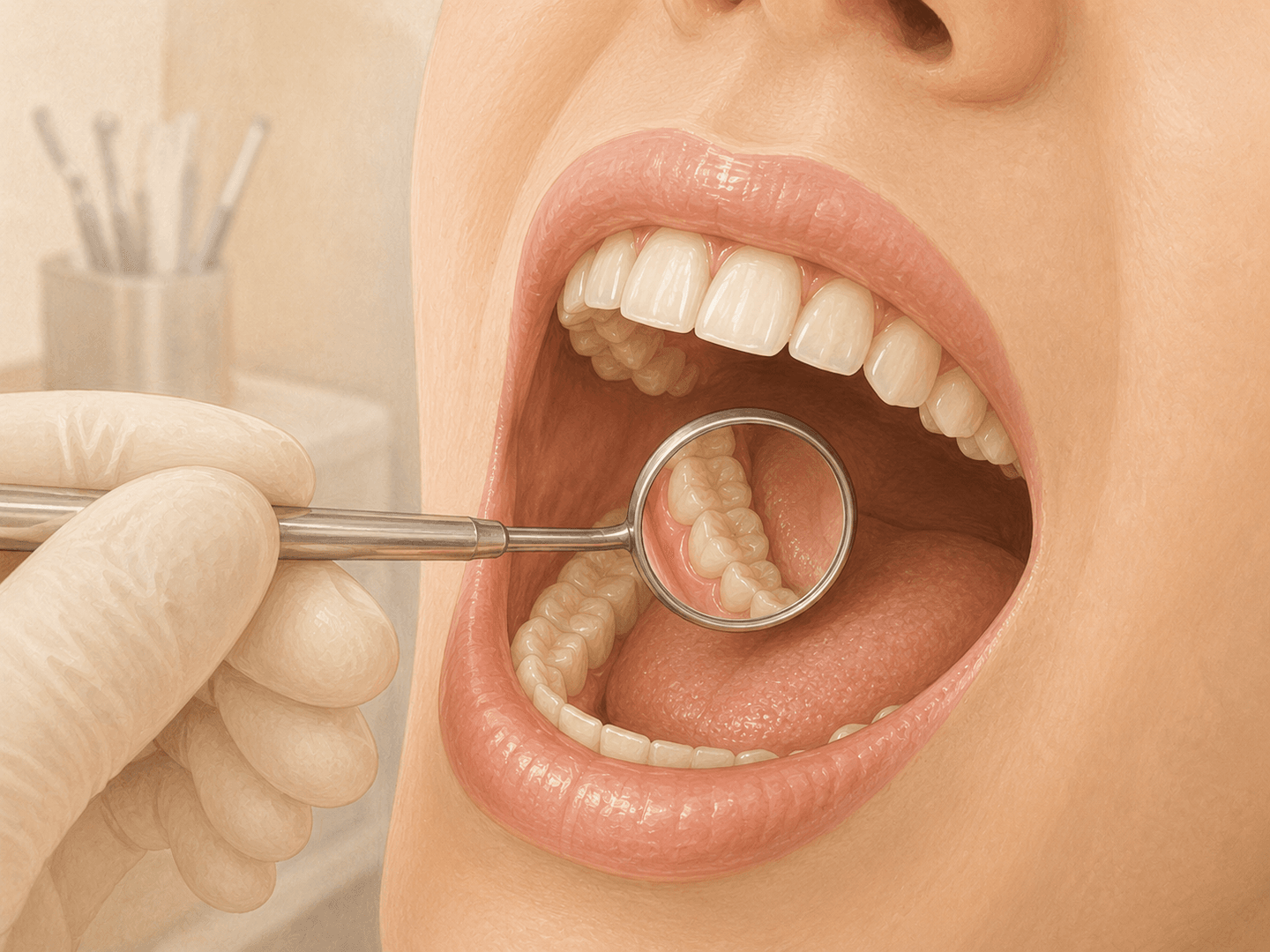
D0120 reports the routine recall exam for an established patient. The visit includes a review of medical and dental history, an intraoral and extraoral exam, an oral cancer screening, a periodontal screening, and review of any radiographs taken at the visit. Most practices schedule it every six months.
When to bill D0120
Bill D0120 when an established patient comes in for a routine recall: the purpose is screening and prevention, not a specific complaint, and the dentist assesses changes since a previous comprehensive or periodic evaluation. Eligibility does not depend on the last comprehensive (D0150) exam falling within any lookback window.
Use a different evaluation code for:
- A new patient’s first visit. Use D0150, the comprehensive evaluation.
- A returning patient with a significant change in health, or absent from active treatment for three or more years. Also D0150. Carriers define the gap differently, but three years is a common threshold.
- A visit triggered by a specific complaint, such as pain, swelling, trauma, or a broken restoration. Use D0140, the limited evaluation.
- A visit whose purpose is periodontal staging or re-evaluation. Use D0180, the comprehensive periodontal evaluation.
- A child under age three. Use D0145, which pairs the child’s exam with counseling for the caregiver.
Top reasons D0120 gets denied
- Frequency exceeded. Most plans pay two evals per benefit year and count D0120, D0150, and D0180 toward the same window. A patient seen at six months can still hit the cap if a comprehensive eval was billed inside that window. The denial usually means the cap was reached, not that the visit was wrong. Bill the fee to the patient or absorb it, depending on office policy.
- Wrong eval code. A new patient was coded D0120 when D0150 was correct, or a problem-focused visit was coded D0120 when D0140 was correct. The carrier denies for “incorrect procedure code.” A new patient incorrectly set up as established is the most common upstream cause of D0120 denials.
- Eval-prophy bundling. Some plans treat the eval and prophy as a single preventive benefit. The eval reports but pays $0 because the prophy line consumed the benefit. This is benefit design, not a denial.
- Clinical findings missing. A chart without documented exam findings invites audit denials.
Documentation that supports the claim
The claim needs the date of service, confirmation that the patient is established with the practice, and notes consistent with a periodic evaluation: medical history reviewed, intraoral and extraoral findings, oral cancer screening, periodontal screening, and radiograph review.
In the patient record, document:
- Clinical findings from the exam (caries, perio status, soft tissue findings, occlusion, existing restoration status).
- Treatment plan changes or recommendations.
- Patient education provided.
- Hygienist notes if the prophy was performed at the same visit.
“Patient seen for recall, no issues” is not enough if a carrier audits the chart. Write the notes at the time of the visit, since notes added days later look reconstructed in an audit.
Example case
A 42-year-old established patient comes in for a six-month recall. Her last D0120 was billed exactly six months ago. The hygienist completes the prophy. The dentist performs an exam, reviews bitewings taken at the visit, screens for oral cancer, and notes a small new restoration recommended on tooth #14.
Billing steps:
- Before the appointment, verify the current eval count and the plan’s benefit year. Some plans run the benefit year from the patient’s enrollment anniversary, not January through December.
- Code D0120 for the eval and D1110 for the prophy on the same claim. Separate claims for one date of service create reconciliation work later.
- Attach the bitewings if the carrier requires radiograph submission with preventive claims.
- Expect one of three EOB outcomes: both lines paid, the eval bundled into the prophy benefit, or the eval denied for frequency.
- On a frequency denial, confirm the prior eval date and apply the office’s patient-portion policy.
FAQs
- What's the difference between D0120 and D0150?
- D0120 is the recall exam for an established patient. D0150 is the comprehensive evaluation for a new patient, an established patient with a significant change in health, or one absent from active treatment for three or more years. D0120 does not require a prior comprehensive eval within any lookback window; the prior eval can itself have been periodic.
- Can I bill D0120 the same day as a prophy?
- Yes. D0120 and D1110 are routinely billed together on a six-month recall. Some plans bundle them under one benefit, but both codes still report on the claim, and the plan's benefit design decides how each line pays.
- Why did the carrier deny D0120 for frequency when it's only been six months?
- Most plans count from the last D0120 or D0150, not just the last D0120. A comprehensive eval less than six months ago resets the frequency window, so check the patient's recent eval history before scheduling the recall.
- Is D0120 the same as D0140?
- No. D0120 is a routine recall evaluation on a healthy patient. D0140 is a limited evaluation for a specific problem, like a toothache, broken filling, or trauma. A visit for a problem rather than a checkup is D0140.
Related codes
Need help billing this code?
We handle D0120 claims daily.
If your team is spending time on denials, narratives, or carrier follow-up for this code, our dental insurance verification service can take it off your plate. We submit the claims, post what comes back, and follow up on anything unpaid.
“Claims, posting, denials, all of it gets handled, and it costs far less than hiring another employee. My front desk got hours of their week back, and honestly I just don't think about billing anymore.”
CDT codes are maintained by the American Dental Association. This page is an editorial billing guide, not the official ADA code descriptor. Verify current coverage policies with each carrier before submitting claims.