D2710 is the CDT code for a full-coverage crown made of resin-based composite, fabricated outside the mouth and then cemented on the tooth.
- When to use: A definitive full crown made of composite resin, processed by a lab or milled from a block, is cemented as the final restoration.
- When not to use: A ceramic crown is D2740, a resin crown built directly in the mouth is D2390, and an interim crown before final impression is D2799.
- Billing note: Plans deny D2710 when the chart reads as a temporary, so the note should say the resin crown is the definitive restoration.
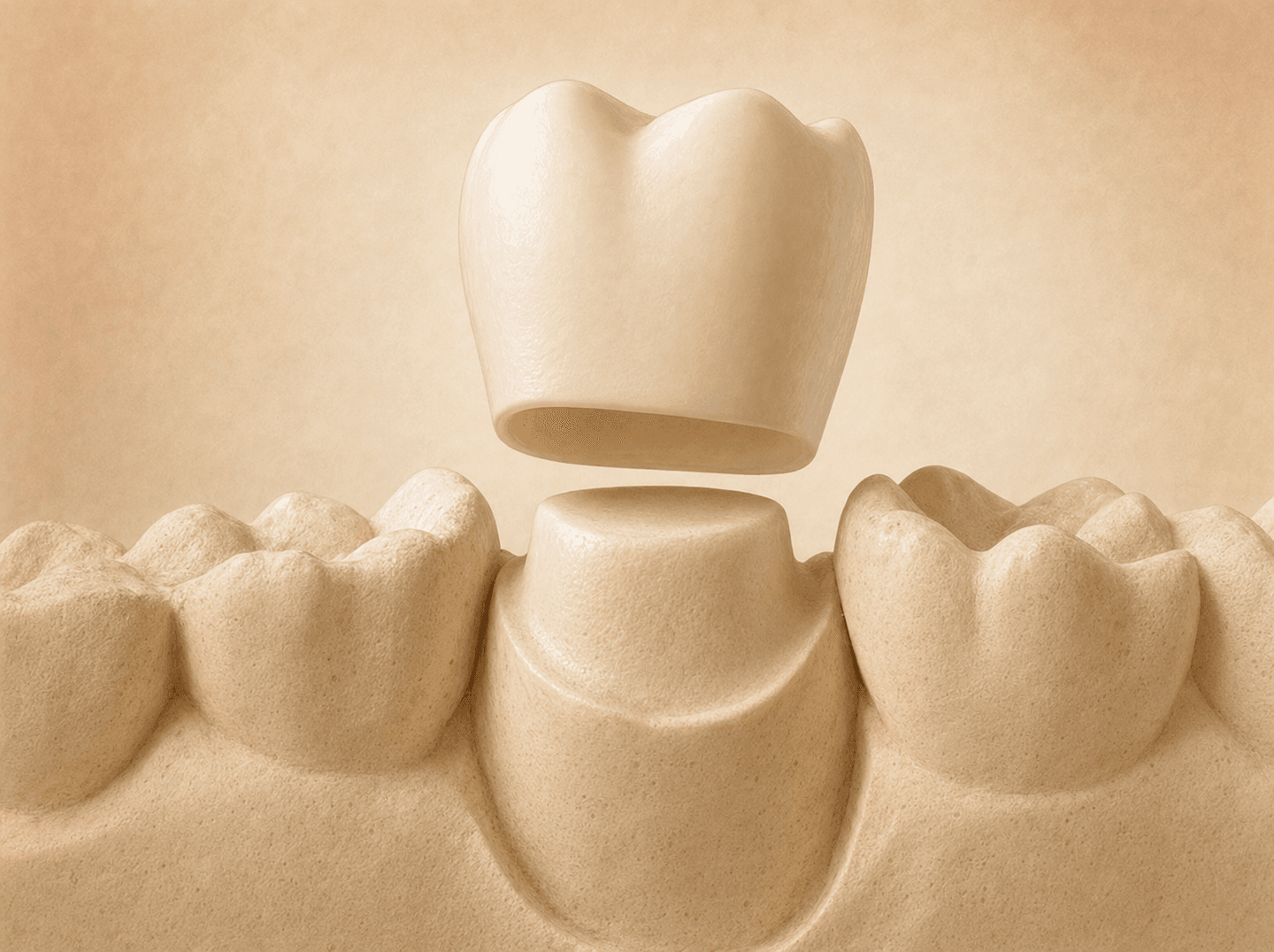
Two facts define D2710
D2710 is a crown made of resin-based composite, with no metal substructure, and it is made indirectly. Change either fact and the code changes:
- Ceramic instead of resin: D2740, even when the crown is milled the same day.
- Resin over metal: D2720 (high noble), D2721 (predominantly base metal), or D2722 (noble), read from the lab invoice’s alloy content.
- Resin built directly in the mouth: D2390.
- A three-quarter crown in indirect resin: D2712.
- An indirect resin crown that anchors a bridge: D6710, the retainer code, not D2710.
Resin, ceramic, or both: reading the material
Some CAD/CAM blocks blend resin and ceramic, so the label alone does not settle the code. Since 2013, CDT has counted a material as porcelain/ceramic when it is mostly inorganic, heat-resistant compounds, and the ADA used that definition to move at least one resin-nanoceramic block under the ceramic codes. Take the material class from the manufacturer’s classification of the specific block and the lab invoice rather than a brand name or a shade guide. Composite points to D2710 and ceramic to D2740. When a hybrid’s class is unclear, ask the carrier before billing it as ceramic.
Keep the invoice with the chart. When a reviewer questions a D2710 that looks like ceramic on a photo, or the reverse, the invoice settles it faster than a narrative does.
Definitive crown or long-term temporary
Resin is the material of choice for provisional crowns, which is why D2710 claims draw scrutiny. Most plans consider the routine temporary worn during crown fabrication part of the final crown fee. California’s Medi-Cal 2026 criteria go further and state outright that D2710 is not a benefit when used as a temporary crown.
If the resin crown is an interim restoration worn while healing or other treatment is completed before the final impression, the code to look at is D2799. Many plans do not cover D2799 either, so verify before treatment.
When D2710 is truly the final restoration, the chart should say so. Notes that mention “provisional,” “temp,” or a future crown on the same tooth are what a reviewer reads as grounds for denial.
Worked example: a full-mouth case with resin interims
A patient is restored in phases. The dentist seats lab-processed resin crowns on teeth #3, #14, #19, and #30 to test a new bite height for four months, with ceramic crowns planned afterward. The front desk bills four D2710 lines.
The carrier denies all four. The chart describes the resin crowns as a bite trial, and the planned D2740 crowns confirm they were never the final restoration.
The office should have treated the resin crowns as interim restorations: coded D2799 where the plan recognizes it, or included them in the final crown fee. Reporting them as D2710 also risks starting each tooth’s crown replacement clock before the definitive crowns are placed.
FAQs
- What is the difference between D2710 and D2390?
- Where the crown is made. D2710 is fabricated outside the mouth, by a lab or a mill, and then cemented. D2390 is a resin composite crown built up directly on an anterior tooth in the mouth. The material is the same family; the indirect step is what moves a resin crown into D2710.
- Does Medicaid cover D2710?
- Some programs do, with conditions. California's Medi-Cal 2026 criteria cover D2710 on permanent teeth for patients 13 and older, once in five years, with prior authorization and radiographs, and exclude most third molars. Other states set their own rules, so check the current state schedule.
- Does a paid D2710 block a ceramic crown later?
- It can. Once a plan pays D2710 as a definitive crown, a replacement on the same tooth usually falls under the plan's crown replacement window, often five years. Upgrading to a D2740 inside that window may be denied, so check the history before recommending it.
Related codes
- D2740
- D2712
- D2720
- D2721
- D2722
- D2390
- D2799
- D6710
Need help billing this code?
We handle D2710 claims daily.
If your team is spending time on denials, narratives, or carrier follow-up for this code, our outsourced dental insurance billing service can take it off your plate. We submit the claims, post what comes back, and follow up on anything unpaid.
“Claims, posting, denials, all of it gets handled, and it costs far less than hiring another employee. My front desk got hours of their week back, and honestly I just don't think about billing anymore.”
CDT codes are maintained by the American Dental Association. This page is an editorial billing guide, not the official ADA code descriptor. Verify current coverage policies with each carrier before submitting claims.