D5130 is the CDT code for an immediate complete upper denture, seated at the same visit the remaining upper teeth are extracted.
- When to use: The impressions and lab work were done before surgery, and the denture goes in the same day the last upper teeth come out.
- When not to use: An upper denture made on a healed ridge is D5110, the lower immediate is D5140, and the extractions bill separately on D7140 or D7210.
- Billing note: The later reline bills separately as D5730 or D5750, and many plans deny it inside a post-delivery waiting period, so verify that window before scheduling.
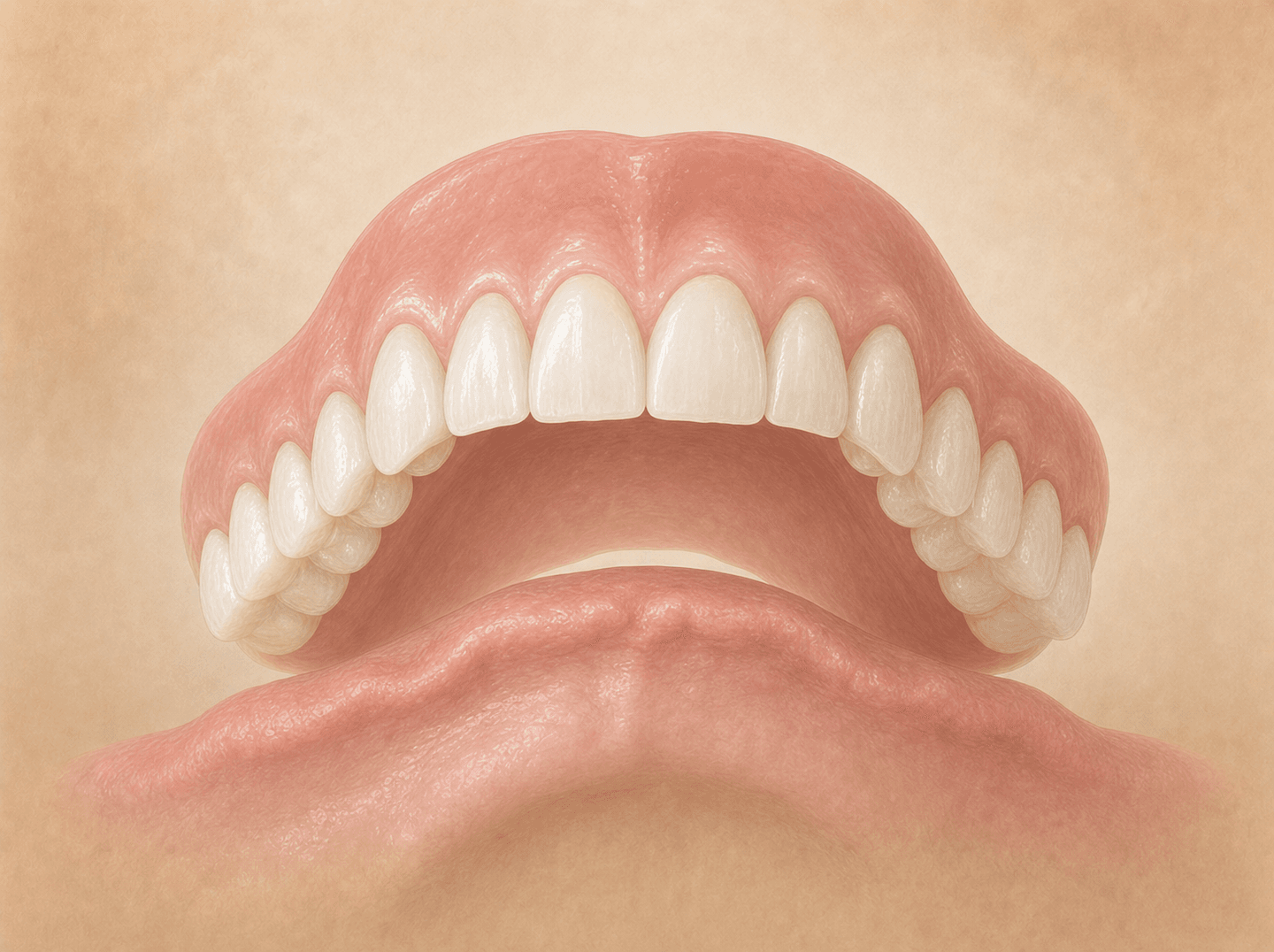
What D5130 covers
D5130 reports an immediate complete denture on the maxillary (upper) arch. The denture is fabricated from impressions taken while the patient still has teeth, then seated at the same appointment where the remaining upper teeth are extracted, directly on the surgical ridge. The code covers the pre-extraction impressions, laboratory fabrication, delivery, and the limited adjustments inside the standard delivery period. Bill it on the delivery date; the impression visit gets no separate denture code.
It does not cover:
- A conventional complete upper denture made on a healed ridge. That is D5110.
- An immediate complete denture on the lower arch. That is D5140.
- A conventional complete lower denture. That is D5120.
- The extractions performed at the same visit. Those bill per tooth on the D7140 and D7210 extraction families.
- The later reline or rebase. See the follow-up section below.
- Partial dentures, including interim or transitional partials, for a patient who keeps some upper teeth. Those are the D5211 to D5226 resin-based series or the D5213 to D5214 cast-metal series.
- An implant-supported overdenture. That is the D6110 to D6113 series.
D5130 versus D5110: immediate versus conventional
The physical denture can be the same either way. The code follows when it is delivered relative to healing.
Immediate (D5130):
- Impressions are taken before the extractions, while teeth are still present.
- The lab cuts the teeth to be removed off the working cast and builds the denture to the projected post-extraction contour.
- The denture is seated the same day the teeth are extracted.
- The ridge is raw and will resorb, so a reline or remake is expected within months.
Conventional (D5110):
- Extractions come first, then weeks to months of healing.
- Final impressions are taken on a stable, healed ridge.
- The denture fits the settled anatomy and needs less early refitting.
Billing D5110 for a denture seated the day of surgery misstates the procedure. The extraction dates in the chart show the same-day delivery if the carrier reviews.
The follow-up reline is a separate benefit
An immediate denture sits on a ridge that is actively changing. Over the first several months the bone and tissue resorb and the fit loosens, so the plan of care almost always includes a reline, or a remade conventional denture, once the ridge stabilizes. The refit bills on its own date of service with its own code:
- D5730 reline complete maxillary denture, chairside.
- D5750 reline complete maxillary denture, laboratory.
- D5710 rebase complete maxillary denture, when the entire base is replaced rather than just the tissue surface.
Coverage is plan-dependent. Many plans won’t pay a reline within a set window after a new denture, often 6 months and sometimes longer, on the theory that early refitting is part of immediate-denture care. After the window, relines carry their own frequency limits.
Top reasons D5130 gets denied or downgraded
- Coded as conventional. D5110 was submitted for a same-day-of-extraction denture. The carrier sees the extraction dates and either denies or asks for a correction to D5130.
- Frequency limit. Most plans pay one complete denture per arch every 5 to 10 years. A prior upper denture inside that window needs an appeal documenting clinical necessity.
- Missing tooth clause. The plan excludes prosthetics for teeth lost before the effective date. Less likely on an immediate case, but confirm during verification.
- Reline billed too early. The reline went in inside the plan’s post-delivery waiting period and denied as included in the denture benefit. This is a timing issue, not a coding error.
- No documentation that the arch is being cleared. Some plans want the pre-extraction radiograph and treatment plan. Attach them up front.
Documentation that supports the claim
The claim needs:
- Date of service matching the delivery (same-day-of-extraction) date.
- Arch designation for the maxillary arch (most systems use area code 01 or an upper-arch indicator).
- The pre-extraction radiograph and treatment plan if the carrier requires evidence that the arch is being cleared.
- Your office fee, not the carrier allowable, so dual-coverage coordination and write-off math stay correct.
In the patient record, document:
- The pre-extraction impression date.
- The teeth extracted at the delivery visit and their surgical codes.
- Delivery date and immediate post-op instructions.
- Material and shade.
- The planned reline timeline and the ridge condition at delivery, which supports the later reline claim.
Example case
A 58-year-old patient has failing, mobile upper teeth from advanced periodontal disease and does not want to be without teeth at any point. The dentist plans full clearance of the maxillary arch with an immediate complete denture.
Billing steps:
- Verify complete denture coverage and the frequency rule, and ask directly about the missing tooth clause and the reline waiting period. Note the reference number.
- Take pre-extraction impressions and send the case to the lab with the teeth marked for removal on the cast.
- At the surgical visit, extract the remaining upper teeth, billing the D7140 or D7210 codes per tooth, and seat the denture.
- Submit D5130 on the delivery date with arch designation 01, attaching the pre-op radiograph if required.
- Bill D5410 per adjustment visit after the standard included period.
- Plan the reline (D5730 or D5750) for when the ridge stabilizes, after confirming the plan’s waiting period so the patient knows whether it is covered.
FAQs
- What is the difference between D5130 and D5110?
- Timing of delivery. D5130 is an immediate complete upper denture, fabricated before the extractions and seated the same day the remaining maxillary teeth are removed, so the patient is never without teeth. D5110 is a conventional complete upper denture, made weeks or months later on a healed, stable ridge. If the denture goes in the day the teeth come out, it is D5130.
- Does D5130 include the later reline?
- No. D5130 covers fabrication, delivery, and the limited adjustments in the standard delivery window. The reline needed as the upper ridge resorbs is a separate procedure: D5730 (chairside) or D5750 (laboratory). Many plans apply a waiting period, often 6 months or longer, before covering a reline on a new denture, so verify the plan's rule before promising the patient a refit.
- Are the extractions billed separately from D5130?
- Yes. D5130 is the prosthesis only. Extractions at the same visit bill per tooth on their own surgical codes, from the D7140 simple and D7210 surgical extraction families. Neither code bundles the other, and on most plans they are separate benefit decisions.
- Why did the carrier deny D5130 for a missing tooth clause?
- The plan excludes prosthetic coverage for teeth already missing before the policy started. On an immediate denture the extractions are current, so the clause is less likely to apply than on a conventional case, but a plan can still apply it to teeth lost before the effective date. Verify it during benefits verification, because it is hard to reverse on appeal.
- What is the difference between D5130 and D5140?
- The arch. D5130 is the immediate complete denture on the maxillary (upper) arch, and D5140 is the immediate complete denture on the mandibular (lower) arch. Both are delivered the day of extraction; the arch designation on the claim separates them.
Related codes
Need help billing this code?
We handle D5130 claims daily.
If your team is spending time on denials, narratives, or carrier follow-up for this code, our outsourced dental insurance billing service can take it off your plate. We submit the claims, post what comes back, and follow up on anything unpaid. Already sitting on older claims that never paid? Our AR cleanup project works the backlog.
“Claims, posting, denials, all of it gets handled, and it costs far less than hiring another employee. My front desk got hours of their week back, and honestly I just don't think about billing anymore.”
CDT codes are maintained by the American Dental Association. This page is an editorial billing guide, not the official ADA code descriptor. Verify current coverage policies with each carrier before submitting claims.