D5751 is the CDT code for relining a complete lower denture at a dental lab, which processes a new tissue surface onto the existing base.
- When to use: A complete lower denture has lost fit, and the case leaves the office for lab processing before the denture is redelivered.
- When not to use: A chairside reline is D5731, a lower partial lab reline is D5761, a processed soft liner is D5765, and a full base replacement is D5711.
- Billing note: Bill on the redelivery date, and expect a denial if the denture is still inside the plan's post-delivery reline window.
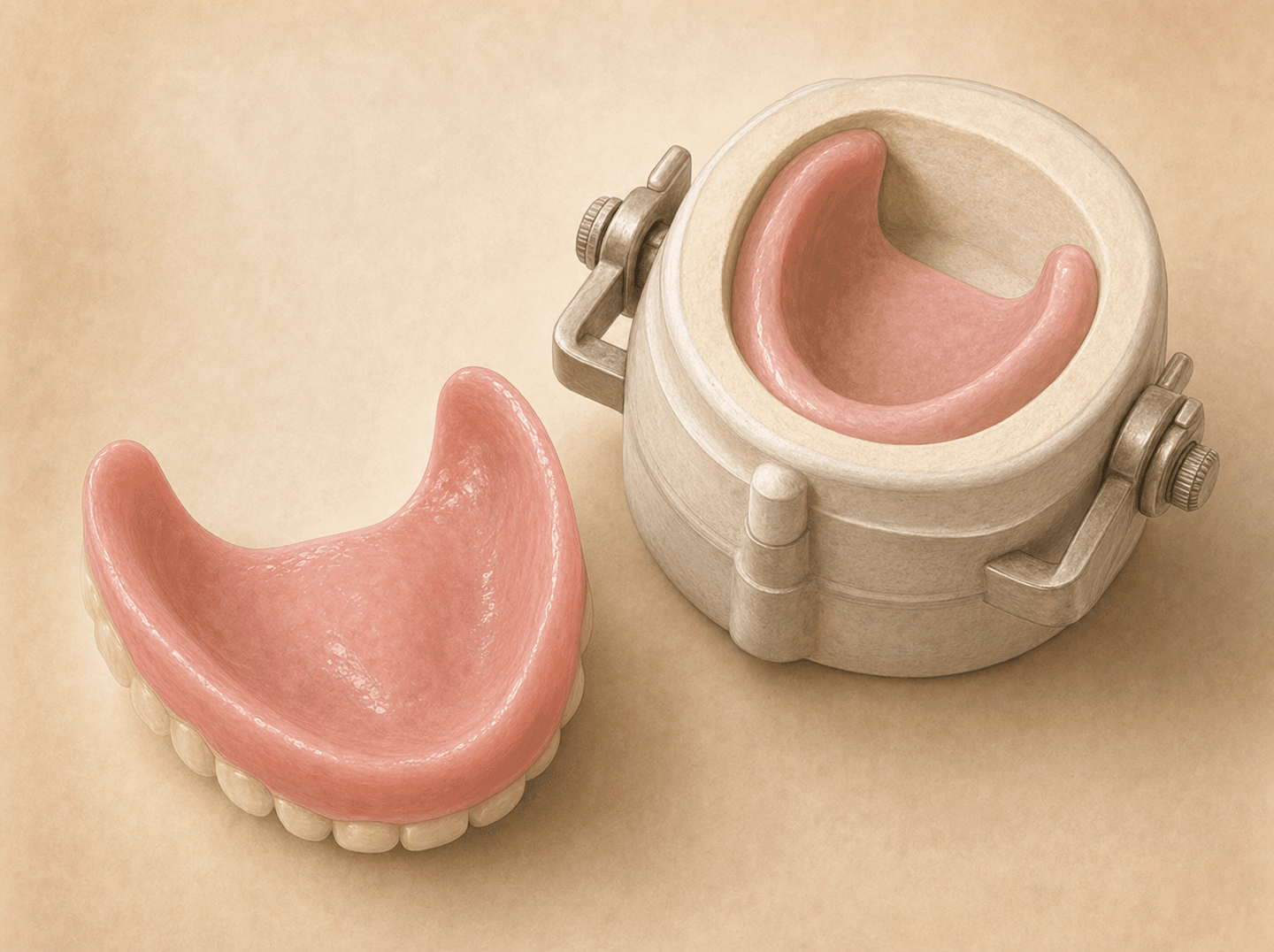
What D5751 reports
D5751 is an indirect reline of a complete mandibular denture. The dentist takes an impression inside the existing lower denture, using the denture as the tray. A lab then replaces the worn tissue-side acrylic with a freshly processed layer shaped to the current ridge. The denture comes back at a second visit, and that redelivery date is the date of service.
Older fee schedules and PMS code lists still say “laboratory” in the description. Current CDT nomenclature says “indirect.” It’s the same code.
Use D5751 when the lower ridge has changed enough that the denture no longer fits, but the teeth, occlusion, and base are still sound. If the base itself is cracked, porous, or worn out, the replacement is a rebase, D5711. If the teeth or occlusion are no longer functional, plans generally expect a new denture (D5120), not a reline.
Hard reline, soft liner, or tissue conditioning
Three lower-arch codes all add material to the tissue side of a denture. The difference is purpose and process.
D5751, the definitive hard reline. Processed acrylic, meant to be the denture’s working fit surface until the next reline or replacement.
D5765, the processed soft liner. A resilient liner for a complete or partial denture, done indirectly. It’s a separate code, used when the dentist decides a soft liner is clinically needed, often for patients with thin or tender tissue over a sharp lower ridge. Don’t post it as D5751 just because a lab was involved.
D5851, tissue conditioning. A short-term soft material placed so irritated or inflamed tissue can recover before the definitive reline or a new denture. UnitedHealthcare’s 2026 removable prosthodontics policy lists inflamed or irritated tissue, and the period after an immediate denture, as indications. The same policy says tissue conditioning is not for long-term stability or comfort, and that relines are not indicated while hyperplasia or denture stomatitis is unresolved.
That last point matters for sequencing. A lab reline taken over inflamed tissue captures swollen tissue, and the plan can question whether the reline was indicated.
Example case: condition first, reline second
A patient has worn a complete lower denture for five years. She reports soreness and has been using extra adhesive. The tissue under the denture is red and puffy along the ridge, and the denture has a visible gap at the back when seated.
- Visit one. The dentist removes the old adhesive, places a tissue conditioner in the denture, and books a recheck. Bill D5851 for the mandibular arch.
- Visit two, three weeks later. The tissue is healthy. The conditioner is replaced, if needed, as part of the follow-up. Bill a second D5851 only if the conditioner was replaced and the plan’s rules allow it.
- Visit three. The dentist takes the reline impression inside the denture and sends it to the lab.
- Visit four. The relined denture is redelivered and checked. Bill D5751 with this date of service.
The chart for visit three should note that the tissue had resolved. That sentence answers the most likely records question on the reline claim.
Fee context
A lab reline usually carries a higher allowable than a chairside reline. South Dakota Medicaid’s adult fee schedule effective July 1, 2026 lists D5751 at $386.31 against $238.00 for the chairside D5731, with D5711 (rebase) at $443.10, D5765 at $324.80, and D5851 at $111.30. Commercial schedules differ, but that order is the usual pattern.
That spread is why carriers look at technique. A chart note that describes relining in the mouth with the denture going home the same day reads as D5731, whatever the claim says.
Common denials
- Post-delivery window. The denture is too new. Many plans hold relines for a set period after delivery, and the lower arch hits it first because the mandibular ridge resorbs faster.
- Frequency. Another lower reline, chairside or lab, falls inside the plan’s limit.
- Prosthesis mismatch. D5751 billed for a lower partial (that’s D5761) or for an upper complete denture (that’s D5750).
- Date of service. The claim carries the impression date instead of the redelivery date.
FAQs
- What is the code for a lab reline of a lower denture?
- D5751, for a complete mandibular denture relined at a laboratory. Current CDT nomenclature calls it an indirect reline. The chairside version is D5731, and the upper-arch lab reline is D5750. A lower partial relined at a lab is D5761.
- What date of service goes on a D5751 claim?
- The redelivery date, when the relined denture goes back to the patient. The impression visit is part of the reline and isn't billed on its own. If the patient never returns for redelivery, talk to the plan before billing, because the procedure wasn't completed.
- Can tissue conditioning and a lab reline both be billed?
- Yes, on different dates, when the chart shows two distinct procedures. D5851 is the short-term liner that lets inflamed lower tissue recover. D5751 is the definitive reline once it has. Whether the plan pays both, and how close together, depends on the plan.
- Is a lab-processed soft reline billed as D5751?
- Check D5765 first. CDT has a separate code for a soft liner on a complete or partial denture done indirectly. If the lab processed a resilient liner rather than hard acrylic, D5765 likely describes the work better. Coverage for D5765 varies, and some plans treat it as optional.
- Why would a plan deny D5751 on a three-month-old lower denture?
- Most likely the post-delivery reline window. Many plans treat relines in the first months after a new denture as part of the denture fee. An early reline on a lower, especially after an immediate denture, needs a narrative describing the ridge change that caused the fit loss.
Related codes
Need help billing this code?
We handle D5751 claims daily.
If your team is spending time on denials, narratives, or carrier follow-up for this code, our outsourced dental insurance billing service can take it off your plate. We submit the claims, post what comes back, and follow up on anything unpaid. Already sitting on older claims that never paid? Our AR cleanup project works the backlog.
“Claims, posting, denials, all of it gets handled, and it costs far less than hiring another employee. My front desk got hours of their week back, and honestly I just don't think about billing anymore.”
CDT codes are maintained by the American Dental Association. This page is an editorial billing guide, not the official ADA code descriptor. Verify current coverage policies with each carrier before submitting claims.