D5741 is the CDT code for relining a lower partial denture directly at the chair, refitting its base to the ridge the same visit.
- When to use: A lower partial rocks or has lost support over the ridge, and the dentist relines it in the mouth and returns it the same day.
- When not to use: A lab reline is D5761, a complete lower is D5731, an upper partial is D5740, and a short-term healing liner is D5851.
- Billing note: Chairside and lab relines on the lower arch usually share one frequency limit, so check the date of the last reline before scheduling.
Why lower partials end up here
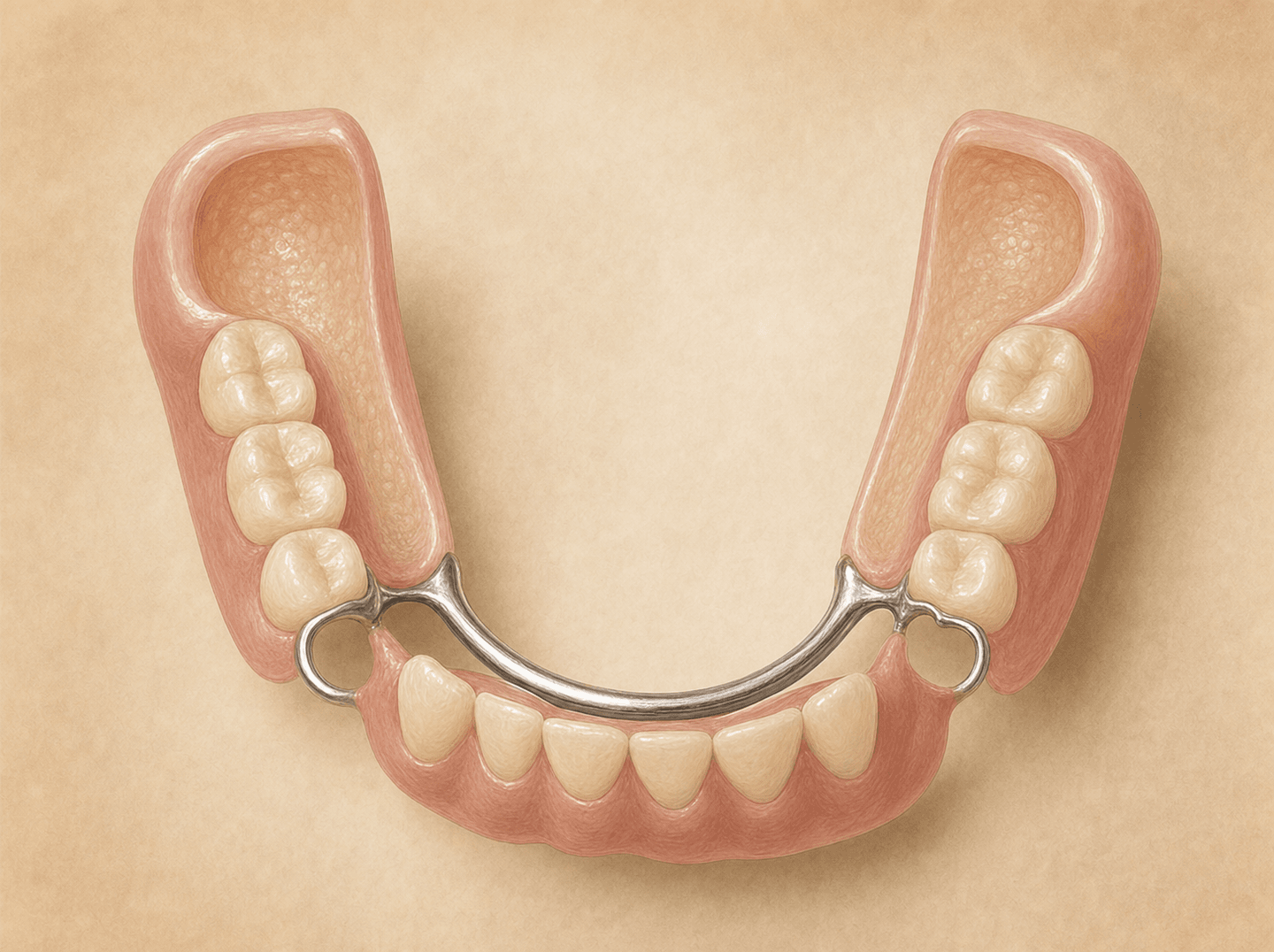
Many lower partials are free-end designs: the last natural teeth are premolars or canines, and the partial carries the missing molars on saddles that rest only on the ridge behind them. Those saddles sit on soft tissue over bone that keeps remodeling. As it shrinks, the saddles lose support, and the partial pivots on its rests when the patient bites down.
That rocking is the classic reason for D5741. A reline rebuilds the tissue side of the saddles so the ridge carries its share of the load again. It also protects the abutment teeth, which take extra stress when the saddles drop.
D5741 covers resin-base lower partials (D5212) and cast metal framework partials (D5214) alike. The code follows the arch and the technique, not the base material.
The lower-arch code map
| What was done on the lower arch | Code |
|---|---|
| Partial relined chairside, same visit | D5741 |
| Partial relined at a lab (indirect) | D5761 |
| Partial base fully replaced around existing teeth | D5721 (rebase) |
| Complete denture relined chairside | D5731 |
| Temporary liner so inflamed tissue can heal | D5851 (tissue conditioning) |
| Sore spot relieved or clasp adjusted, no new material | D5422 (adjustment) |
The upper-arch partial reline done chairside is D5740. Arch mix-ups are easy to make in a PMS that lists the two codes side by side, and the carrier rejects any code that doesn’t match the prosthesis on file.
Flexible lower partials
A flexible nylon partial (D5226) is a common lower-arch choice, and it’s the one that usually can’t be relined well. The material doesn’t bond to standard reline resins. When a flexible lower loosens, the realistic options are an adjustment or a new partial. Tell the patient this at the original treatment plan. A D5741 they were counting on may not be possible.
Denial scenario: the reline that was really a liner
A patient’s lower cast partial has been sore under the right saddle for two weeks. The tissue is red and swollen. The dentist places a soft temporary liner to let the tissue settle, planning a definitive reline in a month. The front desk posts D5741.
The claim pays. A month later the definitive chairside reline is done and posted as D5741 again. It denies for frequency, because the plan allows one lower-arch reline in its frequency period and the first one used it.
The first visit was tissue conditioning, D5851, not a reline. Plans handle D5851 differently from relines, and some don’t cover it, but many give it its own limit that doesn’t use up the reline benefit. The fix is a corrected claim for the first date and an appeal on the second. Coverage for the corrected D5851 depends on the plan.
Before the reline appointment
- Confirm the partial’s delivery date. Many plans exclude relines for a set period after a new partial, and the period varies.
- Pull the date of the last lower reline, chairside or lab, and the plan’s frequency limit.
- Note whether the rests still seat on the abutment teeth. If the framework itself no longer fits, a reline won’t fix it, and neither will a rebase, which replaces only the base material. That partial usually needs replacing.
- Record in the chart that the reline was done chairside and the partial was delivered that day.
FAQs
- What is the dental code for relining a lower partial chairside?
- D5741. It covers a direct reline of a mandibular partial denture, finished in the mouth the same visit. If the partial goes to a lab, the code is D5761. A complete lower denture relined chairside is D5731.
- Can D5741 be billed for a flexible lower partial?
- Rarely in practice. D5741 isn't restricted by base material, but flexible nylon bases are difficult to reline, so most offices adjust or remake a loose flexible partial instead. If a reline is attempted, chart the material and the outcome so the claim matches the work.
- Does a reline on the lower partial count against the upper arch?
- No, on most plans reline frequency is tracked per arch. A D5741 on the lower doesn't use the upper's reline benefit. What does share a limit is the chairside and lab reline on the same arch, so a D5741 can block a D5761 on the lower for the rest of the frequency period.
- Should an adjustment visit before the reline be billed separately?
- Usually not on the same date. An adjustment with no new material is D5422 for the lower partial, but many plans treat an adjustment done at the reline visit as part of the reline. On a separate earlier date, D5422 can stand on its own, subject to the plan's adjustment rules.
Related codes
Need help billing this code?
We handle D5741 claims daily.
If your team is spending time on denials, narratives, or carrier follow-up for this code, our outsourced dental insurance billing service can take it off your plate. We submit the claims, post what comes back, and follow up on anything unpaid. Already sitting on older claims that never paid? Our AR cleanup project works the backlog.
“Claims, posting, denials, all of it gets handled, and it costs far less than hiring another employee. My front desk got hours of their week back, and honestly I just don't think about billing anymore.”
CDT codes are maintained by the American Dental Association. This page is an editorial billing guide, not the official ADA code descriptor. Verify current coverage policies with each carrier before submitting claims.