D5740 is the CDT code for relining an upper partial denture chairside, adding new base material to its tissue side in one visit.
- When to use: An upper partial, resin base or cast frame, has lost fit over the ridge and the dentist refits it in the mouth the same visit.
- When not to use: A lab reline is D5760, a complete upper is D5730, a lower partial is D5741, and replacing the whole base is a D5720 rebase.
- Billing note: Many plans treat a reline in the first months after delivery as part of the partial, so check the delivery date and last reline first.
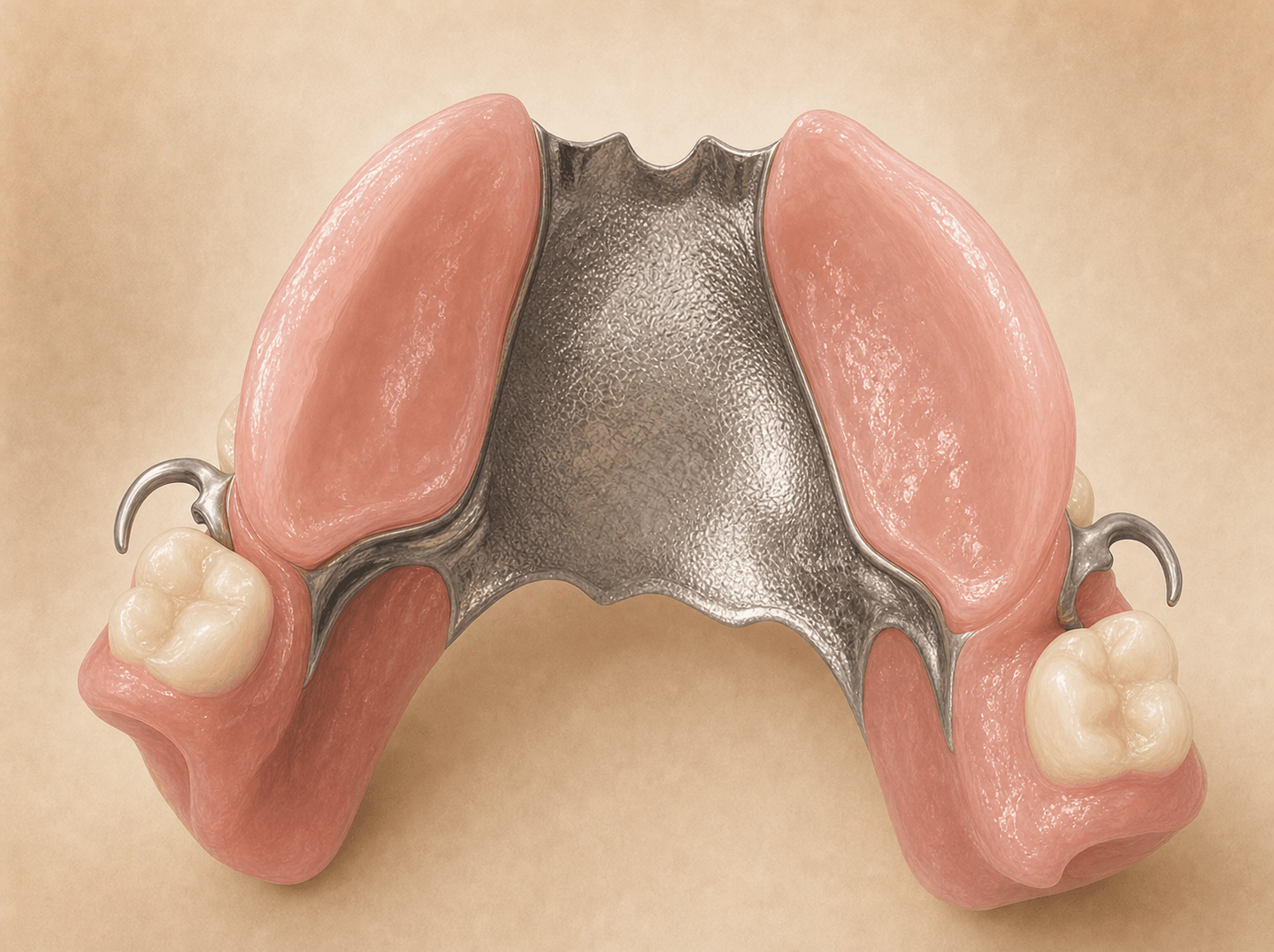
What D5740 reports
D5740 is a direct reline of a maxillary partial denture. The dentist adds reline material to the tissue side of the partial’s base, seats it over the upper ridge so it sets against the current tissue shape, then trims and polishes it at the same appointment. The patient leaves wearing the partial.
The code doesn’t care what the partial is made of. A resin-base partial (D5211) and a cast metal framework partial (D5213) both take D5740 when relined chairside. On the cast partial, only the pink resin saddles over the edentulous ridge receive new material; the metal framework, clasps, and rests sit on the teeth and are not relined.
Flexible-base partials (D5225) are the practical exception. The nylon base doesn’t bond with reline material the way acrylic does, so a loose flexible partial usually means adjustment or a remake, not a D5740.
Picking the right code for a loose upper partial
The same complaint (“my partial is loose”) can end in six different codes. Work through these in order:
- Is the patient’s upper prosthesis a partial at all? If the arch has no natural teeth, it’s a complete denture, and the chairside reline is D5730.
- Was the reline finished at the chair? Yes is D5740. If the partial went out to a lab for a processed reline, it’s D5760.
- Was the tissue surface resurfaced, or the whole base replaced? Replacing the base around the existing teeth and framework is a rebase, D5720.
- Is the material a definitive reline or a short-term healing liner? A temporary liner placed so inflamed tissue can recover is tissue conditioning, D5850 for the upper arch.
- Was any material added? Relieving a sore spot or easing a clasp without new material is an adjustment, D5421 for the upper partial.
A chairside reline on the lower partial is D5741. The arch digit is the only difference, and carriers check it against the prosthesis on file.
How the price gap shows up
Chairside relines usually carry a lower allowable than lab relines, and partial relines often sit below complete-denture relines. One public example: South Dakota Medicaid’s adult dental fee schedule effective July 1, 2026 lists D5740 at $200.20, D5760 at $355.60, and D5730 at $238.00. Commercial fee schedules differ, but the order is typical.
That gap is why a technique mismatch costs money in both directions. Billing D5760 for chairside work gets reprocessed down if records are requested. Quoting a patient the lab fee and then relining chairside leaves an estimate that doesn’t match the EOB.
When D5740 denies
- Inside the post-delivery window. Many plans won’t pay a reline for a period after a new partial, often six months or more. A reline needed early, such as after an extraction changed the ridge, needs a narrative saying so.
- Frequency. Chairside and lab relines on the same arch usually share one frequency limit, so a D5740 now can block a D5760 later. Limits vary by plan.
- Wrong arch or wrong prosthesis. D5740 sent for a lower partial, or for a complete upper denture, rejects against the patient’s prosthetic history.
- A liner coded as a reline. A temporary conditioning liner billed as D5740 uses up the reline benefit before the real reline is done.
Example case
A patient has worn a cast metal upper partial for six years, replacing both upper first molars. She reports the partial rocks when she chews on the left. The clasps and rests still seat fully on the abutment teeth, but there is a visible gap under the left saddle where the ridge has resorbed. The dentist relines both saddles chairside and confirms the rests seat with the new material in place.
Billing steps:
- At verification, confirm reline coverage, the plan’s frequency rule, and the date of any prior reline or rebase on the upper partial.
- Submit D5740 with the maxillary arch on the date of the reline.
- In the note, record that the framework and rests were checked and seat fully. That shows a reline was enough, rather than a rebase or a new partial.
- Post the payment against the chairside allowable, not the lab fee from any older estimate.
FAQs
- What is the code for a chairside reline of an upper partial?
- D5740. It covers a maxillary partial denture relined directly in the mouth and returned the same visit. Current CDT nomenclature labels it a direct reline. The laboratory (indirect) version is D5760, and the lower partial chairside reline is D5741.
- Does D5740 apply to a cast metal partial or only a resin one?
- Both. The code is defined by arch and technique, not by the partial's base material. On a cast framework partial, the new material goes onto the resin saddles that rest on the ridge. A flexible-base partial is the exception in practice, because the nylon base is difficult to reline at all.
- Is a reline the same as a rebase on a partial denture?
- No. A reline resurfaces the tissue side of the existing base. A rebase (D5720 for the upper partial) replaces the whole base material, which is a lab process. UnitedHealthcare's 2026 removable prosthodontics policy also lists rebasing as indicated when teeth on a partial are replaced or rearranged, a case a reline doesn't address.
- Why was D5740 paid at a lower amount than the reline we quoted?
- Most likely because the plan's allowable for a chairside partial reline is lower than for a lab reline or a complete-denture reline. If the treatment plan was written as a lab reline and the work was done chairside, the claim pays at the D5740 rate, and the patient estimate should be reset to match.
Related codes
Need help billing this code?
We handle D5740 claims daily.
If your team is spending time on denials, narratives, or carrier follow-up for this code, our outsourced dental insurance billing service can take it off your plate. We submit the claims, post what comes back, and follow up on anything unpaid. Already sitting on older claims that never paid? Our AR cleanup project works the backlog.
“Claims, posting, denials, all of it gets handled, and it costs far less than hiring another employee. My front desk got hours of their week back, and honestly I just don't think about billing anymore.”
CDT codes are maintained by the American Dental Association. This page is an editorial billing guide, not the official ADA code descriptor. Verify current coverage policies with each carrier before submitting claims.