D8010 is the CDT code for limited orthodontic treatment of the primary dentition, a narrow-objective ortho case (correcting one defined problem, not the whole bite) in a child who still has only primary, or baby, teeth.
D8010 is the least-used code in the limited orthodontic family. Active treatment on a child who still has a full set of baby teeth is uncommon, so the code shows up rarely, and when it does the stage gets confused with the mixed dentition (D8020). The bigger problem is coverage: early-phase orthodontics is one of the most commonly excluded benefits, so a primary-dentition case quoted as if the plan pays can leave the family holding the full fee.
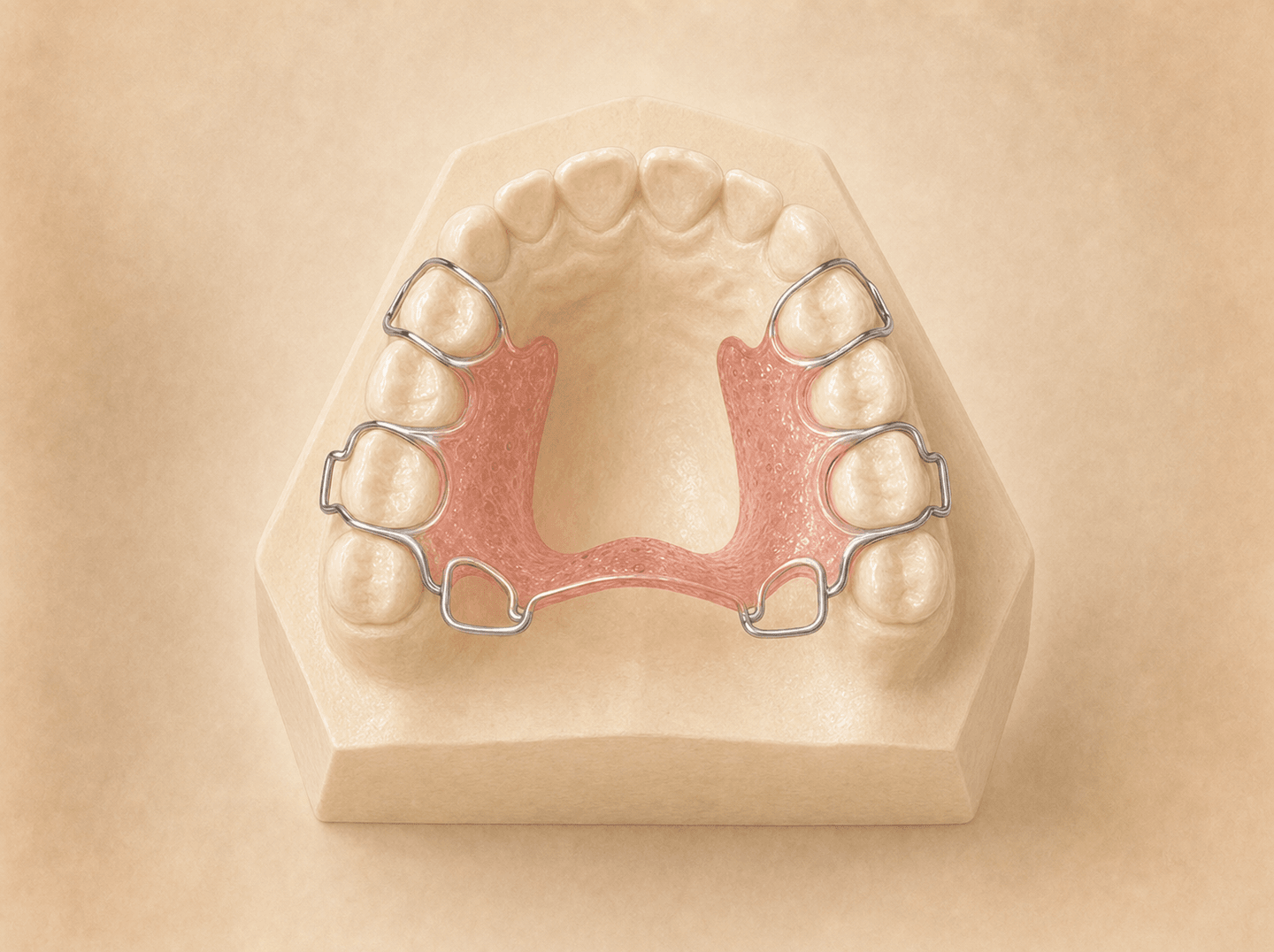
What D8010 covers
D8010 reports limited orthodontic treatment of the primary dentition. Two things have to be true for it to apply.
The scope is limited. Limited treatment has a narrow objective: correcting one defined problem, a single crossbite, a habit, a localized space issue, without taking on the whole bite. It is the opposite of comprehensive treatment, which corrects the full malocclusion across both arches.
The stage is the primary dentition. That’s the all-baby-teeth stage, before the permanent teeth have started erupting. It sits before the transitional (mixed) dentition, where baby and permanent teeth coexist.
Change the scope and you leave the limited family for comprehensive. Change the stage and you leave D8010 for one of the other limited codes.
Primary dentition is what makes D8010 the rare one
Of the four limited codes, D8010 is the one you’ll bill least. Most early orthodontic intervention happens once permanent teeth start to come in, which is the transitional dentition (D8020), not the primary dentition. A case treated while the child still has a complete set of baby teeth is genuinely uncommon.
That rarity is exactly why the code gets miscoded. A biller reaching for an early-treatment code defaults to D8020 or types D8010 out of habit without checking which teeth the chart actually documents. The fix is simple: confirm the dentition stage against the diagnostic records before you pick the code.
- D8010 is the primary dentition (only baby teeth).
- D8020 is the transitional dentition (mixed baby and permanent).
- D8030 is the adolescent dentition (permanent teeth essentially in).
- D8040 is the adult dentition.
The split is the dentition stage, confirmed by the treating dentist, not the patient’s age. A common shorthand pins an age range to each stage, but age is a rough proxy, not the rule. A patient is staged by what’s in their mouth.
Limited versus comprehensive
The second axis is scope, and it’s what separates the limited codes from the comprehensive ones. Limited orthodontic treatment (D8010 through D8040) has a deliberately narrow objective. Comprehensive treatment (D8070 through D8090) addresses the entire malocclusion across both arches as a full course of care.
So the deciding question is never the appliance and never the age. It’s the scope of the treatment plan. Treating one defined problem in the baby-teeth stage is D8010. Treating the whole bite is a comprehensive case, coded by dentition stage in the D8070 through D8090 range.
Why the four limited codes read almost alike
If you pull the current descriptors for D8010 through D8040, they look nearly identical. The CDT 2022 revision rewrote the shared descriptor language to emphasize a limited objective or scale of treatment, and that language no longer leans on the dentition stage. The stage now lives in each code’s name, not the descriptor body.
The practical consequence: you cannot pick between D8010, D8020, D8030, and D8040 by reading the descriptor. You pick by the dentition named in the code and documented in the chart. Treat the four as one family separated only by developmental stage, and confirm the stage every time.
If you work from older references, you may also see interceptive orthodontic codes (D8050 and D8060) cited for early treatment. Those were deleted effective CDT 2022. Don’t bill them. An early, narrow-objective case in the primary dentition is reported under D8010.
Coverage: early treatment is where the gaps are
Orthodontic coverage doesn’t behave like the rest of a dental plan, and early treatment is where the gaps show up most.
Many plans have no orthodontic benefit at all. Ortho is often a rider, not a standard inclusion, so the first thing to verify is whether the plan covers orthodontics in any form.
When there is an ortho benefit, early and limited treatment is not automatically inside it. Some plans cover comprehensive braces but exclude phase-one and limited-objective cases outright. Others cover it but apply rules that change the economics:
- The lifetime orthodontic maximum. Ortho usually has its own dollar cap, often a flat lifetime amount per patient, separate from the annual maximum. A limited case typically draws against that same lifetime max, so paying out on an early D8010 case can reduce what’s left for comprehensive braces later. Verify the remaining lifetime max, not just the headline number, because prior ortho can already have eaten into it.
- An age floor or medical-necessity bar. Some benefits only apply above a minimum dependent age, or require a documented severity threshold for the malocclusion. A young, single-problem case can fall short of that bar even when later comprehensive treatment would clear it.
When to bill D8010
Bill D8010 when the dentist provides limited orthodontic treatment, with a narrow defined objective, to a patient in the primary (baby-teeth) dentition. Typical situations:
- A child with only primary teeth needs a single defined correction, an anterior crossbite or a habit-related problem, rather than full correction of the bite.
- An early intervention treats one specific issue in the primary dentition, with any comprehensive treatment planned for later once the permanent teeth are in.
Do not bill D8010 for:
- A limited case in the transitional dentition (D8020), the adolescent dentition (D8030), or the adult dentition (D8040).
- A comprehensive case correcting the full malocclusion. That’s a code in the D8070 through D8090 range, chosen by dentition stage.
- The pre-orthodontic monitoring visit (D8660) used to watch growth and development before treatment starts. That’s a separate code.
What to get right in your PMS
The menus differ across Open Dental, Dentrix, Eaglesoft, Curve, and Carestream, but the setup that prevents problems is the same:
- Keep the four limited stage codes distinct and labeled. D8010 (primary), D8020 (transitional), D8030 (adolescent), and D8040 (adult) should be separate line items so the staging is a deliberate pick, not a default. Because D8010 is the one billed least, it’s the one most likely to be selected by mistake.
- Set up the ortho benefit fields separately from the plan’s regular benefits. The lifetime ortho maximum, the age limit, and whether early or limited treatment is covered live apart from the annual maximum. If the system tracks ortho as a normal procedure, the estimates will be wrong.
- Flag how an early case affects the lifetime max. If a D8010 phase-one case draws against the same lifetime ortho maximum as a future comprehensive case, note it on the account so phase-two estimates account for what phase one already used.
- Capture the dentition stage and the limited objective in the note at the start of the case. Those two details are what defend the code if the claim is ever reviewed, one for the stage, one for the scope.
An ortho case is billed across its whole lifecycle. For how verification, the initial claim, continuation claims, and debond fit together, see the orthodontic insurance billing guide.
FAQs
- What is the dental code for limited braces on a child with only baby teeth?
- That's D8010, limited orthodontic treatment of the primary dentition. The primary dentition is the all-baby-teeth stage, before the permanent teeth have started to come in. Limited means the treatment has a narrow objective, correcting one defined problem like a crossbite, rather than the whole bite. Once the child has a mix of baby and permanent teeth, the stage becomes transitional and the code changes to D8020. If the case corrects the full malocclusion instead of one problem, it's comprehensive treatment, not D8010.
- What's the difference between D8010 and D8020?
- Dentition stage, not scope. Both are limited orthodontic treatment with a narrow objective. D8010 is the primary dentition, when the patient still has only baby teeth. D8020 is the transitional dentition, the mixed stage with some baby teeth and some erupting permanent teeth. The split is what's actually in the mouth, confirmed by the treating dentist, not a chronological age. Because most early treatment happens once permanent teeth start erupting, D8020 is far more common than D8010.
- Does insurance cover D8010?
- Often it doesn't, and early-phase orthodontics is one of the most commonly excluded benefits. Many plans have no orthodontic coverage at all, and some that do exclude limited or early treatment while covering comprehensive braces later. When a primary-dentition case is covered, it usually draws against the same lifetime orthodontic maximum a future comprehensive case would use, so paying out on an early D8010 case can reduce what's left for phase-two treatment. Verify whether the plan covers limited treatment specifically, and check the remaining lifetime max, before banding.
- Is D8010 still a current CDT code for 2026?
- Yes. D8010 is active in CDT 2026. The limited orthodontic codes by dentition stage (D8010, D8020, D8030, D8040) had their descriptors revised effective CDT 2022 to emphasize a limited objective or scale of treatment, but the codes themselves remain in place. The old interceptive orthodontic codes (D8050 and D8060) were deleted in that same 2022 revision, so don't reach for those on an early primary-dentition case. A narrow-objective case in the baby-teeth stage is reported under D8010.
- Can I bill comprehensive ortho instead of D8010 for a higher payout?
- No. The code has to match the documented scope of treatment. Billing a comprehensive code when the actual plan is a single-problem correction is an upcode the diagnostic records will contradict on review. If the objective is limited, D8010 is the correct code even when a comprehensive code would pay more. Match the code to what the treatment plan and records describe.
Related codes
Need help billing this code?
We handle D8010 claims daily.
If your team is spending time on denials, narratives, or carrier follow-up for this code, our outsourced dental insurance billing service can take it off your plate. We work inside your PMS and post payments the same week. Working the whole claim yourself? Start with our orthodontic insurance billing guide.
CDT codes are maintained by the American Dental Association. This page is an editorial billing guide, not the official ADA code descriptor. Verify current coverage policies with each carrier before submitting claims.