D8670 is the CDT code for a periodic orthodontic adjustment visit during active treatment, billed against the existing case contract.
- When to use: The patient is in active treatment on an orthodontic case already on file, and the carrier's payment schedule calls for a periodic claim.
- When not to use: Monitoring before treatment is D8660, the case fee itself is the comprehensive or limited treatment code, and debond with retainers is D8680.
- Billing note: Bill on the carrier's installment schedule, not every chair visit, and include the original appliance placement date so the claim matches the case.
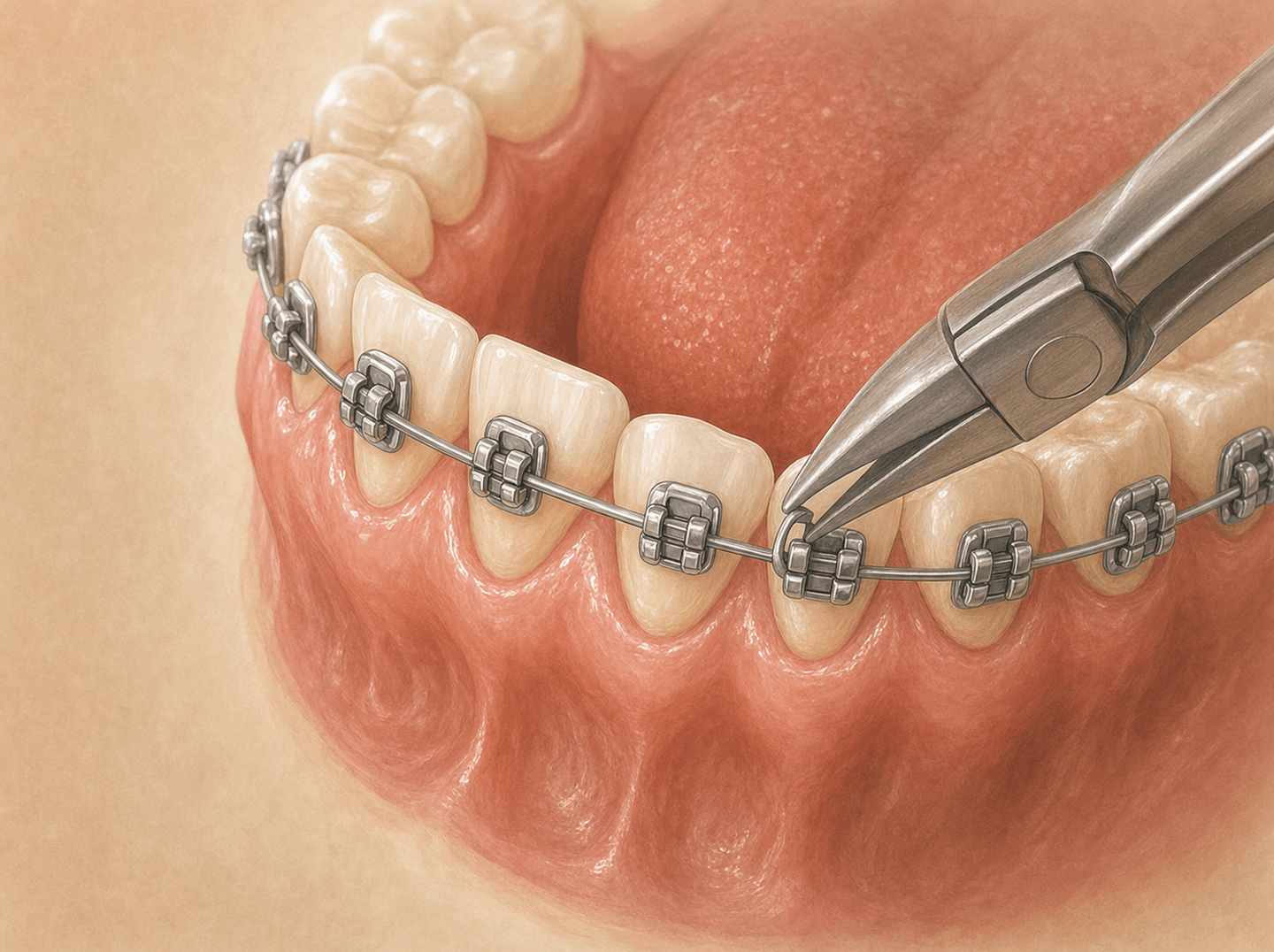
What D8670 covers
D8670 reports a periodic visit during active orthodontic treatment, billed as part of the treatment contract. In the chair, that’s the routine adjustment appointment every four to eight weeks while the patient is in braces or aligners: a wire change, a check on tooth movement, a tweak to the appliance.
The descriptor makes the visit part of a contract, so D8670 does not stand on its own. It assumes an active orthodontic case on file, most often a comprehensive case billed under D8080 for the adolescent dentition or D8090 for the adult dentition, and reports the periodic care delivered under that case. It is not a per-appointment fee and not a second charge on top of the case fee.
Where it sits in the treatment timeline
The codes confused with D8670 touch the same patient at different points. What separates them is when in treatment the code applies.
- Before active treatment: D8660, the pre-orthodontic exam to monitor growth and development of a patient who isn’t ready for, or doesn’t yet need, appliances.
- The case itself: D8080 (adolescent dentition) or D8090 (adult dentition), the comprehensive treatment fee, or a limited code (D8010 through D8040) for a narrow-objective case. This is the contract.
- During active treatment: D8670, the periodic visits that draw against that contract.
- End of treatment: D8680, retention, removing appliances and placing retainers. Once you’re debanding, you’re out of the D8670 period.
The most common conceptual mistake is treating D8660 and D8670 as interchangeable “ortho visit” codes. D8660 is watching and waiting; D8670 is treatment in progress.
D8670 can also report the periodic visits inside a limited contract when the plan pays that way. Washington Apple Health, for example, pays a limited case as banding under D8020 or D8030 plus D8670 visits every 12 weeks.
How D8670 draws against the case fee
D8670 is rarely a fee in its own right. It is how the case fee gets paid over time, and plans handle the case fee one of two ways:
- Installment-paid cases. The carrier pays the case fee in pieces over treatment. D8670 triggers each installment. A common pattern is an initial payment at banding, then scheduled payments at intervals such as 6, 12, and 18 months, with a D8670 claim submitted to release each one. The payment is part of the original approved case fee, not an additional amount.
- Up-front cases. The carrier pays the comprehensive case in a lump sum tied to D8080 or D8090 and treats the periodic visits as already covered. The D8670 claim is largely informational: it reports ongoing treatment but releases no separate payment.
Confirm which model each plan uses before you build the recurring claims, and record it on the plan. Monthly D8670 claims on a plan that paid the case up front only generate denials. If your PMS has an ortho auto-claim feature, set its interval to the carrier’s installment schedule, not the recall schedule. Post each installment against the original case balance, so the ledger shows the case drawing down rather than a stack of separate visit charges.
When to bill D8670
Bill D8670 when:
- An orthodontic case is active for the patient with that carrier, usually comprehensive under D8080 or D8090, or limited on a plan that pays limited cases in periodic installments.
- The patient is in active treatment, attending periodic adjustment visits.
- The carrier’s payment model calls for periodic claims, either to trigger an installment or to report ongoing treatment.
Do not bill D8670 for:
- A pre-treatment patient you’re only monitoring (use D8660).
- The visit where you remove appliances and place retainers (use D8680).
- Every chair visit when the carrier pays on a fixed installment schedule.
- A patient with no orthodontic case on file.
What gets a D8670 claim paid
The periodic claim has to point the carrier to the right contract at the right point in treatment:
- The original appliance-placement date. The start of the contract, entered in the “date appliance placed” field on the ADA claim form. Store it on the case once so every periodic claim carries it. Without it, the carrier can’t tell which case the visit belongs to.
- Months of treatment. Elapsed or remaining months place the claim in the installment schedule. A claim at month 12 of an 18-month case maps to a specific installment.
- The link to the original approval. Reference the predetermination or approval number if the carrier issued one.
- The orthodontic indicator. Mark the claim as orthodontic so it routes against the ortho benefit, not a general medical or basic benefit.
A short narrative noting months elapsed and remaining helps on plans that want it. On a clean installment claim with the placement date and approval reference, it’s often unnecessary.
An ortho case is billed across its whole lifecycle. For how verification, the initial claim, continuation claims, and debond fit together, see the orthodontic insurance billing guide.
FAQs
- What is the dental code for a periodic orthodontic visit?
- D8670, the periodic orthodontic treatment visit billed as part of an active treatment contract. It covers the recurring adjustment appointments, the wire changes and progress checks every four to eight weeks. It is not a standalone visit fee: it draws against the case fee already on record, most often a comprehensive case under D8080 (adolescent dentition) or D8090 (adult dentition), though some plans pay limited cases the same way. With no case on file with that carrier, D8670 will typically deny.
- Is D8670 billed separately or included in the orthodontic case fee?
- It is part of the case fee either way; how it works depends on how the carrier pays the case. Many plans pay the case in installments, and D8670 triggers each installment. Others pay the whole case up front, so the periodic claim is informational. Charging the patient a separate amount per D8670 visit beyond the agreed case fee is usually a participating-provider compliance problem. Verify how each carrier pays the case before setting up the installment claims.
- What's the difference between D8660 and D8670?
- Timing relative to active treatment. D8660 is the pre-orthodontic exam to monitor growth before treatment begins, typically for a younger patient you're watching but not yet treating. D8670 is for visits during active treatment, after appliances are placed. Once you've banded the patient and started moving teeth, you're in the D8670 period.
- How often can you bill D8670?
- On the plan's installment schedule, not on how often the patient comes in. Patients are usually seen every four to eight weeks, but carriers don't pay per appointment. A common pattern is an initial payment at banding, then periodic payments at intervals such as 6, 12, and 18 months, with D8670 billed to trigger each one. Some plans want a monthly or quarterly claim instead. A D8670 for every chair visit will pend or deny against the contract.
- What do I need on a D8670 claim to get it paid?
- A tie back to the approved case. Include the original date the appliance was placed and the months of treatment elapsed or remaining, so the carrier can match the visit to the installment schedule. Reference the predetermination or approval number if the carrier issued one, and mark the claim as orthodontic. Without the placement date and the link to the original case, the claim pends.
Related codes
Need help billing this code?
We handle D8670 claims daily.
If your team is spending time on denials, narratives, or carrier follow-up for this code, our outsourced dental insurance billing service can take it off your plate. We submit the claims, post what comes back, and follow up on anything unpaid. Already sitting on older claims that never paid? Our AR cleanup project works the backlog. Working the whole claim yourself? Start with our orthodontic insurance billing guide.
“Clear handles our verification, claims, and continuation billing, and they follow up on anything that doesn't pay. Nothing slips between visits anymore, and my team always knows who to reach.”
CDT codes are maintained by the American Dental Association. This page is an editorial billing guide, not the official ADA code descriptor. Verify current coverage policies with each carrier before submitting claims.