D8660 is the CDT code for a pre-orthodontic examination that monitors a patient's growth and development to decide when, or whether, active orthodontic treatment should begin.
The money question on D8660 is whether it's covered at all. Many plans treat a pre-treatment monitoring visit as observation rather than active care and pay nothing for it, so the recurring mistake is quoting it as a covered benefit and leaving the family with a surprise. The recurring coding mistake sits one code away: D8670 is the periodic visit during active treatment, and D8660 is the visit before treatment starts. Bill the wrong one and the claim contradicts the treatment status in the chart.
What D8660 covers
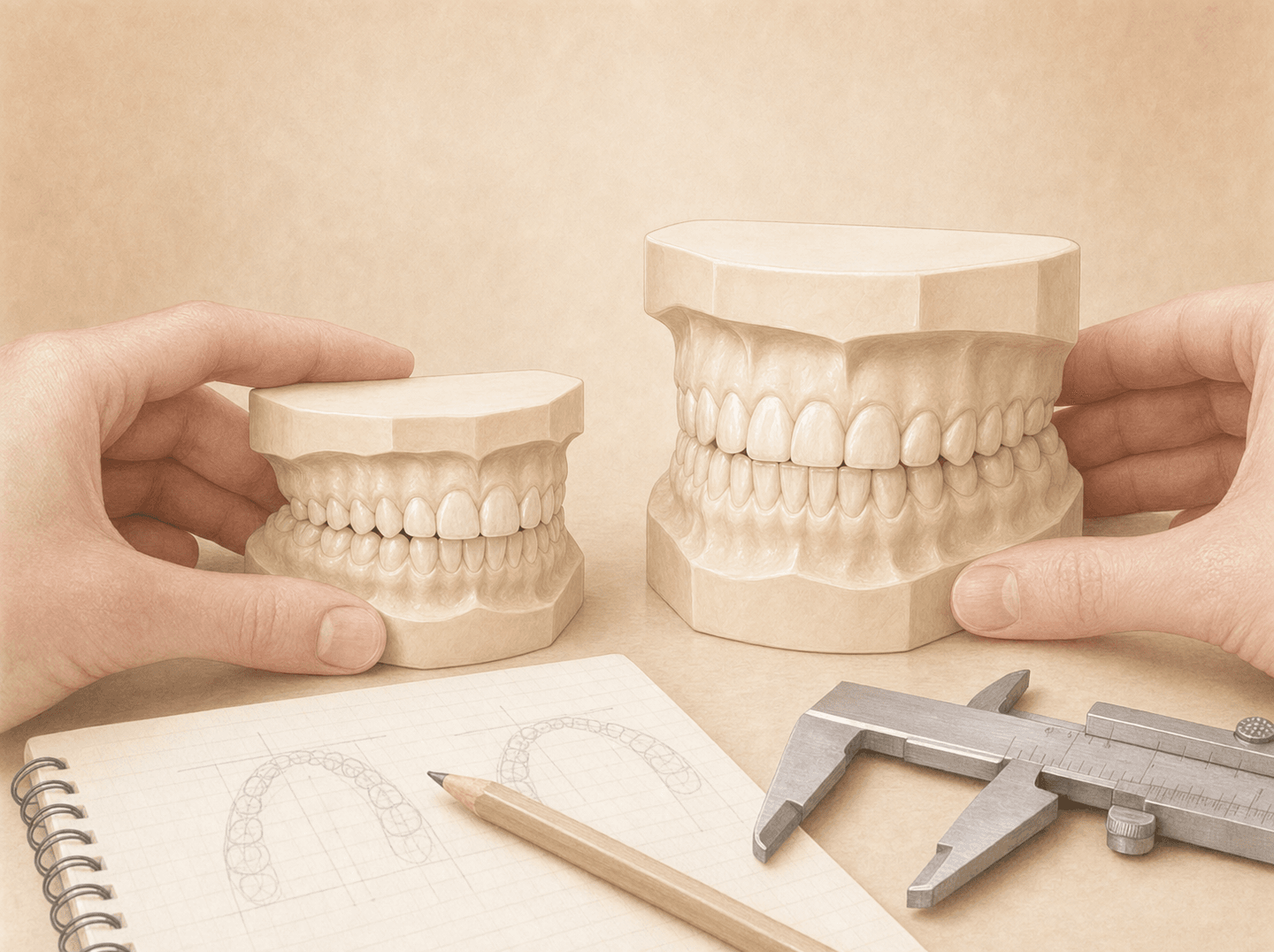
D8660 reports a pre-orthodontic examination to monitor growth and development. The patient, usually a child, isn’t ready for active treatment yet. The dentist examines how the teeth, the bite, and the jaws are developing and uses that to decide when, or whether, orthodontic treatment should begin.
It’s an observation and timing visit, not treatment. The visit typically repeats on a recall interval the dentist sets, tracking a developing malocclusion until the moment to intervene, or the decision not to, becomes clear.
What D8660 is not:
- It is not the periodic visit during active treatment. That’s D8670.
- It is not the orthodontic treatment itself. Limited treatment is coded D8010 through D8040 by dentition stage, and comprehensive treatment D8070 through D8090.
- It is not a general comprehensive exam (D0150) or a case consultation (D9310).
D8660 versus D8670: before treatment versus during
This is the confusion that generates the most miscodes, and the axis is timing relative to active treatment.
D8660 happens before treatment starts. Braces or aligners aren’t on. The visit exists to watch growth and decide when to begin.
D8670 happens during active treatment. The appliance is on, the comprehensive case is underway, and the patient comes in for a scheduled adjustment. D8670 is the periodic treatment visit that carries the case forward, often the code the continuation or installment claim is built around.
The two describe different moments in the orthodontic timeline. Coding D8670 before the case is banded, or D8660 once the patient is in active treatment, contradicts the treatment status the chart documents. Pick the code that matches where the patient actually is: still being observed, or in treatment.
D8660 versus a comprehensive exam or consultation
D8660 also gets confused with the general evaluation codes, and the difference is purpose.
A comprehensive oral evaluation (D0150) is a whole-mouth new-patient or re-evaluation exam. It isn’t specific to orthodontics. D8660 is narrower and ortho-specific: an ongoing look at how a malocclusion is developing to time treatment.
A consultation (D9310) is a diagnostic service where a dentist or specialist gives an opinion or advice on a specific problem, often at another provider’s request. If the visit is a formal case-planning discussion rather than a growth check, a consultation code may be the better fit.
The practical read: use D8660 for the repeating growth-monitoring visits, D0150 for a general comprehensive exam, and D9310 when the visit is a formal consultation on a specific question.
Coverage: observation visits are often not a benefit
D8660 is one of the codes where the coding is straightforward and the reimbursement is not.
Many dental plans pay nothing for a pre-treatment monitoring visit. The orthodontic benefit on a lot of plans only engages once active treatment begins, which leaves the observation phase uncovered. On those plans, D8660 is a patient-responsibility charge, and quoting it as covered is how the family gets a surprise bill.
Where D8660 is handled at all, the pattern varies by plan type:
- HMO or DMO plans often list a fixed patient copay for D8660 on the fee schedule. Bill the contracted amount and collect the copay.
- PPO plans frequently treat it as non-covered or patient-responsibility, since it isn’t active treatment.
- Medicaid rules are state-specific, and observation visits before a qualifying medical-necessity determination are commonly not reimbursed.
None of that is universal. It’s plan-dependent, which is the whole point: verify how the specific plan treats D8660 before the visit, not after.
When to bill D8660
Bill D8660 when the dentist examines a patient who isn’t in active orthodontic treatment yet, to monitor growth and development and decide on the timing of treatment. Typical situations:
- A child with a developing malocclusion is seen on a recall interval to watch how the bite and jaws grow before deciding whether to start braces.
- A patient is being observed after an early phase-one case, waiting for the permanent teeth to come in before a comprehensive case is planned.
Do not bill D8660 for:
- A scheduled adjustment during active treatment. That’s D8670.
- The orthodontic treatment itself. Limited treatment is D8010 through D8040; comprehensive is D8070 through D8090.
- A general comprehensive exam (D0150) that isn’t specific to orthodontic monitoring.
What to get right in your PMS
The setup that keeps D8660 clean, across Open Dental, Dentrix, Eaglesoft, Curve, and Carestream:
- Keep D8660 and D8670 as distinct, clearly labeled codes. One is pre-treatment monitoring, the other is the active-treatment visit. Labeling them so the difference is obvious at the point of selection prevents the most common miscode.
- Default D8660 to patient-responsibility until verification proves coverage. Because many plans pay nothing for observation, an estimate that assumes coverage will overpromise. Set the account to collect from the family unless the verified benefit says otherwise.
- Record the fixed copay on HMO or DMO accounts. Where the plan lists a contracted D8660 copay, store it on the plan so the estimate and the collected amount match.
- Note the treatment status at each visit. Whether the patient is being observed or is in active treatment is what defends D8660 against D8670 if the claim is reviewed. Anchor it to the banding date in the chart.
An ortho case is billed across its whole lifecycle. For how verification, the initial claim, continuation claims, and debond fit together, see the orthodontic insurance billing guide.
FAQs
- What is D8660 used for?
- D8660 reports a pre-orthodontic examination to monitor growth and development. The dentist sees a patient, usually a child, who isn't ready for active orthodontic treatment yet, and tracks how the bite and the jaws are developing to decide when, or whether, treatment should start. It's an observation and planning visit, billed periodically at intervals the dentist sets, before any appliance goes on.
- What's the difference between D8660 and D8670?
- Timing relative to treatment. D8660 is the visit before active treatment starts, monitoring growth to decide when to begin. D8670 is the periodic visit during active treatment, the regular adjustment appointment once the appliance is on and the comprehensive case is underway. If braces aren't on yet and you're watching development, it's D8660. If the patient is in active treatment and coming in for a scheduled adjustment, it's D8670. Coding D8670 before treatment starts, or D8660 during active treatment, puts the claim at odds with the treatment status in the chart.
- Does insurance cover D8660?
- It depends on the plan, and many pay nothing for it. A pre-treatment monitoring visit reads as observation rather than active care, and plenty of plans don't reimburse observation visits at all, especially where the orthodontic benefit only applies once active treatment begins. Some HMO or DMO plans list a fixed patient copay for D8660. On PPO plans it's frequently a patient-responsibility or non-covered charge. Verify how the specific plan handles it before the visit, and set the family's expectation accordingly.
- What's the difference between D8660 and a comprehensive exam like D0150?
- Purpose. D0150 is a comprehensive oral evaluation, a general new-patient or re-evaluation exam covering the whole mouth. D8660 is specifically an orthodontic growth-and-development monitoring visit to time treatment. They aren't interchangeable. A general comprehensive exam is D0150. An ongoing series of visits watching a developing malocclusion to decide when to intervene is D8660. If a formal case-planning discussion is the point of the visit, a consultation code like D9310 may fit instead.
- How often can D8660 be billed?
- The dentist sets the recall interval based on how the patient is developing, so it can be billed at each monitoring visit over months or years. Coverage is the constraint, not the code. Where a plan does reimburse D8660, it may cap the frequency or the number of monitoring visits it will pay. Because many plans don't cover it at all, confirm both whether it's covered and any frequency limit before scheduling a series of observation visits.
- Is D8660 a current CDT code for 2026?
- Yes. D8660 is active in CDT 2026. It reports the pre-orthodontic examination used to monitor growth and development before treatment. It's a separate code from the periodic active-treatment visit (D8670) and from the limited and comprehensive treatment codes (D8010 through D8090), which report the treatment itself once it begins.
Related codes
Need help billing this code?
We handle D8660 claims daily.
If your team is spending time on denials, narratives, or carrier follow-up for this code, our outsourced dental insurance billing service can take it off your plate. We work inside your PMS and post payments the same week. Working the whole claim yourself? Start with our orthodontic insurance billing guide.
CDT codes are maintained by the American Dental Association. This page is an editorial billing guide, not the official ADA code descriptor. Verify current coverage policies with each carrier before submitting claims.