D8703 is the CDT code for replacing a lost or broken orthodontic retainer on the upper (maxillary) arch with a new one.
Most plans put a replacement retainer on the patient, because the ortho benefit was already spent on the original case and its retention, and even the plans that do cover a replacement often cap how often they will. The coding side is simpler, with one trap: if the upper retainer is only loose or cracked rather than lost or broken beyond use, D8703 is the wrong code, and a re-cement or repair applies instead.
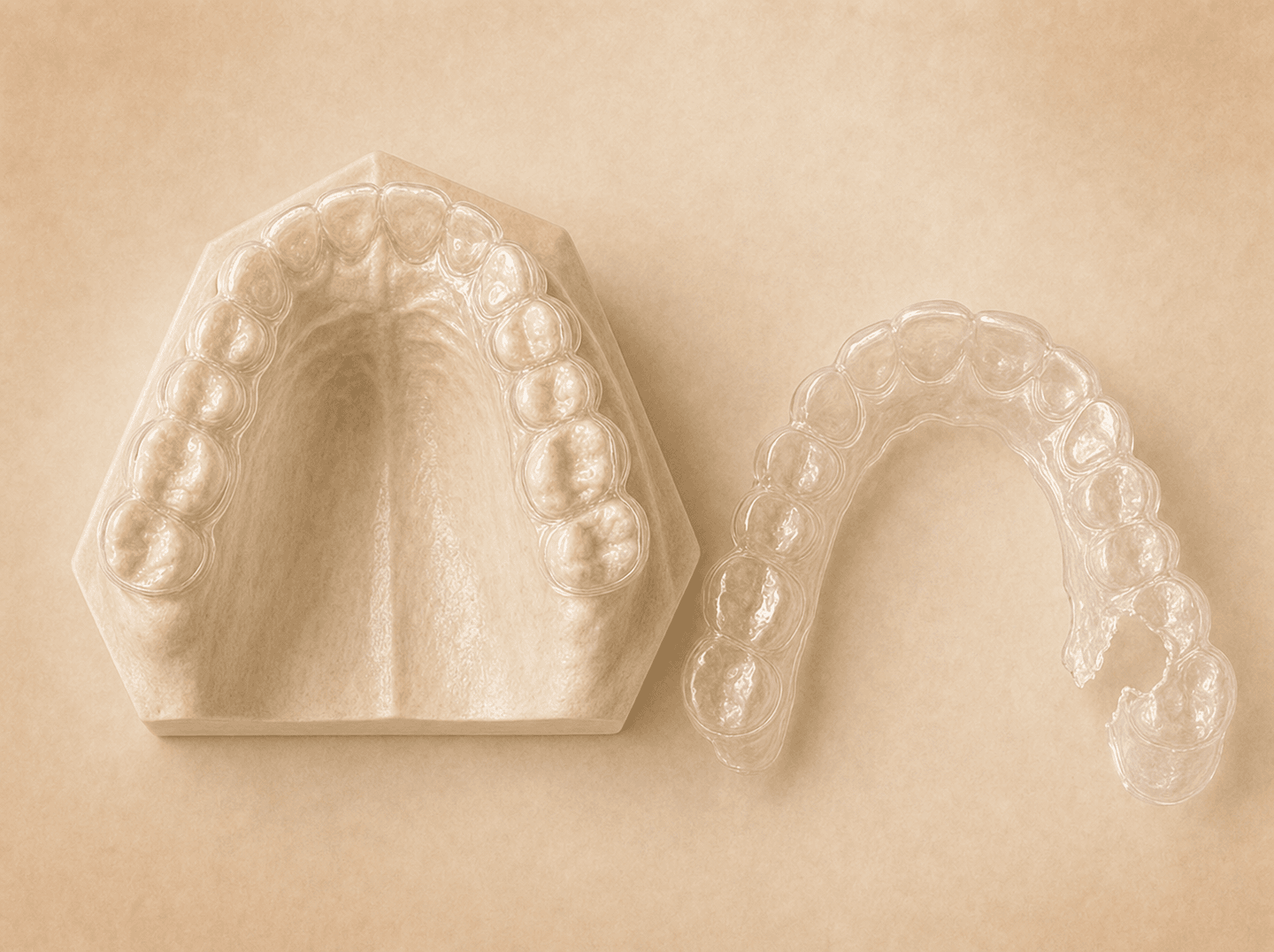
What D8703 covers
D8703 reports replacing a lost or broken orthodontic retainer on the upper arch. In practice that’s the visit where the original upper retainer is gone, or broken past the point of repair, and the office builds and delivers a new one. The code is arch-specific to the maxillary arch and reports the replacement itself, not maintenance of an existing retainer.
The retainer type does not change the code. A removable Hawley, a clear Essix, or a bonded fixed wire all fall under D8703 when the upper retainer is being replaced rather than repaired or re-bonded.
It does not cover:
- Re-cementing or re-bonding an upper fixed retainer that is still intact and just came loose. That’s D8698 (D8699 for the lower arch).
- Repairing a damaged but salvageable upper fixed retainer, including reattachment. That’s D8701 (D8702 for the lower arch).
- Adjusting a removable retainer the patient already has, for fit or comfort. That’s D8681.
- The original retention at the end of active treatment, the first retainer placed at debond. That’s D8680.
- Replacing a lost or broken retainer on the lower arch. That’s D8704.
The distinguishing axis: the arch, and lost versus repairable
Two things decide whether D8703 is the right code, and both are easy to get wrong at the claim line.
First, the arch. D8703 is the upper (maxillary) retainer. The lower is D8704. The pair exists so the claim reports which arch was actually replaced. When both arches are replaced, both codes go on the claim, one per arch.
Second, whether the retainer is actually gone. The replacement codes assume the original retainer is lost or broken beyond use and a new one has to be built. If the retainer still exists, a different code applies: a loose bonded retainer is re-bonded under D8698, and a cracked-but-fixable one is repaired under D8701. Only when there is nothing to save do you move to D8703.
When to bill D8703
Bill D8703 when the patient’s upper retainer is lost, or broken beyond use, and the office constructs and delivers a new upper retainer. Typical situations:
- A patient finished orthodontic treatment, lost the upper retainer, and needs a new one made.
- An upper retainer broke past the point of repair and is being replaced rather than fixed.
Do not bill D8703 for:
- A lower-arch replacement. That’s D8704.
- An intact upper retainer that just needs re-bonding (D8698) or a repair (D8701).
- Adjusting an existing removable retainer for fit (D8681).
- The first retainer placed at the end of active treatment (D8680).
Coverage: replacement usually lands on the patient
By the time a retainer needs replacing, the orthodontic benefit has often already done its work. The lifetime maximum was spent on the original comprehensive case and its retention, so there is frequently nothing left for a replacement. On top of that:
- Many plans exclude replacement outright or treat it as patient responsibility, on the reasoning that the retainer was already paid for once.
- Plans that do cover a replacement often cap the frequency, paying for one within a set window and no more.
- A dependent may have aged out of the ortho benefit in the years between debond and the lost retainer, so even an otherwise-covered service falls outside the age limit.
None of that is universal, so treat it as plan-dependent. Verify whether replacement is covered and any frequency limit before you quote a number, and set the patient’s expectation toward self-pay on most of these.
Top reasons D8703 gets denied
- Non-covered benefit or exhausted lifetime maximum. The most common outcome. The ortho benefit was used on the original case, so the replacement pays nothing and the balance is the patient’s.
- Frequency limit reached. The plan covers a replacement only once in a stated period, and this one falls inside that window.
- Should have been a repair or re-cement. The retainer was intact and could have been re-bonded (D8698) or repaired (D8701). A carrier that requests records reprocesses or denies.
- Benefit terminated or patient aged out. Coverage lapsed, or the dependent passed the ortho age limit, between the original case and the replacement.
- Missing narrative or arch. No note on why the retainer needs replacing, or an arch that doesn’t match the record, leaves the carrier unable to adjudicate.
Documentation that supports the claim
The claim should make the replacement self-explanatory:
- The arch (maxillary) and the retainer type delivered.
- The reason for replacement, lost or broken beyond repair, stated plainly so it reads as a replacement rather than a repair.
- The date of service for delivering the new retainer.
- A reference to the original case where the carrier ties replacement coverage back to the prior orthodontic benefit.
For the patient record, note that the original retainer was lost or unsalvageable, so the choice of a replacement over a repair is defensible if the claim is reviewed.
Example case
A 17-year-old finished comprehensive treatment last year and was debonded with an upper clear retainer and a lower bonded wire. The upper retainer was lost on a school trip. The plan’s ortho lifetime maximum was fully paid out on the original case.
Billing steps:
- Verify the ortho benefit before quoting. Confirm whether the plan covers retainer replacement at all, any frequency limit, and whether the lifetime maximum has anything left. In this case it’s exhausted.
- Tell the family the upper replacement is self-pay before the new retainer is made, so the fee isn’t a surprise at delivery.
- Build and deliver the new upper retainer, and record the arch, the retainer type, and that the original was lost.
- If the plan might cover it, file D8703 for the maxillary arch with a short narrative noting the retainer was lost and replaced, and reference the original case.
- When the EOB comes back non-covered against the exhausted benefit, post it and bill the patient the agreed self-pay fee.
What to get right in your PMS
The menus differ across Open Dental, Dentrix, Eaglesoft, Curve, and Carestream, but the setup that keeps D8703 clean is the same:
- Keep the retainer codes separate and labeled by event and arch. Replacement (D8703 upper, D8704 lower), repair (D8701 upper, D8702 lower), and re-cement (D8698 upper, D8699 lower) should be distinct line items so a replacement doesn’t get coded as a repair or vice versa.
- Default retainer replacement to patient-responsibility until verification says otherwise. Because so many plans don’t cover it, an estimate that assumes coverage will overpromise. Collect from the patient unless the verified benefit proves coverage.
- Store the original case and banding date on the account. A replacement claim reads better when it ties back to the original orthodontic case, and it’s how a carrier confirms the benefit history.
- Capture the arch and the reason on the note. Maxillary versus mandibular and lost-or-broken versus repairable are the two facts that defend the code if the claim is reviewed.
An ortho case is billed across its whole lifecycle. For how verification, the initial claim, continuation claims, and debond fit together, see the orthodontic insurance billing guide.
FAQs
- What is the dental code for replacing a lost upper retainer?
- That's D8703, replacement of a lost or broken retainer on the maxillary (upper) arch. It reports building and delivering a new upper retainer when the original is gone or broken beyond use. The matching lower-arch code is D8704. If the retainer still exists and only needs to be re-bonded or repaired, D8703 is the wrong code: re-cementing a fixed retainer is D8698 (upper) or D8699 (lower), and repairing a damaged one is D8701 (upper) or D8702 (lower).
- What's the difference between D8703 and D8704?
- The arch, and only the arch. D8703 replaces a lost or broken retainer on the upper (maxillary) arch. D8704 replaces one on the lower (mandibular) arch. If a patient loses a retainer for both arches, you bill both codes, one per arch, not a single code for the pair. Report the arch you actually replaced so the claim matches the record.
- Does insurance cover D8703?
- Often it doesn't, and this is the usual sticking point. Many plans treat a replacement retainer as patient responsibility, because the orthodontic lifetime maximum was already used up on the original comprehensive case and its retention. Some plans do cover a replacement but cap the frequency, and some exclude retainer replacement outright. By the time a retainer is lost, a dependent may also have aged out of the ortho benefit. Verify coverage and any frequency limit before quoting, and expect to have the self-pay conversation on most of these.
- When is it D8703 versus re-cementing or repairing the retainer?
- It comes down to whether the retainer still exists and works. D8703 is for a retainer that is lost or broken beyond use and needs a new one built. If a bonded upper retainer just came loose but is intact, re-cement or re-bond it under D8698. If it's damaged but salvageable, repair it under D8701, which includes reattachment. Reaching for D8703 when the original could have been re-bonded or repaired is a common miscode, and a carrier that asks for records can catch it.
- Is D8703 a current CDT code for 2026?
- Yes. D8703 is active in CDT 2026 and reports replacement of a lost or broken maxillary retainer. The CDT set carries separate per-arch codes for the different kinds of retainer work: re-cement or re-bond (D8698 upper, D8699 lower), repair including reattachment (D8701 upper, D8702 lower), and replacement of a lost or broken retainer (D8703 upper, D8704 lower). An older reference that uses a single catch-all retainer code is out of date. Report the arch and the actual service.
Related codes
Need help billing this code?
We handle D8703 claims daily.
If your team is spending time on denials, narratives, or carrier follow-up for this code, our outsourced dental insurance billing service can take it off your plate. We work inside your PMS and post payments the same week. Working the whole claim yourself? Start with our orthodontic insurance billing guide.
CDT codes are maintained by the American Dental Association. This page is an editorial billing guide, not the official ADA code descriptor. Verify current coverage policies with each carrier before submitting claims.