D9230 is the CDT code for nitrous oxide given as the only sedation agent — the inhaled gas, delivered through a nasal hood, used to take the edge off for an anxious patient, billed once per visit.
CDT 2026 revised the code — the old 'anxiolysis' wording is gone, and the descriptor now makes the single-agent point explicit. That single-agent rule is the whole game on this code. If nitrous is the only thing given, you bill D9230. If it's running alongside an enteral, IV, or deep sedation drug, the nitrous folds into that sedation procedure and is not billed separately. Two things drive most of the denials: reporting nitrous on top of another sedation code when it shouldn't be, and assuming adult plans will pay when most don't.
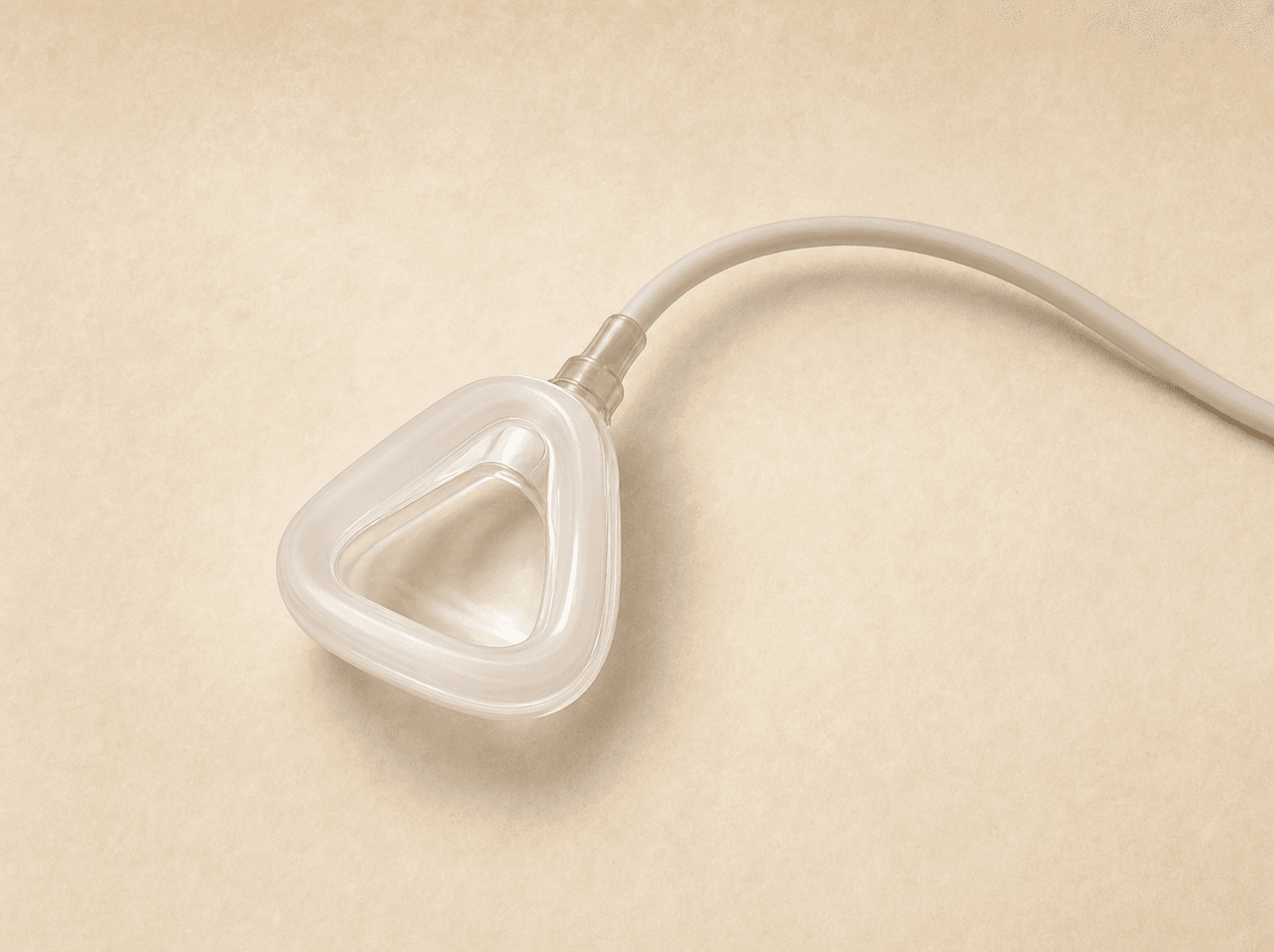
What D9230 covers
D9230 reports nitrous oxide given to a patient when it is the only sedative agent used. It’s the inhaled gas, delivered through a nasal hood, that takes a patient from anxious to manageable for the appointment. The code covers the gas and its administration for that visit.
CDT 2026 revised D9230. The older descriptor leaned on dated terminology, including the word “anxiolysis,” and the update cleared that out and made the single-agent point explicit. The code still reports the same procedure, nitrous oxide for minimal sedation, but the 2026 wording draws a sharper line around when it applies: nitrous, by itself, as the only sedation drug.
That single-agent framing is the detail that matters most for billing. It’s what separates a correctly reported D9230 from a claim that should never have carried the code.
The single-agent rule
This is the distinguishing axis, so it’s worth stating plainly. D9230 is for nitrous as the only sedative. The moment another sedation drug enters the picture, D9230 comes off the claim.
- Nitrous alone: bill D9230. One charge for the visit.
- Nitrous plus an enteral, IV, or deep sedation drug: don’t bill D9230. The nitrous is considered part of that sedation procedure, and you report the sedation code for the agent that was actually used.
The 2026 revision exists partly to make this clear. Practices used to stack a nitrous charge on top of a sedation code for the same visit. Under the current descriptor, that’s a miscode.
Per visit, not per time increment
D9230 is a single charge for the date of service. It is not time-based. You bill it once for an appointment where nitrous was the only sedative, regardless of whether the gas ran for ten minutes or an hour.
This trips people up because the deeper sedation codes work the opposite way. Those are billed in 15-minute units:
- D9239 reports IV moderate (conscious) sedation for the first 15-minute increment, with subsequent increments billed separately.
- D9222 reports deep sedation or general anesthesia for the first 15-minute increment, with D9223 for each subsequent increment.
The descriptors for those codes spell out the time-based structure. D9230’s does not. If a code is meant to be billed by time, the nomenclature says so. Nitrous doesn’t, so don’t carve it into increments.
D9230 versus the codes it’s confused with
Three groups of codes sit near D9230 and get mixed up with it. The axis that separates them is what kind of anesthesia or sedation was actually delivered.
Local anesthesia (D9210, D9215). These are not sedation at all. D9210 reports local anesthesia given when it’s not in conjunction with an operative or surgical procedure. D9215 reports local anesthesia given in conjunction with operative or surgical procedures. Local anesthesia numbs tissue; nitrous manages anxiety and is inhaled. They answer different clinical needs, and in practice D9210/D9215 are routinely bundled into the procedure they support and denied when billed alongside it. D9230 is its own thing.
Enteral sedation (D9244, D9245). D9244 reports in-office minimal sedation with a single enteral (swallowed) drug; D9245 reports moderate enteral sedation. These replaced the deleted D9248. The key crossover: when nitrous is given with one of these enteral drugs, the nitrous is part of the enteral sedation procedure and is not separately billed as D9230. The patient swallowed a drug, so the visit is no longer single-agent nitrous.
IV and deep sedation (D9239, D9222, D9223). These report a deeper plane of sedation delivered by a different route, billed by time. They’re a different level of care than minimal inhaled sedation. Nitrous co-administered during one of these is, again, part of that sedation procedure, not a separate D9230.
The rule underneath all three: D9230 is the minimal, inhaled, single-agent code. Anything heavier, swallowed, injected, or running alongside another drug, lives under a different code, and the nitrous goes with it.
Coverage reality
Nitrous coverage is plan-dependent and skews against adults. The patterns to expect:
- Many plans exclude nitrous for adults. They treat it as a comfort or elective service rather than a covered benefit. The denial is the plan’s language, not a coding error.
- Some plans cover it only with documented medical necessity. A narrative establishing severe anxiety or phobia, a pronounced gag reflex, a special-needs accommodation, or an uncooperative pediatric patient is what gets these claims paid.
- Pediatric coverage is more common. Plans are more likely to cover nitrous for children, sometimes only below a certain age, because it’s frequently what makes treatment possible for a young patient.
None of this is universal. The only reliable way to know is to verify the specific plan before the appointment.
The narrative that supports the claim
For plans that pay D9230 with documentation, the narrative needs to do two jobs: establish why nitrous was needed, and make clear it was the only sedative used.
A workable narrative covers:
- The clinical reason. Why nitrous was indicated, for example high anxiety or dental phobia, a strong gag reflex preventing standard treatment, an uncooperative pediatric patient, or a procedure requiring extended chair time.
- The outcome. That the nitrous allowed the planned treatment to be completed, that without it the procedure could not have been done comfortably.
- The single-agent fact. That nitrous was the only sedation agent given. This is what keeps D9230 defensible if the claim is reviewed against the 2026 single-agent descriptor.
Keep it specific to the patient. A generic line applied to every nitrous claim is detectable across a batch and reads as templated.
What to get right in your PMS
The exact menus differ across Open Dental, Dentrix, Eaglesoft, Curve, and Carestream, but the setup that prevents problems is the same:
- Confirm D9230’s current descriptor in your code table. After the 2026 revision, make sure the code’s description in your system reflects single-agent nitrous, not the old “analgesia, anxiolysis” wording. A stale label invites the stacking miscode.
- Flag the single-agent rule where the team will see it. The most common error is reporting D9230 alongside another sedation code. A note on the code record (or a claim edit) that prompts the biller to drop D9230 when an enteral or IV sedation code is also on the visit prevents the bundled-miscode denial.
- Default adult nitrous to verify-first. Set the expectation that adult nitrous isn’t assumed covered. Verify the plan and quote the patient before the appointment rather than after.
- Attach the narrative to the claim, not just the chart. For plans that require medical necessity, link the nitrous narrative to the D9230 line so the clearinghouse sends it with the claim.
FAQs
- What is the dental code for nitrous oxide?
- D9230. It reports nitrous oxide (laughing gas) given as the only sedative agent. CDT 2026 revised the code to drop the older 'analgesia, anxiolysis' wording and make clear it applies when nitrous is the only sedative used. If nitrous is given together with another sedation drug (enteral, IV, or deep sedation), it is not billed separately under D9230. The nitrous is considered part of that other sedation procedure, and you report the sedation code instead.
- What changed with D9230 in CDT 2026?
- The code wasn't deleted, it was revised. The 2026 update removed outdated terminology (including 'anxiolysis') and clarified that D9230 reports nitrous oxide when it's used as a single agent. This sits inside a larger 2026 overhaul of the sedation and anesthesia family, six new codes, several revisions, and the deletion of D9248. The practical takeaway for billing: report D9230 only when nitrous is the only sedative. When it accompanies another agent, the nitrous rolls into that sedation code (for example D9244 for minimal enteral sedation).
- Is D9230 billed per visit or per minute?
- Per visit. D9230 is a single charge for the date of service, not a time-based code. You don't bill it in 15-minute increments no matter how long the nitrous ran. That's the opposite of the deeper sedation codes: IV moderate sedation (D9239 and subsequent increments) and deep sedation/general anesthesia (D9222, D9223) are billed in 15-minute units because their descriptors say so. Nitrous doesn't work that way. One D9230 per appointment where nitrous was the only sedative.
- Does insurance cover D9230 for adults?
- Often not. Many dental plans exclude nitrous oxide for adults entirely, or cover it only with a documented medical-necessity narrative (severe dental anxiety, a strong gag reflex, special-needs accommodation). Coverage is more common for pediatric patients, and some plans pay it only under a certain age. Treat adult nitrous as likely patient-pay unless the plan says otherwise, verify the specific plan before the appointment, and put the out-of-pocket number in writing. Coverage is plan-specific, not universal.
- Can I bill D9230 with another sedation code on the same visit?
- No. This is the single most common miscode after the 2026 revision. If the patient receives nitrous plus an enteral, IV, or deep sedation drug, the nitrous is part of that sedation procedure and is not separately reportable. Bill the sedation code for the agent that was used (for example D9244 or D9245 for enteral, D9239 for IV moderate, D9222 for deep sedation/general anesthesia) and leave D9230 off the claim. D9230 stands alone only when nitrous is the only sedative given.
- What documentation does D9230 need?
- For a plan that requires medical necessity, the narrative should state why nitrous was needed and that it was the only sedative used. Note the clinical reason (anxiety or phobia, gag reflex, an uncooperative pediatric patient, extended chair time) and that the nitrous allowed the planned treatment to be completed. The chart should also record the procedure it supported and confirm no other sedation drug was given, so the single-agent basis for D9230 is clear if the claim is reviewed.
Related codes
Need help billing this code?
We handle D9230 claims daily.
If your team is spending time on denials, narratives, or carrier follow-up for this code, our outsourced dental insurance billing service can take it off your plate. We work inside your PMS and post payments the same week.
CDT codes are maintained by the American Dental Association. This page is an editorial billing guide, not the official ADA code descriptor. Verify current coverage policies with each carrier before submitting claims.