D9941 is the CDT code for a custom athletic mouthguard made from an impression or scan to protect the teeth during sports.
- When to use: The appliance is custom made for a patient to wear during sports, even if it looks like a night guard.
- When not to use: A guard for nighttime grinding is D9944, D9945, or D9946, and a store-bought or boil-and-bite guard is not billable.
- Billing note: Most plans exclude athletic mouthguards as elective, so treat D9941 as patient-pay and get the fee accepted in writing before fabrication.
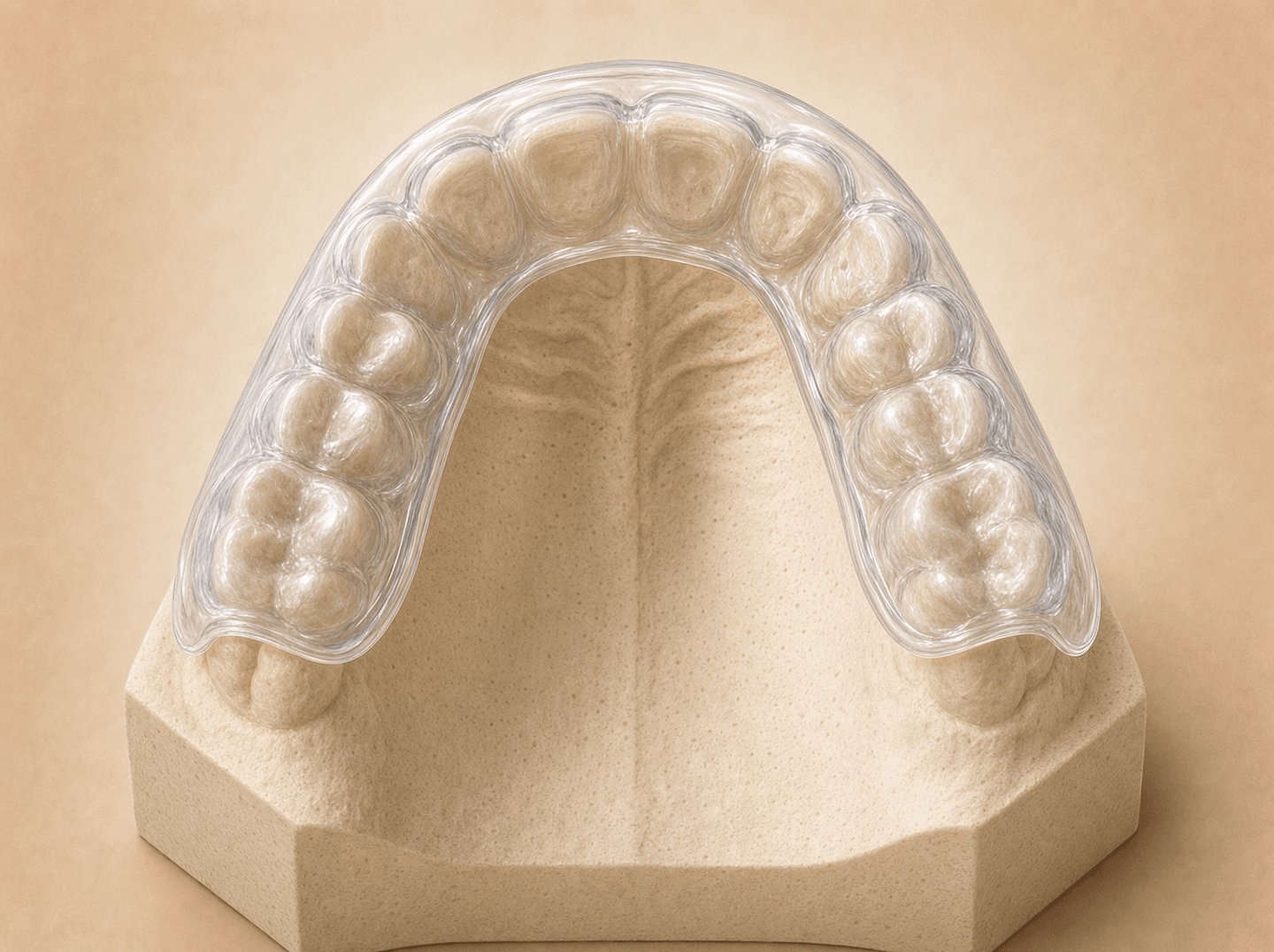
What D9941 covers
D9941 reports the fabrication of a custom athletic mouthguard: an appliance made from an impression or digital scan to fit one patient’s teeth, worn to protect the teeth, lips, and surrounding tissue from impact during sports and physical activity. The code covers capturing the impression, the lab or in-office fabrication, and the fit-and-deliver appointment.
The clinical purpose defines the code. D9941 is the impact-protection appliance for athletes, contact and collision sports, and any activity where a blow to the face is a realistic risk.
What D9941 is not
- A night guard (occlusal guard). A guard for nighttime grinding or clenching is D9944 (hard, full arch), D9945 (soft, full arch), or D9946 (hard, partial arch). This is the most common miscoding on D9941.
- A store-bought or boil-and-bite guard. D9941 requires custom fabrication. A stock guard the patient buys and molds at home is not billable.
- A TMJ or bite appliance. Splints designed to treat a temporomandibular disorder are coded separately based on the appliance design.
- A sleep apnea appliance. An oral appliance for obstructive sleep apnea has its own codes and is usually a medical, not dental, claim.
Mouthguard vs. night guard: the distinction that drives the code
The two appliances can look alike and use similar materials. They differ in why they exist, and the code follows the why.
An athletic mouthguard absorbs and spreads the force of an impact (an elbow, a ball, a fall) so it does not fracture a tooth or drive the lower jaw into the upper. An occlusal (night) guard manages the slow, repetitive forces of bruxism and clenching, protecting teeth and restorations from wear and protecting the joint and muscles.
Keep D9941 and the occlusal guard codes as separate, clearly labeled entries in the practice software. A single generic “guard” entry is the fastest way to miscode.
Coverage reality: plan on patient-pay
Most dental plans exclude custom athletic mouthguards. Carriers generally classify them as elective or optional rather than medically necessary, the same bucket as cosmetic procedures. A minority of plans cover them, sometimes only for patients under a certain age or with specific plan language.
D9941 is a patient-pay procedure in most offices, and that is how the benefit is written, not a billing failure. Set it as patient-pay by default so it is not routed to insurance automatically.
When to bill D9941
Bill D9941 when you fabricate a custom mouthguard for a patient to wear during athletic activity. Common situations:
- A patient (often a youth athlete, but adults too) needs protection for a contact or collision sport.
- A patient with orthodontic appliances or significant restorative work wants a guard that fits their actual dentition rather than a stock guard.
- A patient who had a dental injury during sport wants a properly fitted guard.
Do not bill D9941 for a nighttime grinding or clenching guard, a guard bought over the counter, or adjusting or evaluating a guard you did not fabricate when no new appliance was made.
Documentation that supports the claim
The chart note matters even on a patient-pay procedure, both for the rare plan that covers it and for a patient who later disputes the charge. Capture:
- The clinical purpose. That the appliance is for athletic protection, and the sport or activity. This is what keeps D9941 from looking like a miscoded night guard.
- The custom fabrication. That an impression or digital scan was taken and the guard was made to fit this patient.
- The fee and the patient’s acknowledgment. That the cost was quoted and accepted before fabrication.
For a claim to a plan that covers it, a one-line narrative stating the appliance is a custom athletic mouthguard for a named sport helps the carrier apply the right benefit.
How to handle repairs and replacements
There is no athletic-mouthguard repair code. D9942 (repair and/or reline) and D9943 (adjustment) are written for occlusal guards. Because athletic guards take hard use and are usually patient-pay to begin with, a damaged guard is commonly remade rather than repaired, as another patient-pay service with its own note. Using D9942 or D9943 on an athletic guard applies an occlusal-guard code outside its written scope, which a carrier can question.
Replacement timing is a clinical and growth question more than a coverage one. Youth athletes outgrow a guard as their dentition changes, and any guard wears out with use. With the procedure usually patient-pay, there is rarely a plan frequency limit to track, but there is a conversation with the patient about when a new guard is needed.
FAQs
- What is the dental code for a mouthguard?
- D9941, for a custom athletic mouthguard worn during sports. Patients and front desks also use 'mouthguard' for a night guard, which is an occlusal guard: D9944 (hard, full arch), D9945 (soft, full arch), or D9946 (hard, partial arch). The code follows the clinical purpose, not the appearance, so D9941 on a nighttime grinding guard is the wrong code even if the lab work looks the same.
- Is D9941 the same as a night guard code?
- No. D9941 is a custom mouthguard for athletic activity. A night guard for bruxism or clenching is an occlusal guard, billed under D9944, D9945, or D9946 depending on material and arch coverage. The appliances can look similar, but one protects against impact during sport and the other against grinding forces at night. Code and document the purpose so the claim and the chart agree.
- Does dental insurance cover D9941?
- Usually not. Most dental plans treat custom athletic mouthguards as elective or preventive-optional and exclude them. Some cover them for patients under a certain age, but that is the exception. Treat D9941 as patient-pay by default, verify the specific plan if the patient asks, and get the quoted out-of-pocket cost in writing before fabrication.
- Can I bill D9941 for a store-bought or boil-and-bite mouthguard?
- No. D9941 reports the clinical work of taking an impression or digital scan and producing a guard fitted to that patient, in your office or at a lab. An over-the-counter, stock, or boil-and-bite guard bought at a sporting-goods store involves no custom fabrication.
- How do I bill a repair to an athletic mouthguard?
- There is no repair code specific to athletic mouthguards. D9942 (repair and/or reline) and D9943 (adjustment) are written for occlusal guards. A damaged athletic guard is usually remade, and since the original is typically patient-pay, handle the repair or replacement as a patient-pay service and document what was done. Using D9942 or D9943 applies an occlusal-guard code outside its written scope, which a carrier can question.
Related codes
Need help billing this code?
We handle D9941 claims daily.
If your team is spending time on denials, narratives, or carrier follow-up for this code, our outsourced dental insurance billing service can take it off your plate. We submit the claims, post what comes back, and follow up on anything unpaid.
“Claims, posting, denials, all of it gets handled, and it costs far less than hiring another employee. My front desk got hours of their week back, and honestly I just don't think about billing anymore.”
CDT codes are maintained by the American Dental Association. This page is an editorial billing guide, not the official ADA code descriptor. Verify current coverage policies with each carrier before submitting claims.