D0191 is the CDT code for a limited clinical inspection that looks for signs of disease or injury and flags whether the patient needs referral.
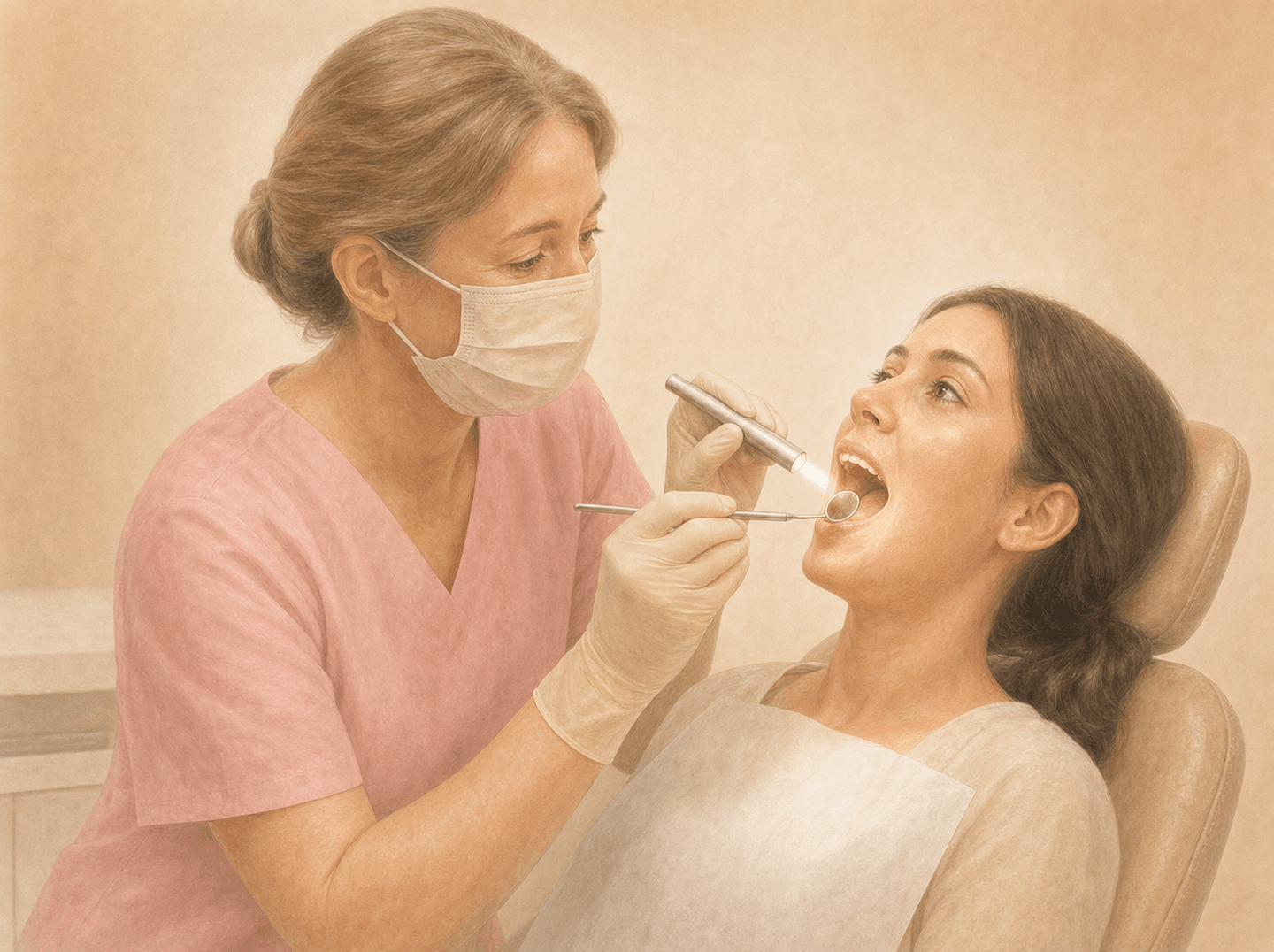
- When to use: A clinician, often a hygienist, inspects the mouth for possible problems without making a dentist's diagnosis, such as in a school, nursing home, or teledentistry program.
- When not to use: Pure triage with no inspection is D0190, and a dentist's diagnostic exam is D0120, D0140, or D0150.
- Billing note: Many plans won't pay D0191 on the same date as an exam code, so bill the evaluation when the dentist also examined the patient.
Where an assessment sits in the evaluation family
D0191 is the middle tier between a screening and a dentist’s exam. The deciding question is what the provider concludes.
A screening (D0190) only decides whether the person needs to see a dentist. An assessment goes further: the clinician inspects the oral tissues and teeth, records what looks abnormal, and notes the need for referral. An evaluation (D0120, D0140, D0150, or the periodontal D0180) is the dentist’s diagnostic exam, ending in a diagnosis and treatment plan.
So the same child can pass through all three: screened at school (D0190), assessed by a hygienist at a mobile van the following month (D0191), and examined by a dentist at the clinic (D0150). Each is a separate service on a separate date.
Settings where D0191 earns its keep
The code was built for care delivered away from the dentist’s chair or before the dentist is involved:
- Hygienist-run school and community programs. Sealant and varnish programs often pair the preventive service with an assessment, so each child leaves with a referral status.
- Long-term care and home visits. A hygienist assesses residents and flags who needs the dentist to come in.
- Teledentistry. The on-site clinician captures images and records findings; a remote dentist reviews them. Payers that cover this model usually want D9995 or D9996 on the claim alongside the assessment.
- General-supervision hygiene visits. In some states a hygienist may see a recall patient when the dentist is not in the building. With no dentist evaluation that day, some offices report D0191 instead of D0120. Whether that pays depends on the plan and the state’s supervision rules.
A long-term care example
A practice contracts with a skilled nursing facility. Its hygienist visits monthly. In March she sees 18 residents, inspects each mouth, and records findings: a loose lower denture causing a sore spot on one resident, a broken molar on another, red, bleeding gums on three more. She documents each finding and refers five residents to the dentist.
Each resident is a D0191 line on the March date. The five referred residents get a D0140 or D0150 when the dentist sees them. That later evaluation is a separate date and pays on its own. Had the dentist examined a resident during the March visit, the claim would carry the evaluation code only.
What sinks a D0191 claim
- Same-day evaluation. The biggest one. When the dentist examines the patient the same day, the assessment is absorbed. Pick the evaluation.
- No findings documented. An assessment needs a record of what was inspected and the referral decision. A claim backed only by a sign-in sheet reads as a screening.
- Wrong provider setup. If the payer doesn’t enroll hygienists, a claim under the hygienist’s own NPI rejects regardless of the clinical work. Confirm enrollment and supervision rules before the program starts billing.
- Frequency. An annual limit is common. A second assessment in the same year denies even when it is clinically reasonable.
FAQs
- What is the D0191 dental code?
- D0191 reports an assessment: a limited clinical look in the mouth for anything that may point to disease, a malformation, or an injury, whether oral or systemic, plus a note on whether the patient should be referred for diagnosis and treatment. It is not a diagnosis. The findings go to a dentist, who makes the diagnosis at an evaluation.
- Can a dental hygienist bill D0191?
- Often yes, within state scope of practice and the payer's enrollment rules. D0191 is the code most hygienist-led community programs use, because hygienists can inspect and record findings but generally cannot perform a dentist's evaluation. Some Medicaid programs, such as North Dakota's, let a supervised hygienist's assessment be billed under the enrolled dentist's NPI. Others, such as West Virginia's, don't cover D0191 at all and don't let hygienists enroll and bill independently.
- Can D0191 be billed with D0120 or D0150 on the same day?
- Usually not. Many programs treat an assessment as included in any oral evaluation on the same date of service, so the D0191 line denies when D0120 through D0180 is also on the claim. Oregon Medicaid goes further: when D0191 is reported with an evaluation in a teledentistry encounter, it disallows the D0191 even when a different provider performed it.
- Is D0191 used for teledentistry?
- Frequently. A hygienist on site does the assessment and sends images or a live video feed to a dentist. Several payers require a teledentistry code on the same claim: D9995 for a real-time video encounter, or D9996 for store-and-forward review. The teledentistry code identifies how care was delivered, and many plans pay little or nothing for it on its own.
- How often will a plan pay D0191?
- Commonly once or twice a year, where it is covered at all. North Dakota Medicaid allows two screenings or assessments combined (D0190 and D0191) per calendar year, and Kentucky Medicaid's 2026 schedule pays $25.00 for patients under 21 and doesn't cover it for adults. Commercial coverage is uneven, so verify before building a program around it.
Related codes
Need help billing this code?
We handle D0191 claims daily.
If your team is spending time on denials, narratives, or carrier follow-up for this code, our dental insurance verification service can take it off your plate. We submit the claims, post what comes back, and follow up on anything unpaid.
“Claims, posting, denials, all of it gets handled, and it costs far less than hiring another employee. My front desk got hours of their week back, and honestly I just don't think about billing anymore.”
CDT codes are maintained by the American Dental Association. This page is an editorial billing guide, not the official ADA code descriptor. Verify current coverage policies with each carrier before submitting claims.