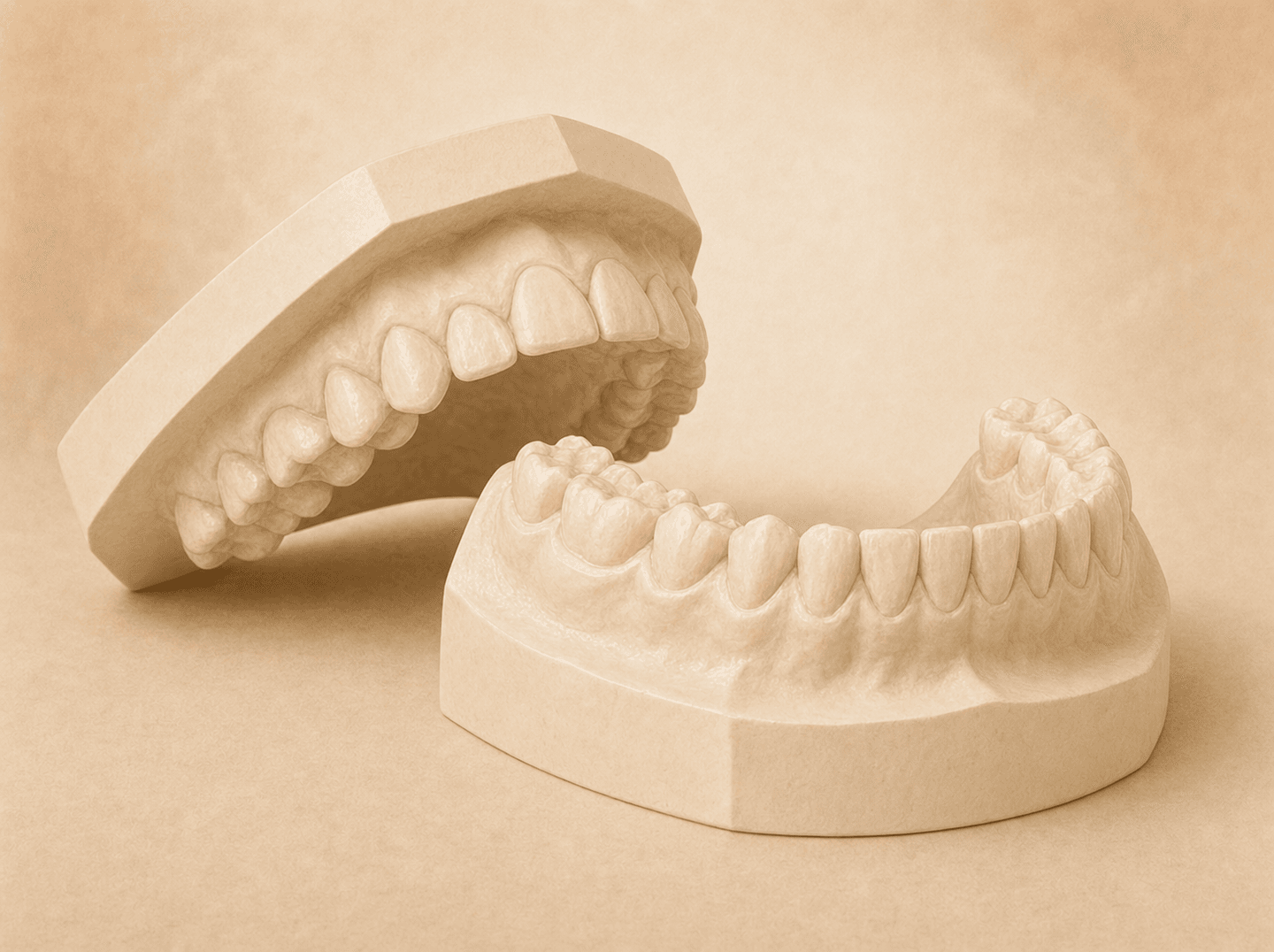
D0470 is the CDT code for diagnostic casts, stone study models poured from an impression and used to plan treatment.
- When to use: The office pours a physical stone model to study the case, such as for orthodontic records or a complex restorative plan.
- When not to use: A direct intraoral scan is D0801, a scan of an existing cast is D0802, and a model printed from a scan is D0396.
- Billing note: Many plans bundle casts into the records or exam visit or pay them under the ortho benefit, so verify the plan before the visit.
What D0470 covers
D0470 reports diagnostic casts: stone models of the patient’s teeth and surrounding ridge, poured from an impression and used to study the case. The chart may call them study models or diagnostic models. The dentist uses the cast to examine the bite, measure arch relationships, plan orthodontic or restorative treatment, and document the starting point before work begins.
Two conditions must both be true. The model is for study and planning, not for building a device. And, in current guidance, it is a physical model made the traditional way, an impression poured into stone.
The distinguishing axis: how the model is made
D0470 is no longer a catch-all code for any model. It is specifically the traditional physical cast, and the deciding question is the method of capture:
- Traditional impression poured to stone is D0470.
- A direct digital capture of the arch with an intraoral scanner is a 3D surface scan, D0801 (3D intraoral surface scan, direct).
- A surface scan of an existing physical cast is D0802, the indirect surface scan, where the patient is not present and the scan is of the model rather than the mouth.
- Printing a physical model from a digital scan in the office is D0396, the 3D-printing step.
The same clinical goal, a model to plan from, can land on several codes depending on the workflow.
D0470 is for diagnosis, not for making a device
A diagnostic study cast and a working impression can look identical on the bench, but they bill differently. The test is purpose.
A diagnostic cast exists to study and plan. The dentist analyzes it to understand the malocclusion, the occlusal scheme, or the restorative situation, and builds a treatment plan from it.
A working impression exists to fabricate something: a crown, a denture, an orthodontic appliance, a night guard. It is part of that device’s procedure. Billing D0470 for appliance impressions is a common misuse, and a study-model code attached to an appliance case gives a reviewer a reason to question it.
Coverage reality: often bundled, often plan-dependent
Whether a plan pays D0470 as its own line is a plan-by-plan question, and many do not. A lot of plans treat diagnostic casts as part of the evaluation or records visit. The cast is not denied as unnecessary; it is considered included in the visit. Other plans cover D0470 in defined circumstances, such as a documented complex restorative or surgical plan where the cast clearly drives treatment planning.
When casts are part of an orthodontic workup, payment often follows the plan’s orthodontic benefit rather than the general diagnostic category. Ortho benefits have their own terms, such as separate maximums and age limits, so a cast in an ortho records set may be handled very differently from the same cast on a restorative case.
When to bill D0470
Report D0470 when the office produces a physical stone study cast to evaluate and plan treatment. Common situations:
- Orthodontic records, where the casts document the starting malocclusion and arch relationships. The records set is billed as separate lines: diagnostic casts (D0470), panoramic image (D0330), cephalometric image (D0340), and photographs (D0350), and a carrier can pay, bundle, or deny each one on its own.
- A complex restorative or full-mouth case, where the dentist studies the occlusion and plans the sequence of work from the model.
- Pre-authorization or case presentation, where the cast supports the treatment plan submitted to the carrier or shown to the patient.
- Tracking change over time, where a baseline cast documents the dentition before and during a course of care.
Do not bill D0470 for a scanned model (D0801 or D0802), a model printed from a scan (D0396), or the working impressions used to fabricate a crown, denture, appliance, or guard.
Documentation that supports the claim
Diagnostic casts get questioned when the record does not show why the model was needed. Write the note at the time of service, and include:
- The date the casts were made and the patient identifier.
- The diagnostic or treatment-planning reason: the orthodontic workup, the complex restorative plan, or the case being presented or pre-authorized.
- A statement that the model is a study cast for evaluation, not a working impression for a device.
- For an orthodontic case, the casts as part of the broader records set alongside the radiographs and photographs.
If the cast is part of a pre-authorization, keep it tied to the treatment plan it supports so the purpose is obvious to the reviewer.
FAQs
- Is D0470 a current CDT code for 2026?
- Yes. D0470 is active in CDT 2026 for diagnostic casts. What changed is the guidance on digital workflows: D0470 now reads specifically as a physical model made the traditional way, an impression poured to stone. A model captured by intraoral scanner is reported under the 3D surface scan codes instead (D0801 for a direct intraoral scan), so the code depends on how the model is made.
- What is the difference between D0470 and a digital scan code?
- How the model is created. D0470 is a traditional physical cast: an impression poured into stone. An arch captured with an intraoral scanner is a 3D intraoral surface scan, D0801. A surface scan of an existing stone cast is D0802. Printing a physical model from a digital scan in the office is D0396. The deciding question is the method of capture, not whether a model ends up on the bench.
- Does insurance cover D0470?
- Sometimes; it is plan-dependent. Many plans bundle diagnostic casts into the records or evaluation visit instead of paying a separate benefit. When casts are tied to an orthodontic case, payment often follows the plan's orthodontic benefit rules rather than the general diagnostic category. Some plans cover D0470 in defined situations, such as a documented complex restorative or surgical plan. Verify the plan before the visit and tell the patient the model may not be a standalone covered service.
- Can I bill D0470 with panoramic and cephalometric images for orthodontic records?
- Often yes, when each item is clinically justified and the plan allows it. A standard orthodontic records set commonly includes diagnostic casts (D0470), a panoramic image (D0330), a cephalometric image (D0340), and clinical photographs (D0350). Each is its own code, and a carrier can pay, bundle, or deny any of them independently. On a plan with an orthodontic benefit, the records may fall under that benefit rather than the general diagnostic allowance, so confirm how the plan handles a records set before submitting.
- Can D0470 be billed for impressions taken to make an appliance?
- No. D0470 is for diagnostic study models used to evaluate and plan, not for the working impressions that go into fabricating an appliance, crown, denture, or night guard. Those impressions are part of the device's procedure. If the model exists to study the case and plan treatment, D0470 can apply; if it exists to build something, it is part of that build.
Related codes
Need help billing this code?
We handle D0470 claims daily.
If your team is spending time on denials, narratives, or carrier follow-up for this code, our dental insurance verification service can take it off your plate. We submit the claims, post what comes back, and follow up on anything unpaid.
“Claims, posting, denials, all of it gets handled, and it costs far less than hiring another employee. My front desk got hours of their week back, and honestly I just don't think about billing anymore.”
CDT codes are maintained by the American Dental Association. This page is an editorial billing guide, not the official ADA code descriptor. Verify current coverage policies with each carrier before submitting claims.