D0340 is the CDT code for a flat, standardized side or front view of the skull captured with a cephalostat, and it covers the tracing and measurements the orthodontist or surgeon works from, not just the film.
D0340 rarely stands on its own. It's one of the orthodontic records set, taken alongside a panoramic image (D0330), photographs (D0350), and often diagnostic casts (D0470), and that's where the billing question sits. Many carriers fold the ceph into a global records or case fee instead of paying it as a separate line, and the descriptor already bundles the acquisition, the measurement, and the analysis into one code, so a separate tracing or analysis isn't billable on top of it. Verify whether records are reimbursable on their own before you send D0340 out as a standalone claim.
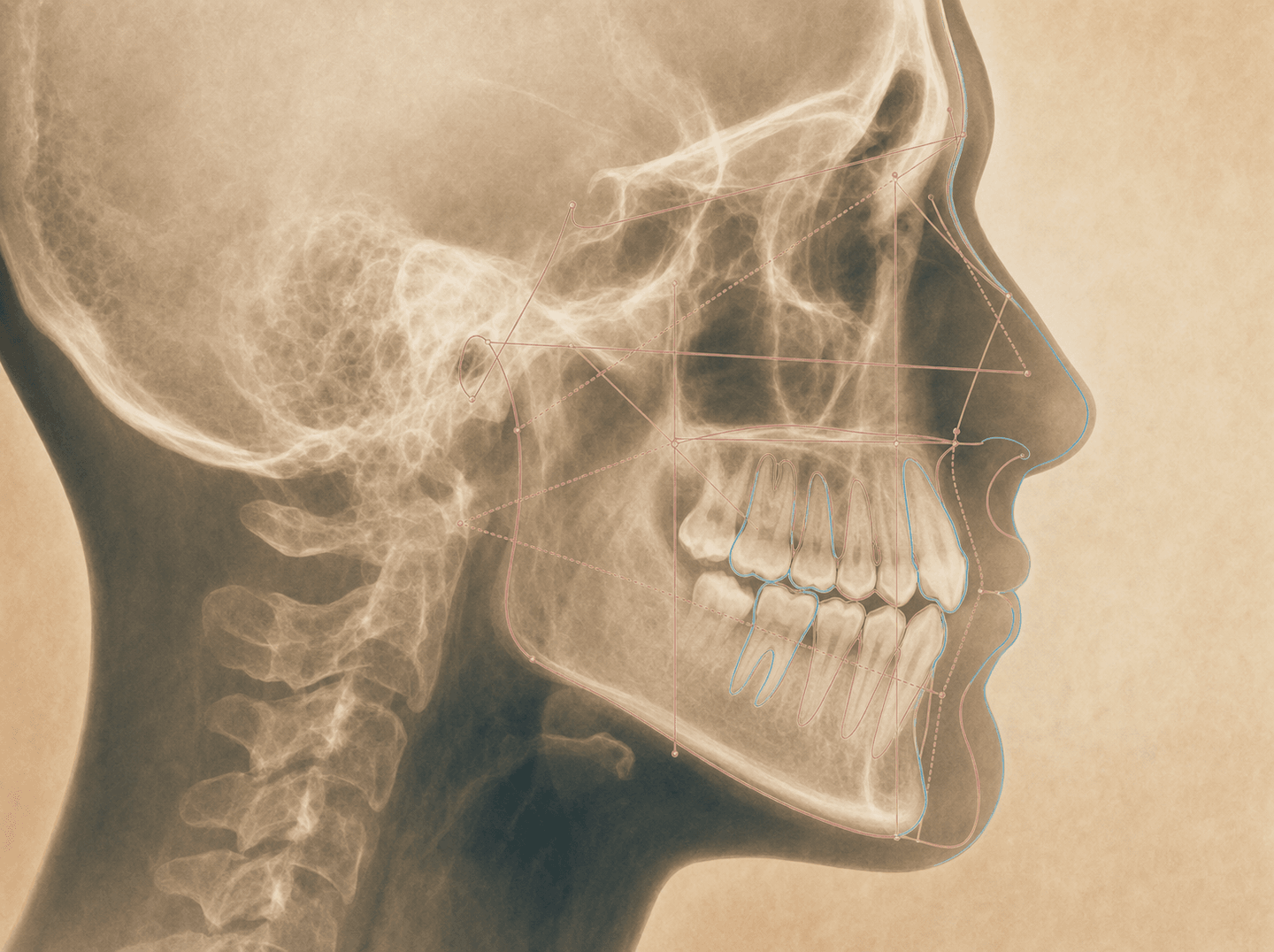
What D0340 covers
D0340 reports a 2D cephalometric radiographic image. It’s a standardized view of the skull, a lateral (side) or frontal projection, captured with a cephalostat that holds the head in a fixed position with reproducible x-ray beam geometry. That standardization is the point: it lets the clinician measure the relationship of the teeth, jaws, and skull, and compare images over time.
The code covers the image, the measurement, and the analysis together. It’s used mostly in orthodontic and oral-surgery practices for diagnosis, treatment planning, and tracking skeletal change through treatment.
Because the analysis is built into the code, a separate charge for tracing or cephalometric analysis on top of D0340 isn’t appropriate. The one code reports the whole thing.
The orthodontic records set
D0340 almost never travels alone. A standard orthodontic records set pairs it with two or three other diagnostic codes, and keeping them straight is most of the billing work:
- D0330 is the panoramic image, a single curved film of both arches, the condyles, and the sinuses.
- D0340 is the cephalometric image, the standardized skull view for craniofacial measurement.
- D0350 is 2D oral or facial photographs, taken intra-orally or extra-orally.
- D0470 is diagnostic casts, the study models of the dentition.
These report different things and are billed as separate codes. Don’t collapse them into one records charge on the claim, even when the practice quotes the patient a single records fee. Each image or record is its own line under its own code.
Why the name says “2D”
The 2D in the descriptor is doing real work. It separates a standard flat cephalometric film from a cephalometric view reconstructed out of a 3D cone beam CT scan.
D0340 is the standalone 2D ceph. If the cephalometric image comes from a CBCT capture, that’s a different coding situation in the cone beam ranges, not D0340. Reporting a CBCT-derived view as D0340, or a standard 2D ceph as a cone beam code, is a mismatch carriers cross-check on the imaging type. Code the image you actually captured.
Billing: records are often bundled, not paid line by line
The recurring billing question on D0340 isn’t how to code it. It’s whether the carrier pays it separately.
Many plans treat orthodontic records as a group. Some fold the ceph, the pano, and the photos into a single global records fee. Others bundle the records into the comprehensive orthodontic case and pay nothing extra for the diagnostic images. And some do reimburse diagnostic records on their own lines, often with a frequency limit on how often a records set is covered.
That’s plan-dependent, and it decides how you submit:
- Verify whether the plan pays orthodontic records separately from the treatment case.
- If records are separately reimbursable, bill D0340, D0330, D0350, and D0470 on their own lines rather than as a bundled charge.
- If records are bundled into the case, don’t expect a separate payment on the ceph, and set the estimate accordingly.
For a Medicaid orthodontic pre-authorization, the ceph plays a different role. It’s part of the required documentation packet, panoramic (D0330), cephalometric (D0340), photographs (D0350), the diagnosis, and the treatment plan, that supports a medical-necessity score. Medicaid usually requires a scoring form, often an HLD index or a state-specific assessment, and without a qualifying score the case is denied as cosmetic.
When to bill D0340
Bill D0340 when a standard 2D cephalometric image is captured, with its measurement and analysis, typically as part of an orthodontic or surgical records workup. Common situations:
- Orthodontic diagnosis and treatment planning at the start of a case.
- A pre-authorization records packet, especially for Medicaid or a medically necessary case.
- Tracking skeletal change partway through or at the end of treatment.
Do not bill D0340 for:
- A panoramic image. That’s D0330.
- Oral or facial photographs. Those are D0350.
- A cephalometric view derived from a cone beam CT. Use the appropriate cone beam range.
- A separate tracing or analysis on top of the ceph. The analysis is already included in D0340.
What to get right in your PMS
Across Open Dental, Dentrix, Eaglesoft, Curve, and Carestream, the setup that keeps records billing clean:
- Keep the records codes as separate line items. D0330, D0340, D0350, and D0470 should each be their own labeled code, even when the practice quotes the patient one records fee. The claim reports each record separately.
- Store whether the plan pays records separately or bundles them. That single verified fact decides whether D0340 goes out as its own reimbursable line or sits inside the case fee. Put it on the ortho benefit record so estimates are right.
- Don’t set up a separate cephalometric analysis charge. The analysis is part of D0340. A second line for tracing or analysis will be denied as bundled and can flag the account.
- Build a records template for pre-auth packets. For Medicaid and medically necessary cases, group D0330, D0340, and D0350 with the diagnosis, treatment plan, and the required scoring form so nothing in the packet is missing at submission.
FAQs
- What is the dental code for a cephalometric x-ray?
- D0340. It reports a 2D cephalometric radiographic image, a standardized side or front view of the skull taken with a cephalostat, along with the measurement and analysis. It's a core part of orthodontic records, used to measure the relationship of the teeth, jaws, and skull for diagnosis and treatment planning. The code covers the image plus the analysis together, so a separate tracing isn't billed on top of it.
- What's the difference between D0340, D0330, and D0350?
- They're three different orthodontic records. D0340 is the cephalometric image, the standardized skull view used for craniofacial measurement. D0330 is the panoramic image, the curved single film of both arches, the condyles, and the sinuses. D0350 is 2D oral or facial photographs, taken intra-orally or extra-orally. All three, often with diagnostic casts (D0470), make up a standard ortho records set. They report different things and are billed as separate codes, not one bundled charge.
- Why does the code say 2D cephalometric image?
- The 2D in the name distinguishes a standard flat cephalometric film from a cephalometric view reconstructed from a 3D cone beam CT scan. D0340 is the standalone 2D ceph. If the cephalometric view is derived from a CBCT capture, that's a different coding situation in the cone beam ranges, not D0340. Code the standard 2D cephalometric image as D0340, and don't reach for it to report a CBCT-derived view.
- Does insurance pay for D0340 separately?
- Often not as a standalone line. Many carriers treat orthodontic records as a group and either fold the ceph into a global records fee or bundle it into the comprehensive case rather than paying D0340 on its own. Others do reimburse diagnostic records separately, sometimes with a frequency limit. It's plan-dependent. Verify whether the plan pays orthodontic records separately, and how it wants them submitted, before billing D0340 as its own line.
- Is D0340 used in a Medicaid orthodontic pre-authorization?
- Frequently, yes. A Medicaid ortho pre-authorization usually needs a records packet: a panoramic image (D0330), a cephalometric image (D0340), photographs (D0350), the diagnosis, and the proposed treatment plan. Medicaid also typically requires a medical-necessity scoring form, often an HLD index or a state-specific assessment form, and without a qualifying score the case is denied as cosmetic. The ceph is part of the documentation that supports the score, not a separate benefit on its own.
Related codes
Need help billing this code?
We handle D0340 claims daily.
If your team is spending time on denials, narratives, or carrier follow-up for this code, our dental insurance verification service can take it off your plate. We work inside your PMS and post payments the same week.
CDT codes are maintained by the American Dental Association. This page is an editorial billing guide, not the official ADA code descriptor. Verify current coverage policies with each carrier before submitting claims.