D2920 is the CDT code for re-cementing or re-bonding an existing crown that came off but is still intact and usable — cleaning off old cement and luting the same crown back onto the tooth, not making a new one.
The code is simple, but the billing rules around it aren't. The denial is almost always the global-period rule — carriers refusing to pay a recement on a crown the same provider placed within 6 to 12 months — a frequency limit on chronic recements, or a recement that turns into a remake mid-appointment.
What D2920 covers
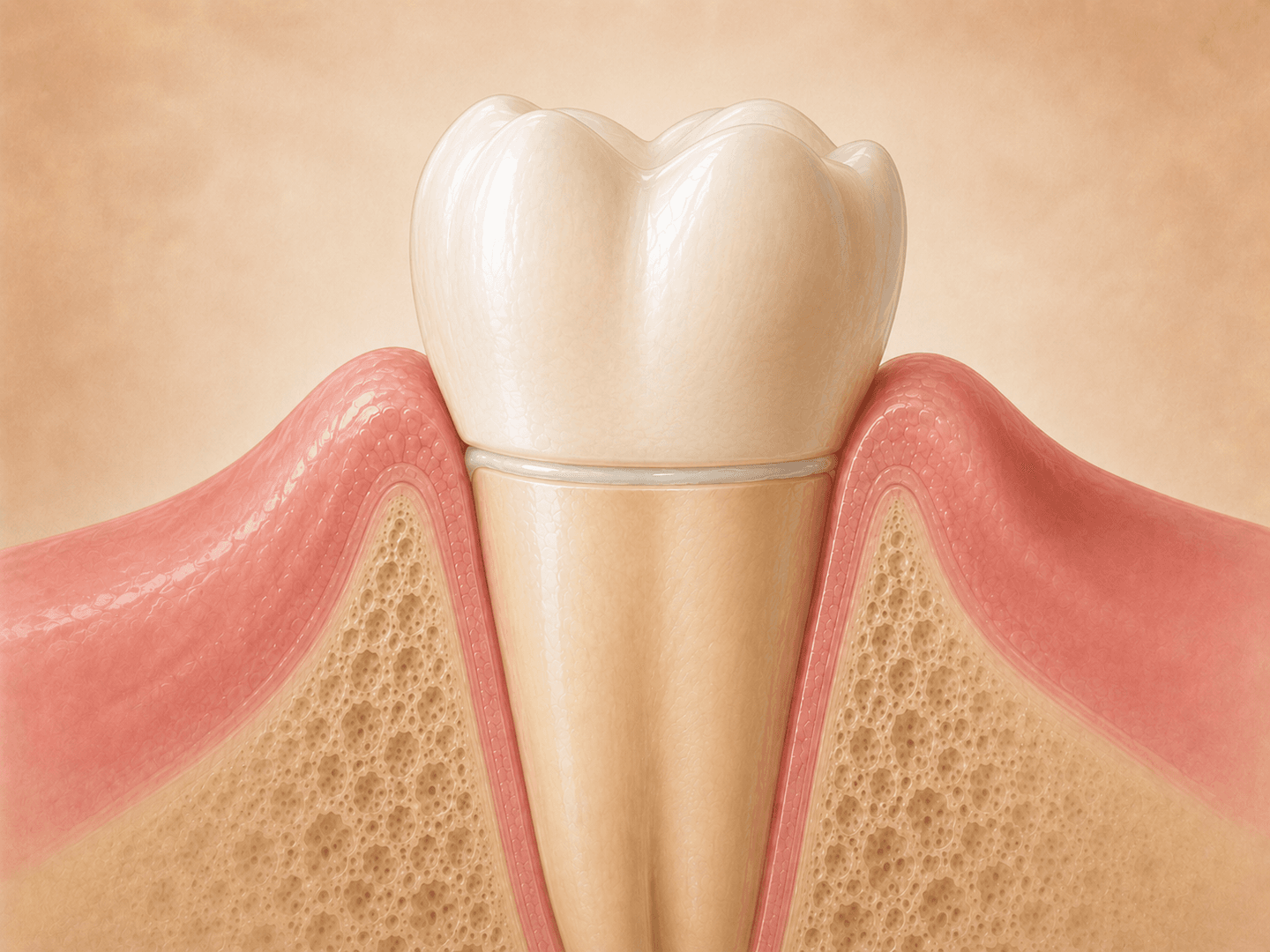
D2920 reports the recementation or re-bonding of an existing crown that has dislodged. The crown is still intact and clinically acceptable. The work is removing residual cement, cleaning the crown and the tooth, and luting the crown back in place with new cement or bonding agent.
It does not cover:
- A new crown. If the existing crown is broken, fractured, worn beyond use, or doesn’t fit anymore, the procedure is a new crown (D2740, D2750, D2751, D2752, or D2799 for a provisional).
- A bridge retainer that came off. Use D6930 for re-cementation of a fixed partial denture.
- A post and core that dislodged but is reusable. Use D2915 (re-cement or re-bond indirectly fabricated or prefabricated post and core). D2952 and D2954 are for placing a new post and core in addition to a crown (D2952 indirectly fabricated/cast, D2954 prefabricated), distinguished by fabrication method, not by whether a dislodged post is recovered.
- A veneer that debonded. Rebonding an intact veneer is D2910, which covers re-cementing or re-bonding an inlay, onlay, veneer, or other partial-coverage restoration. If the veneer is not salvageable and a new one is fabricated, that’s D2961 (resin laminate) or D2962 (porcelain laminate).
- Reattaching a tooth fragment. That’s D2921.
If the crown comes off in one piece, the tooth structure underneath is sound, and the crown still fits, it’s D2920.
When to bill D2920
Bill D2920 when:
- A patient returns with a crown that has come off, in the office or in their hand or in a baggie.
- The crown is examined and is clinically usable (no fracture, margins intact, internal surface clean).
- The underlying tooth structure is sound enough to support the recemented crown.
- The crown is cleaned, the tooth is prepared, and the crown is luted back with cement or bonding agent.
Do not bill D2920 for:
- A crown that needs to be remade. If the crown is broken or doesn’t seat properly, the visit becomes a crown prep and either a new crown is fabricated or a temporary is placed. Bill the new crown code, not the recement.
- A crown that’s still in place but the patient feels it’s loose. Most carriers will not pay for a recement on a crown that hasn’t actually come off.
- A failed attempt to recement that ends with the decision to remake. The remake code absorbs the work.
Top reasons D2920 gets denied
Four issues account for most denials on this code:
- Global period on a recently-placed crown. If the original crown was placed by the same provider inside the carrier’s lookback window, the recement is bundled. Delta Dental and many BlueCross plans use 6 or 12 months. Aetna often uses 12 months. Some Cigna plans extend to 24 months. The denial reads as “global period” or “included in original procedure.” The fee usually cannot be billed to the patient either, because the recement is considered part of the warranty on the original crown.
- Frequency limit hit. A patient with chronic debonding on the same tooth may hit a one-per-year or two-per-lifetime frequency cap on D2920. The second or third recement on the same tooth will pend or deny. At that point the documentation should be moving toward a remake, not another recement.
- Code-procedure mismatch. D2920 reported when the original work was on a bridge retainer or an implant crown. Use D6930 for a fixed partial denture. Use D6092 (re-cement or re-bond implant/abutment supported crown) for an implant crown that came off; use D6093 for an implant-supported fixed partial denture.
- No record of an original crown. Patient is new to the practice and the prior crown was placed elsewhere. The claim sometimes pends for a request for chart notes from the original placement, especially when the carrier wants to verify the recement isn’t on a crown they paid for within their global window.
When the global-period rule applies
Most carriers consider a recement on a crown they paid for recently to be a warranty issue. The original crown fee included the cementation, and if the crown debonds within the global window, the carrier expects the practice to absorb the recement cost.
How the math works:
- You placed D2740 on tooth #14 in February.
- The crown debonds in June.
- You recement the same crown.
- You submit D2920 to the carrier.
- The carrier denies, citing the global period.
- Most carriers also instruct in the EOB that the patient cannot be billed.
Some practices absorb the recement when it falls inside the global window. The recement chair time is short, the lab cost was already paid for, and chasing the recement fee from the patient erodes trust. If you choose to bill the patient anyway, check your provider contract first. Many in-network agreements explicitly prohibit charging the patient for services bundled under a global rule.
If the original crown was placed by a different provider, the global rule does not apply. The recement is a separate, billable service. A narrative on the claim establishing that this is a recement of an externally-placed crown will usually clear the denial.
When a recement turns into a remake
A recement that fails on examination is one of the more frustrating scenarios. The patient is in the chair, the crown is in the office, and the moment you start cleaning the internal surface you realize the crown is fractured, or the margins are damaged, or the tooth structure underneath has decayed and won’t support a recement.
What to bill:
- If you proceed to prep the tooth and place a temporary, bill the new crown code (D2740/D2750/etc.) for the prep date and let the seat date drive the final claim. Drop D2920 entirely.
- If the patient leaves with the broken crown in a baggie and an appointment to come back, you may bill D2799 (provisional crown) on the day a temporary is placed, then the new crown code on the seat date. Do not bill D2920 for the failed recement attempt. The carrier will deny it as “service not completed” or pay nothing on it because no crown was actually recemented.
The temptation to bill D2920 for the chair time on a failed recement is understandable. The cleaner billing answer is that the chair time gets absorbed into the new crown fee, and the only code on the claim is the one that documents the work actually completed.
Documentation that supports the claim
The claim needs:
- Date of service.
- Correct tooth number for the recemented crown.
- A note indicating whether the original crown was placed by your office or elsewhere, and the approximate date of original placement if known.
For the patient record, document:
- Reason the crown debonded (poor retention form, cement failure, recurrent decay under the margin, patient bite force).
- Condition of the crown on examination (intact, marginal integrity verified).
- Condition of the underlying tooth structure.
- Cement or bonding agent used.
- Occlusion verified after recementation.
- Whether the recement is a first event on this tooth or a repeat.
For a repeat recement on the same tooth, the chart should note that the case is being monitored for remake. Two or more debondings within a short window usually indicates the crown needs to be redone, and the documentation should reflect that judgment.
Example case
A patient calls Tuesday afternoon. The crown on her upper-right second molar (tooth #2) fell off while she was flossing. She has the crown. Your office placed it three years ago.
Billing steps:
- Verify the patient’s current insurance and the carrier’s lookback window. Three years is well outside any global period, so D2920 is billable.
- Examine the crown for fractures and confirm marginal integrity. Confirm the underlying tooth structure is sound.
- Clean both surfaces, recement with resin-modified glass ionomer (or your office’s standard), verify occlusion.
- Bill D2920 at office fee on the date of service. No narrative needed on a standard recement.
- The EOB usually pays at the plan’s allowable. The patient owes any coinsurance or deductible portion per their plan’s preventive or basic restorative category, depending on how the plan classifies recementation.
If the recement is the second one on tooth #2 within twelve months, add a chart note recommending remake on the next debond. The third recement on the same tooth will likely deny on frequency, and at that point the case should be remade.
What to get right in your PMS
The specifics vary across Open Dental, Dentrix, Eaglesoft, Curve, and Carestream. The steps that matter are the same:
- Code the procedure as D2920 on the correct tooth. Tooth-number mismatch is one of the more common avoidable rejections, especially when the crown is on a posterior tooth and the chair-side note used a different numbering convention.
- Check claim history for the original crown placement before submission. If your own office placed the crown inside the carrier’s global window, flag the claim for review. The cleanest path is usually to not submit it.
- Post on the date of service. Recements are same-day procedures.
- Add a narrative only when the original crown was placed by another provider. Otherwise, a recement claim should submit without narrative and pay routinely.
- Watch the EOB for global-period bundling. When the denial code indicates the recement is included in another procedure, do not appeal. The denial is correct under the carrier’s rules. Adjust the patient ledger accordingly.
If your office is seeing multiple recement denials in a billing cycle, the cause is usually one of two things: the practice is recementing crowns inside the global window without checking placement history, or the practice has a pattern of recurrent debonds on the same teeth that should be moving to remake. Both are workflow issues, not billing issues, and they need to be addressed at the clinical side before the billing problem resolves.
FAQs
- What is the dental code to recement a crown?
- D2920. It reports re-cementing or re-bonding a previously seated crown that came off. Most denials on D2920 come from the carrier's global-period rule: if the same provider placed the crown within the lookback window (typically 6 to 12 months), the recement is bundled into the original crown fee and pays $0.
- What's the difference between D2920 and D2921 (reattach tooth fragment)?
- D2920 is for recementing a full-coverage crown that came off. D2921 is for bonding a tooth fragment back onto a fractured tooth where no crown is involved. Different procedure entirely. Don't confuse the two.
- Why did the carrier deny D2920 when the crown came off in the patient's mouth?
- Most carriers apply a global-period rule. If the same provider placed the crown within the carrier's lookback window (typically 6 or 12 months, sometimes 24), the recement is considered part of the original crown fee and pays $0. The denial reads as 'service included in another procedure' or similar. The patient still owes nothing in most cases because the original crown fee covered it.
- Can I bill D2920 the same day as a new crown if the old one cracked during recement?
- No. If you decide to remake the crown during the visit, you bill the new crown code (D2740, D2750, etc.) and drop the D2920. You don't bill both. The recement attempt rolls into the remake.
- How often will a plan pay for D2920 on the same tooth?
- Many plans have a frequency limit of one recement per tooth per year. Some pay only the first recement and consider subsequent debonds a sign that the crown needs to be remade. If the crown is debonding repeatedly, the documentation should support remake, not recement.
- Does D2920 need a narrative?
- Usually not. Most plans pay D2920 routinely without documentation. Add a narrative when the recement is the second or third on the same tooth, or when the original crown was placed by a different provider and you need to establish that the patient's plan should cover the recement.
Related codes
Need help billing this code?
We handle D2920 claims daily.
If your team is spending time on denials, narratives, or carrier follow-up for this code, our outsourced dental insurance billing service can take it off your plate. We work inside your PMS and post payments the same week.
CDT codes are maintained by the American Dental Association. This page is an editorial billing guide, not the official ADA code descriptor. Verify current coverage policies with each carrier before submitting claims.