D3330 is the CDT code for a completed root canal on a permanent molar, the back tooth that usually carries three or more canals, with the crown or filling that rebuilds the tooth billed separately.
It is the most-billed and most-scrutinized of the endodontic codes, and the problems cluster around three things: missing or insufficient radiographs at submission, retreatment cases coded as initial therapy, and the timing question between the RCT and the crown that almost always follows.
On this page
- What D3330 covers
- When to bill D3330
- What separates D3330 from D3310/D3320
- Top reasons D3330 gets denied or downgraded
- Radiographic documentation that carriers actually want
- Retreatment vs initial: a coding decision that matters
- The buildup and crown timing
- Crown timing after RCT
- Documentation that supports the claim
- Example case
- What to get right in your PMS
- FAQs
What D3330 covers
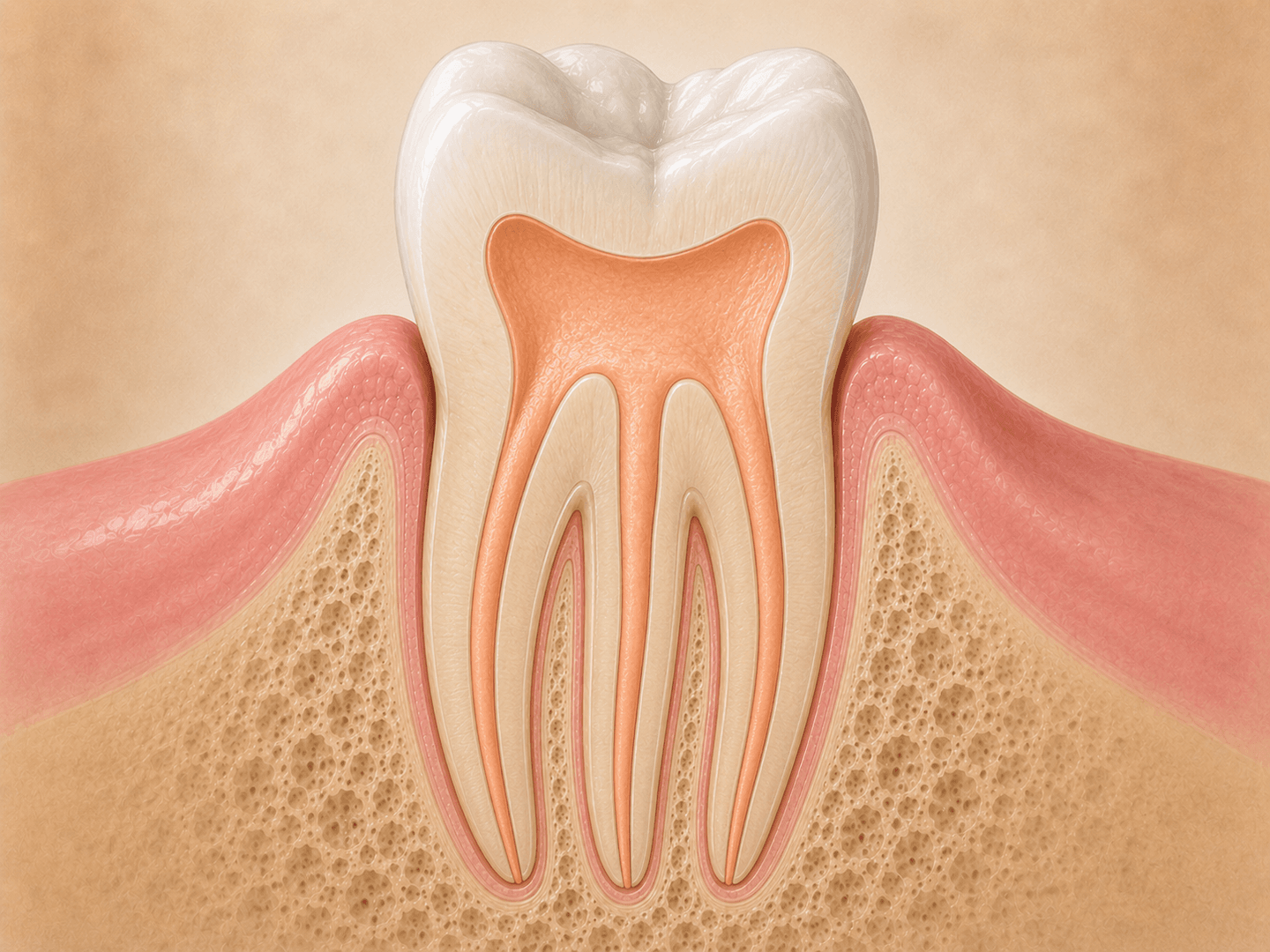
D3330 reports complete endodontic therapy on a permanent molar with three or more root canals. The procedure includes opening the tooth, debriding the pulp chamber and canals, shaping and cleaning the canals, and obturating with a permanent root canal filling material (typically gutta percha and sealer). The code includes routine intraoperative radiographs, intracanal medication if used, and the temporary restoration placed at the completion appointment.
It does not cover:
- Anterior root canal therapy. Use D3310.
- Premolar root canal therapy. Use D3320.
- Retreatment of a previously root-canaled tooth. Use D3346 (anterior), D3347 (premolar), or D3348 (molar).
- Pulpotomy. For a therapeutic pulpotomy (the pulp inside the crown is taken out down to where crown meets root, a medicament is placed over what is left, and the tooth is not headed for a root canal), use D3220. For a partial pulpotomy for apexogenesis on a permanent tooth with incomplete root development, use D3222. D3221 is the emergency pain-relief debridement done before a root canal, on baby or adult teeth, and it is not a pulpotomy.
- Apicoectomy (surgical root-end resection). Use D3410, D3421, or D3425.
- The final restoration (buildup or crown). Those are separately billable codes.
- The post or core. Use D2950 for a buildup or D2952/D2954 for posts.
D3330 is one procedure on one tooth, completed across as many appointments as the case requires.
When to bill D3330
Bill D3330 when:
- A permanent molar has been diagnosed with pulpal pathology (irreversible pulpitis, necrosis, abscess, fracture exposing pulp) and root canal therapy has been completed.
- The tooth has three or more canals (most maxillary molars have three or four, mandibular molars have two or three).
- The obturation is complete with a permanent root canal filling material.
- The tooth has been temporized for the patient to return for final restoration.
Do not bill D3330 for:
- Incomplete treatment. If the patient doesn’t return for obturation, the work performed reports under a different code (typically D3221 for a pulpal debridement) and D3330 is not billable.
- Anterior or premolar teeth. Use the correct code by tooth type, even if the case is unusually complex.
- A retreatment of a previously root-canaled molar. Use D3348.
- The final restoration. That’s a separate appointment and a separate code.
What separates D3330 from D3310/D3320
The distinguishing factor is tooth type, not difficulty. A molar with one canal (anatomically unusual) is still D3330. A premolar with three canals (also unusual) is still D3320.
The tooth type drives the code because:
- Molars are anatomically more complex and require more chair time.
- The carrier allowables are set per tooth type, not per canal.
- The code is structural, not procedural.
This matters when documenting unusual anatomy. A molar with five canals (a maxillary molar with two MB canals plus DB, palatal, and a sometimes-present second palatal) is still D3330. The chart can note the canal count, but the code remains the same. There’s no “D3330 with additional canals” surcharge code.
Top reasons D3330 gets denied or downgraded
Six issues account for most problems on this code:
- Missing or insufficient radiographs. The most common single denial. Carriers typically want pre-op and post-op periapical films showing the complete fill. Some also want working-length films from mid-treatment. Submit pre-op and post-op together with the initial claim.
- Retreatment coded as initial therapy. D3330 was billed on a tooth that already had endo done previously. The carrier reviews the pre-op film, sees the existing fill, and denies with a request to recode as D3348 (molar retreatment). The retreatment code has a higher allowable on most plans, but the denial-and-recode cycle delays payment by 2 to 4 weeks.
- Calcified or unfindable canals. Some plans pay the standard D3330 allowable only when all canals were located and obturated. If a canal was calcified and couldn’t be negotiated, the documentation needs to explain this. Many carriers reduce the allowable proportionally if a canal was bypassed. A narrative noting which canal was calcified and why it could not be treated is necessary.
- Same-day buildup and crown. Billing D3330, D2950, and D2740 on the same date of service can trigger a denial or partial denial. Carriers expect these to be sequential procedures. Bill each on its actual date of service.
- Tooth eligibility (strategic value). Some plans deny D3330 on terminal molars (#16, #17, #32, third molars in general) or on teeth with extensive periodontal involvement. The denial reads as “tooth not restorable” or “endodontic therapy not indicated due to periodontal status.” Predetermination on these cases can prevent a denial after the fact.
- Frequency exceeded (lifetime). Most plans pay D3330 once per tooth per lifetime. A retreatment within the lifetime window uses D3348, not D3330. Submitting D3330 a second time on the same tooth triggers an automatic denial.
Radiographic documentation that carriers actually want
The general expectation across major carriers:
- Pre-operative periapical showing the diagnostic film with the original pathology (apical lesion, deep caries, fracture line, prior trauma evidence).
- Post-operative periapical showing the complete obturation extending to the apex of each canal.
- Working-length or mid-treatment film for some plans, especially Delta Dental in several states.
Submit pre-op and post-op with the initial claim. If the carrier requires working-length, they’ll request it as a pend response and you can supply it. Submitting all available films upfront on a clean clinical record reduces back-and-forth.
The films must be:
- Diagnostic quality (sharp, properly positioned, showing the apex of every canal).
- Dated to match the dates of service on the claim.
- Linked to the correct tooth.
A poor-quality post-op film is one of the most common reasons for a pend that turns into a denial. If the post-op film cuts off the apex or has a positioning artifact, retake before submitting.
Retreatment vs initial: a coding decision that matters
The distinction between D3330 and D3348 (molar endodontic retreatment) is one of the most consequential coding decisions on this code. The difference:
- D3330: initial endodontic therapy. The tooth has not had root canal treatment before.
- D3348: retreatment of a previously root-canaled molar. The original endo failed and is being redone, which involves removing the existing fill and re-treating the canals.
D3348 has a substantially higher allowable than D3330 on most plans (often 25 to 40% higher) because the work involved is greater. Coding a retreatment as D3330 underbills the case. Coding an initial as D3348 will be caught on audit when the carrier reviews the pre-op film.
How to tell which one applies: read the pre-op radiograph. If there’s an existing root canal fill visible, it’s a retreatment. If the canals are untreated, it’s initial.
The buildup and crown timing
A molar that’s just had endo almost always needs full coverage. The standard sequence:
- D3330 for the root canal therapy itself, completed and the tooth temporized.
- D2950 for the buildup at the crown prep appointment, days to weeks later.
- D2740, D2750, or other crown code for the final restoration on the seat date.
Each procedure has its own date of service and its own claim line. Carriers expect this sequence. Billing all three on the RCT completion date triggers:
- Denial of the buildup as “included in endodontic therapy.”
- Denial or pend of the crown for “tooth not yet temporized.”
- Audit flag for billing irregularities.
The clinical sequence and the billing sequence should match. If the dentist completes the RCT, places a buildup, and preps the crown all on the same day (which sometimes happens with a same-day-crown workflow), the chart should document the sequence clearly and the crown’s seat date should still drive its claim’s date of service.
Crown timing after RCT
Most carriers expect a crown on an endodontically treated molar within a reasonable window after the RCT, typically 30 to 60 days. A molar that has been root-canaled but not crowned within this window has elevated risk of fracture, and the patient eventually presents with a cracked tooth that needs extraction.
From a billing standpoint, delaying the crown indefinitely doesn’t usually cause a denial on the crown itself when it’s finally placed. But it does sometimes generate carrier requests for documentation of why the crown is being placed later than expected.
The practical answer: schedule the crown appointment at the same visit the RCT is completed. The patient leaves with a temporary and an appointment, and the case moves through to completion without the gap that produces fractures.
Documentation that supports the claim
The claim needs:
- Pre-op periapical radiograph.
- Post-op periapical radiograph showing complete obturation.
- Date of service (completion of obturation, not the start date of treatment).
- Correct tooth number.
- Narrative for unusual cases (calcified canal, fractured instrument retained, retreatment scenarios coded as D3348).
For the patient record, document:
- Diagnosis (irreversible pulpitis, pulpal necrosis, apical periodontitis, etc.).
- Number of canals located and obturated.
- Working length of each canal.
- Obturation material used.
- Temporary restoration placed and planned final restoration timeline.
- Patient instructions and follow-up.
Chart notes matter on D3330 because carriers do audit. A note that reads only “RCT completed on #19” will not pass audit. A note documenting the canal count, the working lengths, the obturation, and the temporary restoration will.
Example case
A 41-year-old patient presents with severe spontaneous pain in the lower left first molar (tooth #19). The dentist confirms irreversible pulpitis on testing. The pre-op periapical shows deep distal caries extending to the pulp, with a small apical radiolucency on the mesial root. The tooth has not been previously root-canaled.
Treatment sequence:
- Visit 1: pulpal debridement and instrumentation, working-length films taken, calcium hydroxide placed, temporary restoration. The chart notes three canals located (mesial buccal, mesial lingual, distal).
- Visit 2 (one week later): obturation completed, post-op periapical taken showing complete fill of all three canals to the apex, temporary restoration replaced.
- Visit 3 (three weeks later): buildup and crown prep, temporary crown placed.
- Visit 4 (two weeks later): final crown seated.
Billing steps:
- Submit D3330 on the date of obturation (visit 2). Attach the pre-op periapical and the post-op periapical. No narrative needed if the films are diagnostic quality.
- Submit D2950 (buildup) on the date of the crown prep (visit 3).
- Submit D2740 (or other crown code) on the seat date (visit 4).
- Each claim line stands alone with its own date of service. Each pays per the patient’s plan benefits.
If the carrier pends D3330 for working-length films, supply them from the chart. If the carrier denies D3330 as “tooth previously treated” (mistaken for retreatment), pull the pre-op radiograph to demonstrate this was initial therapy and appeal.
What to get right in your PMS
The specifics vary across Open Dental, Dentrix, Eaglesoft, Curve, and Carestream. The steps that matter:
- Code by tooth type, not by complexity. A complex anterior is still D3310. A simple molar is still D3330.
- Post on the date of obturation, not the date the treatment started. Treatment started weeks ago doesn’t reach the carrier. Only the completion date does.
- Attach both pre-op and post-op films to the claim itself. Many systems store images at the patient level by default. The clearinghouse needs the films linked to the specific claim line.
- Bill the buildup and crown on their actual dates of service. Same-day RCT-buildup-crown bills trigger denials. Each step on its own date.
- Check the pre-op film for prior endodontic treatment before coding D3330. If you see existing fill, the code is D3348, not D3330. This is the single most consequential check on this code.
If your office sees a high rate of D3330 documentation pends, the cause is almost always image-quality or image-attachment workflow. Diagnostic films attached to the right claim line on the first submission reduce documentation pends by more than any other workflow change.
FAQs
- What's the difference between D3310, D3320, and D3330?
- All three are root canal therapy on permanent teeth, distinguished by tooth type and canal count. D3310 is anterior (single canal). D3320 is premolar (typically one or two canals). D3330 is molar (three or more canals). The tooth dictates the code, not the difficulty.
- Why did the carrier deny D3330 for missing documentation?
- Most carriers require pre-op and post-op periapical radiographs on the claim. Some also require a working-length or mid-treatment film. Submit pre-op and post-op together with the initial claim and you eliminate the most common documentation denial.
- When should I use D3346 instead of D3330?
- D3346, D3347, and D3348 are the endodontic retreatment codes (anterior, premolar, molar). Use them when the tooth has had a previous root canal that failed and is being redone. Coding a retreatment as an initial RCT (D3330 on a molar that already had endo) is one of the most common D3330 errors and gets caught on audit when carriers see the pre-op X-ray with the existing fill.
- Can I bill the buildup and crown the same day as the RCT?
- Not typically. Most carriers require the buildup (D2950) and the crown (D2740, D2750, etc.) to be billed on the dates they were actually performed, which is usually days or weeks after the RCT. Billing all three on the RCT completion date often triggers a request for clarification or a partial denial.
- Does Delta Dental have a specific D3330 documentation requirement?
- Delta Dental plans typically require both pre-op and post-op periapical radiographs showing the complete treatment. Some Delta plans also pend D3330 claims for missing working-length films. The exact requirements vary by Delta state plan, so verify with the specific Delta entity covering the patient.
Related codes
Need help billing this code?
We handle D3330 claims daily.
If your team is spending time on denials, narratives, or carrier follow-up for this code, our outsourced dental insurance billing service can take it off your plate. We work inside your PMS and post payments the same week.
CDT codes are maintained by the American Dental Association. This page is an editorial billing guide, not the official ADA code descriptor. Verify current coverage policies with each carrier before submitting claims.