D4910 is the CDT code for periodontal maintenance, the recall cleaning and perio status check after scaling and root planing or periodontal surgery.
- When to use: The patient has documented prior scaling and root planing or perio surgery and returns on a maintenance recall, commonly every three months.
- When not to use: A patient with no prior perio therapy is D1110, active scaling and root planing is D4341 or D4342, and gingivitis without bone loss is D4346.
- Billing note: Carriers deny it when no prior perio therapy is on their file, so attach the prior perio chart and a current evaluation for transfer patients.
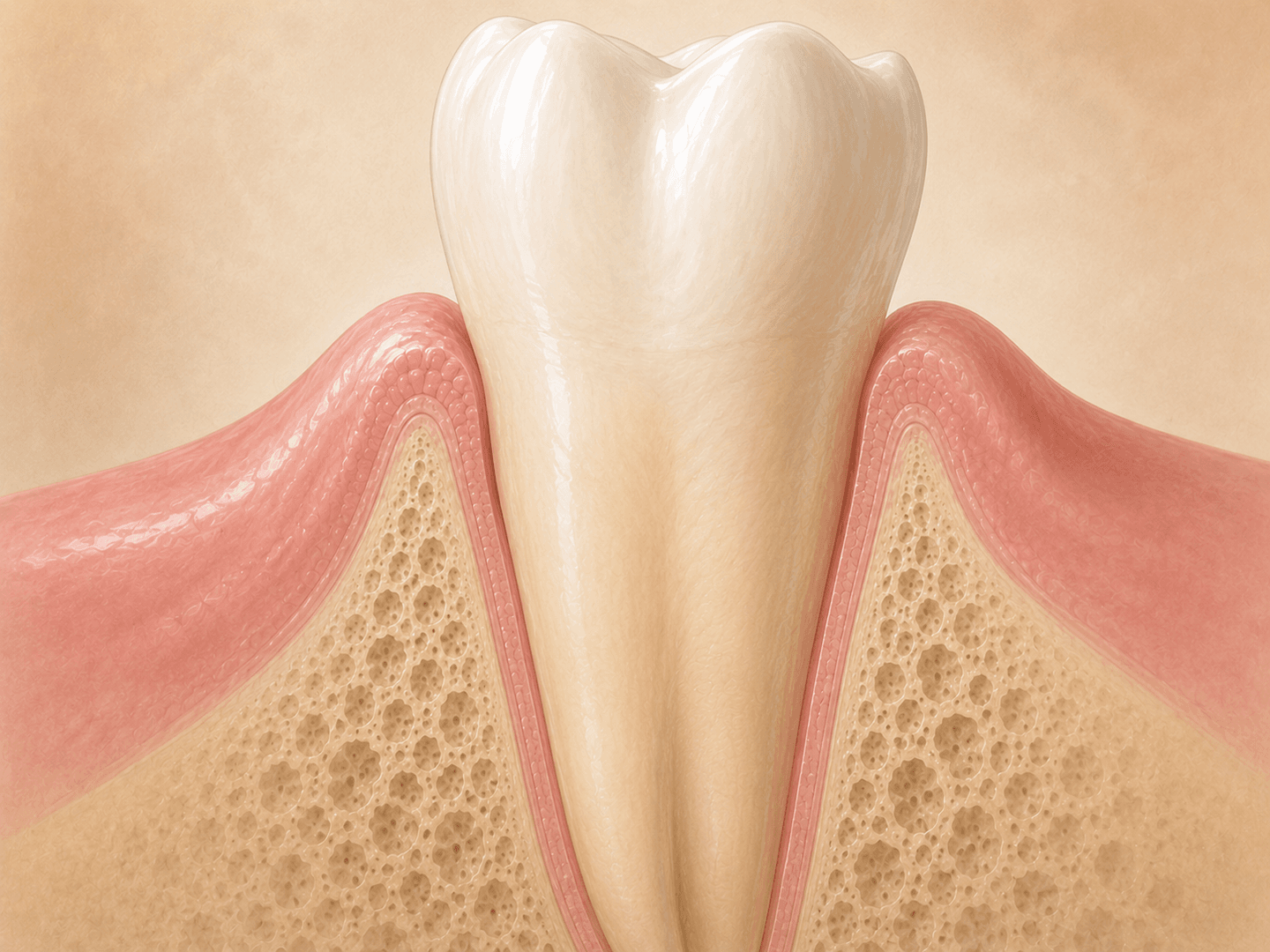
What D4910 covers
D4910 reports a periodontal maintenance visit on a patient who has completed active periodontal therapy. The visit includes removal of supragingival and sub-gingival plaque and calculus, site-specific scaling on residual pockets if present, and an evaluation of the patient’s perio status.
D4910 assumes a perio patient on a maintenance interval, typically three months apart, indefinitely.
It does not cover:
- A patient who has never had SRP or perio surgery. Use D1110.
- Active periodontal therapy. Use D4341 or D4342.
- Gingivitis treatment in the absence of bone loss. Use D4346.
- Localized antimicrobial delivery into a specific pocket. Use D4381.
Once a patient enters perio maintenance, they generally remain in it permanently. Reverting to D1110 long-term is not standard and creates documentation issues.
When to bill D4910
Bill D4910 when:
- The patient has documented history of SRP (D4341 or D4342) or periodontal surgery.
- The patient is on a maintenance recall (commonly three months).
- The chart reflects ongoing periodontitis or stable perio status.
Do not bill D4910 for:
- A patient with no prior perio therapy. The carrier will deny.
- A patient who has only had a prior prophy. The clinical history doesn’t support maintenance.
- Active SRP on a recurring pocket. Use D4341 or D4342, not maintenance.
- A purely gingivitis case. Use D1110 or D4346 depending on severity.
Top reasons D4910 gets denied
- No perio therapy on file with the carrier. The most common cause. The carrier’s records don’t show prior D4341, D4342, or perio surgery for this patient. Without that history, the carrier denies and offers a D1110 alternate.
- Frequency exceeded. The patient hit the D4910 cap (often four per benefit year). Some plans auto-convert the extra visit to a prophy at the D1110 allowable.
- Documentation didn’t support maintenance. The chart shows healthy probing depths and no perio diagnosis. The carrier reclassifies the visit.
- Patient is new to the practice. Even if the patient had SRP at a prior office, the new practice’s first claim under that carrier may be denied until the patient’s history is established with the carrier.
- Split maintenance benefit. Some plans pay two D4910 per year and process the remaining visits at the D1110 allowable, so the third and fourth D4910 come back downgraded. That is an alternate benefit, not a coding error. Keep coding D4910 for maintenance visits.
Patient qualification
The carrier qualifies the patient for D4910 by claim history, not by the chart at the new practice. A new patient who transfers in with a perio diagnosis and recall schedule may still see denials until:
- Prior perio therapy is on file (claim or appeal documentation).
- A current perio evaluation is documented and submitted with the first D4910 claim.
For transfer patients, attaching the prior perio chart and a current perio evaluation to the first D4910 claim helps the carrier connect the history.
Mixing prophy and maintenance in a single year
A plan’s benefit design does not change how you code. Each visit’s code is determined by the procedure actually performed and documented that day, not by which benefit pool the plan would rather fund. For a documented periodontitis-maintenance patient who receives subgingival or site-specific instrumentation, the visit is D4910 every time. D1110 applies only when the visit was genuinely a routine prophylaxis with no therapeutic perio component. Per the ADA, “we must code for what we do,” and coding “should not depend on what a benefit package will cover.”
What varies by plan is reimbursement, not the code. When a carrier denies D4910 and pays the D1110 (prophy) allowable, that is the payer’s alternate-benefit decision, an outcome you absorb or appeal. It is not a reason to pre-select a code to match the benefit design. Intentionally choosing a code to maximize reimbursement can constitute fraud.
How this plays out at the carrier:
- Every visit coded D4910, within the plan’s maintenance frequency. Each one pays as perio maintenance. The patient pays nothing if the benefit is at 100%.
- Four D4910 on a plan that caps maintenance at two. The first two pay as maintenance; the carrier may apply an alternate benefit and pay the remaining two at the prophy allowable, leaving the patient the differential.
- D4910 denied with a prophy alternate because no prior perio therapy is on file. The fix is documentation, not recoding.
Verify the plan’s recall benefit structure before the first visit of the year, but use it for cost estimates and patient financial counseling, not to pre-assign codes. Report what you do each visit; let the carrier apply its alternate benefit. To prompt that, attach a narrative such as “If D4910 is not a covered benefit, please apply the alternate benefit of D1110.” Dropping a maintenance patient to D1110 generally precludes returning to D4910 without a new active-periodontitis diagnosis.
Documentation that supports the claim
The claim needs:
- Patient history showing prior D4341, D4342, or perio surgery.
- Current perio status documented at the visit.
- Probing depths charted, even if stable.
- Any site-specific scaling performed.
For the patient record, document:
- Probing depths at six sites per tooth.
- Bleeding on probing, if present.
- Pockets that received site-specific instrumentation.
- Stability or progression compared to the prior visit.
A maintenance visit charted as “prophy completed, patient stable” is too thin for a perio code. The chart should reflect that the visit was a perio recall, not a routine cleaning.
D4910 versus D1110
The two codes are clinically and procedurally similar but apply to different patient populations:
- D1110 is for periodontally healthy patients on a routine recall, typically every six months.
- D4910 is for patients with a history of active periodontal therapy on a maintenance interval, typically every three months.
A patient on D4910 has a clinical case that justifies more frequent recalls and site-specific instrumentation as needed. A patient on D1110 has periodontal health and standard prophy needs.
Switching a perio patient back to D1110 long-term is not standard. The carrier eventually notices the pattern and may audit.
Example case
A 54-year-old patient completed SRP in all four quadrants 18 months ago. The patient is on a three-month maintenance recall and has had three D4910 visits since active therapy completed. The current visit is the fourth in the benefit year. Probing depths are stable (3-4mm with one residual 5mm at #30). No bleeding except at #30.
Billing steps:
- Confirm the plan’s D4910 frequency cap. If the cap is four per year, this visit qualifies.
- Code D4910 with the current perio chart and prior SRP history on file.
- Site-specific scaling at #30 is part of the maintenance visit, not a separate code.
- If the plan caps at two D4910 with a prophy alternate for the remaining two, the third or fourth visit may pay at the D1110 allowable. This visit was still a perio-maintenance visit with site-specific instrumentation at #30, so it is coded D4910; let the carrier apply the alternate benefit and bill the patient the differential if the plan downgrades. Do not re-report it as D1110 to fit the cap.
What to get right in your PMS
- Verify the patient’s perio history is on file with the carrier before billing D4910. A new patient with perio diagnosis from a prior practice needs the history established before the first maintenance claim pays.
- Document probing depths at every maintenance visit. A maintenance visit without a current chart looks like a prophy to an auditor.
- Verify the plan’s recall benefit structure before scheduling the year’s visits. Some plans pay two D4910 and process the other two visits at the prophy allowable, and four D4910 hits a cap on many plans. Use that for the patient’s estimate, not to pick the code.
- Don’t revert to D1110 long-term once the patient is on maintenance. It looks like under-treatment of a perio case in an audit.
- Code site-specific scaling at one or two pockets as part of the D4910 visit, not as a separate procedure code. Adding D4381 (localized antimicrobial) is a different procedure that requires its own documentation.
FAQs
- Can I bill D4910 for a patient who hasn't had SRP at our practice?
- Only if the patient has documented history of SRP or periodontal surgery from a prior provider, and the chart reflects that. The carrier checks its own claim history before paying D4910. A new patient with no perio claims on file will see the maintenance code denied even if the case is clinically appropriate.
- How often does a plan pay for D4910?
- Most plans pay D4910 on a three-month interval, allowing four maintenance visits per benefit year. Some plans cap maintenance at two visits per year, with the other two visits paid as prophy at the D1110 allowable. Verify the specific plan's perio recall benefit before scheduling four visits.
- Can I alternate D4910 and D1110 across the year?
- No. The code reported each visit must match the service actually delivered. If the patient is a true periodontitis-maintenance case and the visit includes subgingival or site-specific instrumentation, report D4910 every time, even past the plan's cap, and let the carrier apply its alternate benefit at the D1110 allowable if it chooses. The ADA's position is that D4910 and D1110 are not interchangeable and should not be alternated, and recoding a true perio-maintenance visit as a prophy to fit a frequency cap can be considered fraud. The code only changes for a clinical reason: if the patient's perio status genuinely improves so that a routine prophylaxis with no subgingival or site-specific instrumentation is performed, D1110 is correct for that visit because it reflects what was done.
- Why did the carrier downgrade D4910 to a prophy allowable?
- Three common reasons. The patient hit the carrier's D4910 frequency cap and the plan auto-converted the extra visits to prophy. The patient has no perio therapy on file with the carrier and the code was denied entirely with a prophy alternate. Or the chart didn't reflect ongoing perio status and the carrier reclassified the visit.
Related codes
Need help billing this code?
We handle D4910 claims daily.
If your team is spending time on denials, narratives, or carrier follow-up for this code, our outsourced dental insurance billing service can take it off your plate. We submit the claims, post what comes back, and follow up on anything unpaid. Already sitting on older claims that never paid? Our AR cleanup project works the backlog.
“Claims, posting, denials, all of it gets handled, and it costs far less than hiring another employee. My front desk got hours of their week back, and honestly I just don't think about billing anymore.”
CDT codes are maintained by the American Dental Association. This page is an editorial billing guide, not the official ADA code descriptor. Verify current coverage policies with each carrier before submitting claims.