D6062 is the CDT code for a single all-metal implant crown, cast in high noble alloy, that seats on a separate abutment.
- When to use: A full cast high noble crown with no porcelain is seated on a D6056 or D6057 abutment over a single implant.
- When not to use: A cast crown attached directly to the implant is D6067, base metal is D6063, noble is D6064, and titanium on an abutment is D6094.
- Billing note: The abutment is billed on its own line, so a D6062 with no D6056 or D6057 on file can prompt a records request.
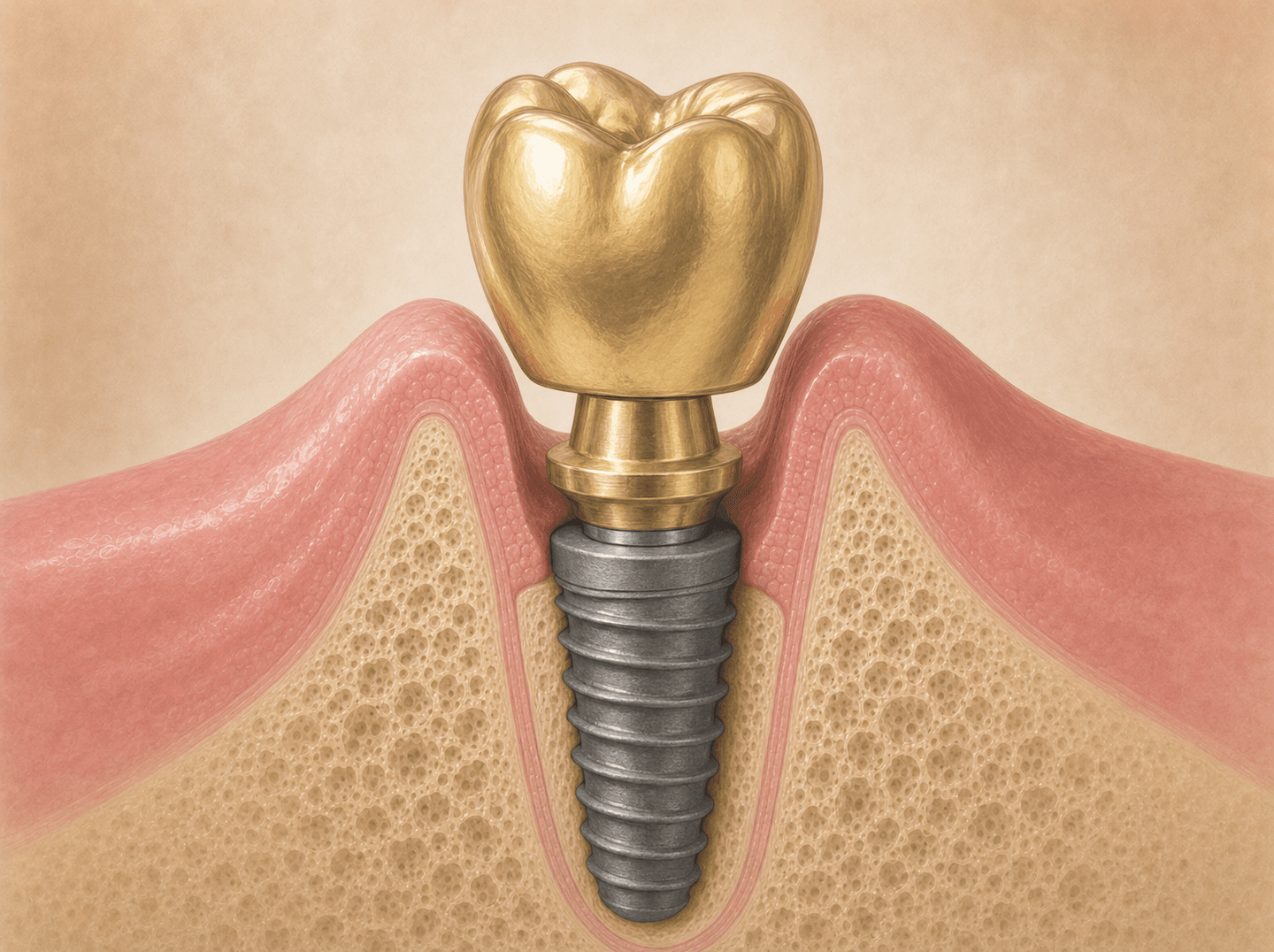
What D6062 covers
D6062 reports one single-tooth implant crown cast entirely in metal, with no porcelain layer, where the alloy is high noble: at least 60% noble metal by weight with at least 40% gold. The crown sits on an abutment that is a separate component from the crown, attached to the implant beforehand and billed on its own line.
These crowns are uncommon in a modern implant practice. When they appear, it is usually on a posterior implant in a heavy grinder, or where there is little vertical room between the abutment and the opposing tooth, so a thin all-metal crown fits where porcelain would not.
The two questions that pick the code
Implant crowns are coded on two independent axes. Answer both before choosing.
1. What supports the crown? If a separate abutment was placed and billed, the crown is abutment-supported. If the crown and its connection to the implant are one piece, with nothing separately billable underneath, it is implant-supported.
2. What is the crown made of? All ceramic, porcelain over metal, cast metal by alloy class, or titanium.
| Crown material | Abutment-supported | Implant-supported |
|---|---|---|
| Porcelain or ceramic | D6058 | D6065 |
| Porcelain over high noble | D6059 | D6066 |
| Cast high noble | D6062 | D6067 |
| Cast predominantly base metal | D6063 | D6086 |
| Cast noble metal | D6064 | D6087 |
| Titanium | D6094 | D6088 |
Porcelain over base and noble alloys has its own abutment-supported codes (D6060, D6061) and implant-supported codes as well.
Denial scenario: the one-piece gold crown billed as D6062
An office restores implant #19 for a patient who clenches. The lab returns a screw-retained, one-piece cast high noble crown with the implant interface cast into it. No separate abutment was used. The office bills D6062 on #19, and because its implant fee template always pairs the crown with an abutment, it also bills D6056 on #19.
The carrier pends the claim and asks for the lab invoice. The invoice shows one component, so the reviewer recodes the crown to D6067 and denies the D6056 line, since nothing was placed under the crown. The practice now has an adjusted claim, a denied line, and a patient estimate that no longer matches.
The fix is upstream. Before submitting any implant crown, check the lab invoice for one or two components. Two components mean an abutment line plus an abutment-supported crown code. One component means an implant-supported crown code and no abutment line.
What carriers commonly ask for
- The abutment on record. D6062 assumes a separate abutment exists. If it was placed on an earlier date or by another office, a narrative saying so prevents a mismatch flag.
- Implant placement history. The implant date, the tooth it replaces, and when that tooth was lost. Many plans apply a missing-tooth clause to implant restorations, and some exclude implant prosthetics altogether.
- Clinical readiness. UnitedHealthcare’s implant prostheses policy (DCP046.06, effective April 1, 2026) lists osseointegration, an implant body to crown ratio that does not exceed 2:1, no infection, and no mobility as guidelines for an implant-supported prosthesis. A post-operative radiograph and a sentence on stability cover those.
- The alloy. The lab certificate showing high noble content. A gold-colored crown is not automatically high noble.
Coverage of the crown itself is plan-dependent. Some plans pay implant crowns at their own allowable, while others apply an alternate benefit based on a conventional crown on a natural tooth, such as the full cast high noble crown D2790. The pre-treatment estimate is where you find out which.
FAQs
- What's the difference between D6062 and D6067?
- The support. D6062 is abutment-supported: the cast crown seats on a separate abutment that is billed on its own line as D6056 or D6057. D6067 is implant-supported: a one-piece cast high noble crown that attaches directly to the implant with no separately billable abutment. Whether the crown is cemented or screwed does not decide between them.
- Is a full gold crown on a titanium abutment D6062?
- Yes, if the crown alloy is high noble. The crown code follows the crown's alloy, not the abutment's. The titanium abutment is reported separately as D6056 or D6057. D6094 applies only when the crown itself is made of titanium.
- What code covers a cast high noble crown that anchors an implant bridge?
- D6072, the abutment-supported retainer for a cast high noble metal fixed partial denture. D6062 is a single crown. Once the crown is joined to a pontic, it is a retainer and takes the retainer code instead.
- What code is used to re-cement a D6062 crown?
- D6092, re-cement or re-bond of an implant or abutment supported crown. It applies when the same cemented crown is put back on. A screw-retained crown that is simply removed and re-seated is not re-cemented, so D6092 does not fit that visit.
Related codes
Need help billing this code?
We handle D6062 claims daily.
If your team is spending time on denials, narratives, or carrier follow-up for this code, our outsourced dental insurance billing service can take it off your plate. We submit the claims, post what comes back, and follow up on anything unpaid. Already sitting on older claims that never paid? Our AR cleanup project works the backlog.
“Claims, posting, denials, all of it gets handled, and it costs far less than hiring another employee. My front desk got hours of their week back, and honestly I just don't think about billing anymore.”
CDT codes are maintained by the American Dental Association. This page is an editorial billing guide, not the official ADA code descriptor. Verify current coverage policies with each carrier before submitting claims.