D6210 is the CDT code for an all-metal bridge pontic cast from a high noble alloy, with no porcelain or resin facing.
- When to use: The lab cast the replacement tooth entirely in high noble alloy, typically a gold bridge in a back-of-the-mouth span where no tooth-colored facing is wanted.
- When not to use: A cast noble pontic is D6212, cast base metal is D6211, titanium is D6214, and porcelain over high noble metal is D6240.
- Billing note: Many plans review pontics with a radiograph, so attach a pre-op image showing the gap and both abutments to the first submission.
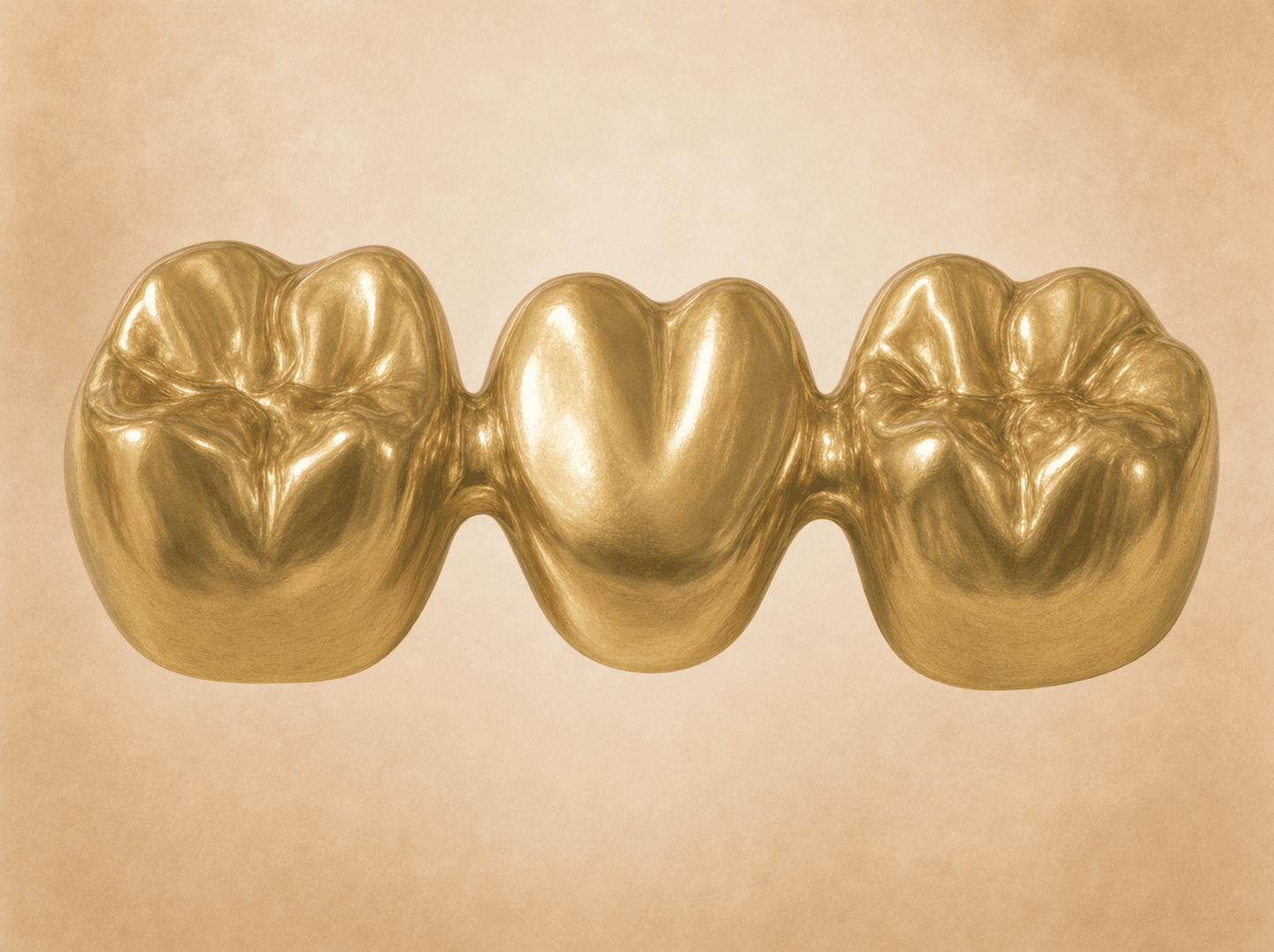
What D6210 reports
D6210 reports one pontic, the artificial tooth suspended in a fixed bridge, when the lab casts it entirely from a high noble alloy. There is no porcelain or resin on it. In practice that means a gold pontic, most often in a molar or premolar span where strength and wear on the opposing teeth matter more than appearance.
Bill one D6210 per cast high noble pontic, on the cementation date, alongside a retainer code for each abutment. The retainers are never part of D6210.
Cast pontic codes by alloy
The metal class comes from the alloy’s composition, not its color. The thresholds are the ADA’s alloy classification, which counts gold plus the platinum group metals (platinum, palladium, rhodium, iridium, osmium, ruthenium) as noble content.
| Code | Pontic material | Composition rule |
|---|---|---|
| D6210 | Cast high noble metal | At least 60% noble content and 40% gold |
| D6212 | Cast noble metal | At least 25% noble content |
| D6211 | Cast predominantly base | Under 25% noble content |
| D6214 | Titanium | Titanium and titanium alloys, its own class |
The class changes the allowable. South Dakota Medicaid’s adult fee schedule effective July 1, 2026, for example, lists D6210 at $773.50, D6212 at $716.80, and D6211 at $625.80. Commercial fee schedules differ, but the ordering is typical.
Pairing the pontic with its retainers
The abutment crowns carry their own codes from the D6700 series. The all-metal match for a D6210 pontic is D6790, a full cast high noble retainer crown, or D6780 when the retainer is a three-quarter cast high noble crown that leaves part of the tooth uncovered.
Matching is a design choice, not a coding rule. A bridge can join a cast pontic to porcelain-fused-to-high-noble retainers (D6750), and each unit is still coded by what it is. The bridge dental codes guide lists every pontic and retainer pairing by material.
When the alloy certificate disagrees with the claim
Most labs ship an alloy certificate or list the alloy on the invoice. That document, not the treatment plan, decides the code.
A typical miss: the treatment plan said “gold bridge,” the front desk entered D6210, and the lab used a palladium-silver alloy with almost no gold. That alloy is noble, not high noble, because it fails the 40% gold requirement. The pontic is D6212 and the retainers are full cast noble crowns (D6792). If the claim already paid as D6210, send a corrected claim rather than waiting for an audit to recoup it.
Documentation the carrier will ask for
Delta Dental of Minnesota’s 2026 prepayment review list, for example, flags every pontic code, D6210 included, as requiring a radiograph. Other plans ask only on review. A pre-op periapical or panoramic image showing the edentulous space and both abutments covers either case.
The chart should also record:
- Tooth numbers for the pontic and each abutment.
- The alloy name and composition from the lab.
- When and why the replaced tooth was lost. Plans with a missing-tooth clause exclude teeth lost before coverage began; the missing tooth clause guide covers how that wording varies.
- For a replacement bridge, the age of the prior prosthesis and why it failed.
Example case
A 58-year-old patient with heavy bruxism lost #30 to a vertical root fracture eight months after joining the plan. #29 and #31 have large failing restorations. The dentist recommends a full gold bridge for its wear behavior against the opposing natural teeth.
The lab casts all three units in a high noble alloy (68% gold, 85% total noble content) and lists it on the certificate. On the cementation date the claim carries:
- D6790 on #29.
- D6210 on #30.
- D6790 on #31.
The pre-op radiograph and the extraction date go with the claim. Because #30 was extracted during coverage, a missing-tooth clause does not reach this pontic.
FAQs
- What's the difference between D6210 and D6240?
- The facing. Both pontics use high noble alloy, but D6210 is metal all the way through, while D6240 has porcelain fused over a high noble frame so the replacement tooth looks natural. If any porcelain is layered on the pontic, it is not D6210.
- Can a D6210 pontic sit between PFM retainer crowns?
- Yes. Each unit of a bridge is coded by its own material, so a cast high noble pontic joined to porcelain-fused-to-high-noble retainers bills as D6750, D6210, D6750. The lab work order should describe each unit so the claim lines match it.
- Is a titanium pontic billed as D6210?
- No. Titanium has its own pontic code, D6214. The ADA's alloy classification treats titanium and titanium alloys (at least 85% titanium) as a separate category, not a grade of noble metal, so it never maps to a noble or high noble code.
- Why did the plan pay D6210 at a lower allowable than billed?
- Usually an alternate benefit. Some plans pay a high noble unit at the allowable for a less costly metal, and the EOB shows the D6210 line reduced rather than denied. Whether the difference can be billed to the patient depends on the plan and the provider agreement, so check both before quoting the bridge.
Related codes
Need help billing this code?
We handle D6210 claims daily.
If your team is spending time on denials, narratives, or carrier follow-up for this code, our outsourced dental insurance billing service can take it off your plate. We submit the claims, post what comes back, and follow up on anything unpaid. Already sitting on older claims that never paid? Our AR cleanup project works the backlog.
“Claims, posting, denials, all of it gets handled, and it costs far less than hiring another employee. My front desk got hours of their week back, and honestly I just don't think about billing anymore.”
CDT codes are maintained by the American Dental Association. This page is an editorial billing guide, not the official ADA code descriptor. Verify current coverage policies with each carrier before submitting claims.