D0145 is the CDT code for an exam of a child under three, combined with preventive counseling for the parent or caregiver.
- When to use: The child is under three on the date of service, and the caregiver is counseled on home care, diet, and fluoride.
- When not to use: A child who has turned three gets D0150 as a new patient or D0120 at recall, and a visit for pain or trauma is D0140.
- Billing note: Many plans deny D0145 on age once the child turns three, so check the date of birth against the date of service.
What D0145 covers
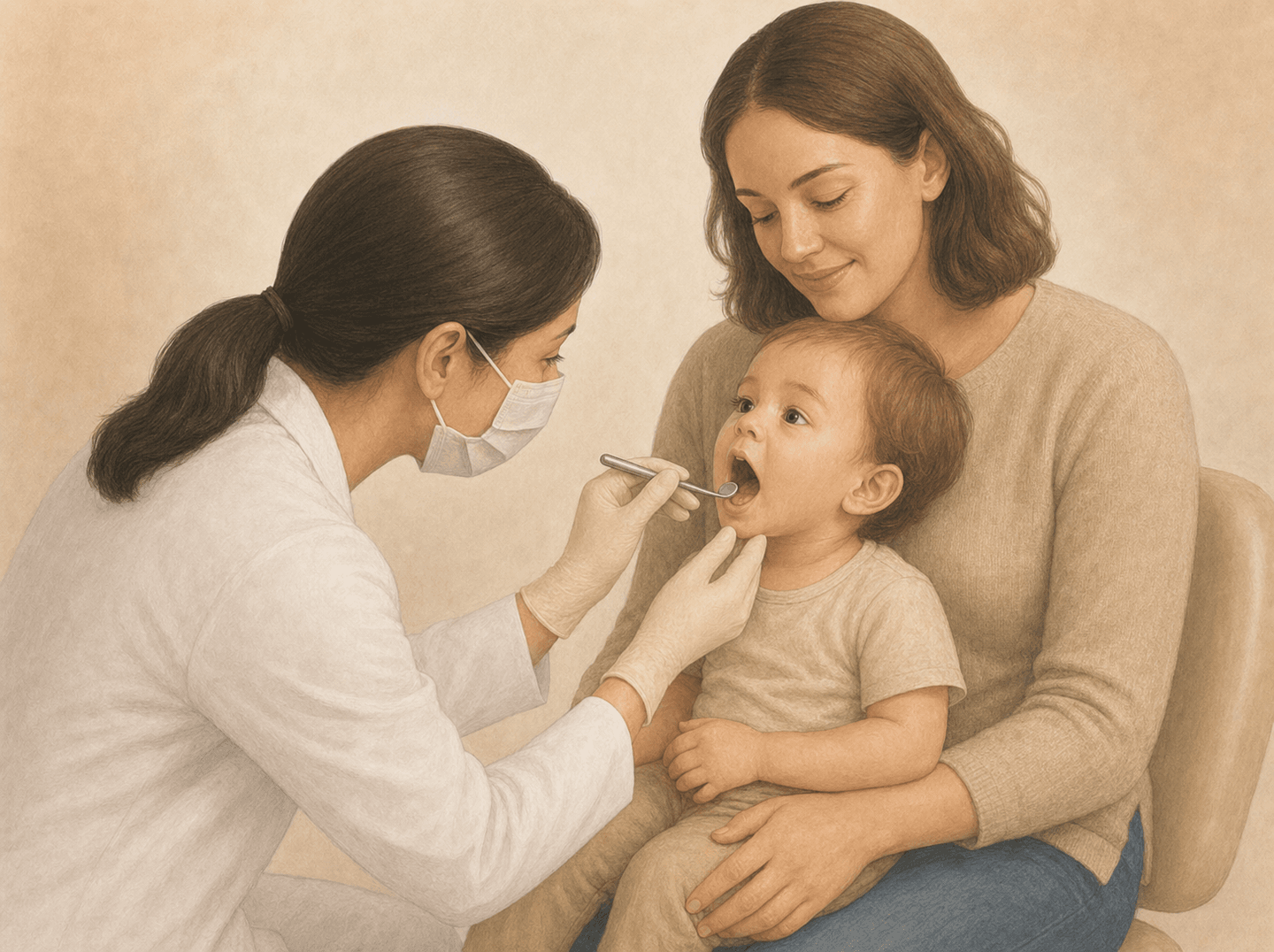
D0145 reports the exam of a child who has not yet turned three, combined with preventive counseling for the child’s parent or caregiver. Both parts are part of what the code reports. The dentist reviews the child’s oral and physical health history, examines the teeth and soft tissue, and assesses caries risk. The dentist or hygienist then counsels the caregiver on home care: typically brushing technique, fluoride, feeding and diet habits, and how to reduce the child’s risk of early childhood caries.
The cleaning, fluoride, and any treatment at the same visit are reported with their own codes.
The distinguishing axis: age plus caregiver counseling
D0145 requires two conditions together: the patient is under three years of age, and the visit pairs the child’s evaluation with counseling for the primary caregiver. The age sets who the code is for. The counseling sets what it reports. A toddler exam with no documented caregiver counseling is not a complete D0145, and an adult evaluation is never D0145, however much patient education it includes.
The other evaluation codes are not age-specific and have no caregiver-counseling component:
- D0120 is a periodic recall evaluation on an established patient.
- D0150 is a comprehensive evaluation on a new patient or a returning patient after a long gap.
- D0140 is a limited evaluation for a specific problem. A child seen for pain, swelling, or trauma is D0140.
The age boundary: code by age on the date of service
D0145 applies only while the patient is under three. Once the child turns three, use D0150 for a comprehensive evaluation on a new patient or D0120 for an established-patient recall, depending on the patient’s history with the practice.
Many plans key the benefit to the patient’s age on the date of service. A child whose third birthday falls between booking and the visit can trigger an age denial on D0145, even though the visit looks identical to a toddler exam. This is the most common avoidable D0145 denial. Check the date of birth against the appointment date, not the booking date, before submitting.
Coverage reality: often paid from the preventive benefit
How D0145 pays depends on the plan, so present each of these to the caregiver as plan-dependent:
- Benefit category. D0145 is a diagnostic code, but many plans reimburse it from the preventive benefit, which can change the coinsurance the patient owes. That is the plan’s benefit design, not a property of the code. Set the estimate to the category the plan actually uses.
- Frequency. Plans that cover D0145 commonly limit it to once or twice per benefit period, and some count it against a shared evaluation allowance with the other oral evaluation codes. A child who has used that allowance can be denied for frequency even when the code is correct.
- Recognition. Some plans don’t recognize D0145 and want a different evaluation code for a young child, and some contracts don’t cover toddler evaluations at all. That is a coverage gap, not a coding error.
Verify all three on the benefit check: whether D0145 is covered, which benefit category pays it, and the frequency limit. The general benefit summary rarely spells these out for a code this specific. Confirm coverage before telling the caregiver it’s a covered service.
Same-day combinations
A toddler’s preventive visit often includes services that report on their own codes:
- D1120 is the child prophylaxis (cleaning on primary or transitional dentition), when a cleaning is performed.
- D1206 is topical fluoride varnish, commonly applied at a young child’s preventive visit.
Each reports on its own line and pays per the plan’s benefit for that code. Whether the plan pays the evaluation and the preventive services separately or bundles them under one preventive benefit is plan design, so confirm it during verification. Submit them on one claim with D0145, since separate claims for the same date of service create reconciliation work.
Documentation that supports the claim
Reviewers look for two things on D0145: the patient’s age and the caregiver counseling. The record should include:
- The patient’s date of birth, confirming the child was under three on the date of service.
- The oral evaluation findings, including the soft-tissue and dental exam and a caries-risk assessment.
- The caregiver-counseling topics, named specifically. Brushing technique, fluoride use, feeding and diet habits, and caries-risk reduction are the common ones. A note that says “exam, child doing well” with no mention of counseling doesn’t fully support the code.
- Who received the counseling: the parent, legal guardian, or primary caregiver present at the visit.
Document the counseling at the time of the visit, since counseling notes added later look reconstructed in an audit. If the note reads like a plain exam with no education component, an audit can reclassify the visit.
FAQs
- What is the dental code for a toddler's first dental visit?
- For a child under three, the evaluation code is D0145. It reports the child's exam together with preventive counseling for the parent or caregiver on home care, diet, and caries risk. The adult codes do not apply: a new adult patient gets D0150 and an established adult at recall gets D0120.
- What's the difference between D0145 and D0120?
- The patient's age and the counseling component. D0145 is the evaluation for a child who has not yet turned three, and caregiver counseling is part of what it reports. D0120 is the periodic recall evaluation for an established patient and has no counseling element. The split is age and caregiver education, not how detailed the exam was.
- What's the difference between D0145 and D0150?
- For a patient under three, the code is D0145. D0150 is the comprehensive evaluation for a new patient of any age, or an established patient after a long gap or a significant change in health. Both can describe a child's first visit, but the patient's age and the caregiver counseling decide it, not whether the exam would otherwise count as comprehensive.
- Does the child have to be under three for D0145?
- Yes. Once the patient turns three, use the standard evaluation codes instead: D0150 for a comprehensive evaluation on a new patient, or D0120 for an established-patient recall. Some plans key the benefit to the patient's age on the date of service, so code by the age on that date.
- Is the caregiver counseling required to bill D0145?
- Yes. Counseling with the parent or primary caregiver is part of what D0145 reports, not an add-on. It typically covers brushing, fluoride, feeding and diet habits, and caries risk. If the chart shows only an exam with no documented counseling, it does not support D0145, so record the counseling topics in the note.
- Is D0145 a current CDT code for 2026?
- Yes. D0145 is active and unchanged in CDT 2026. It sits in the Diagnostic category with the other clinical oral evaluation codes (D0120, D0140, D0150, D0160, D0180). Many plans pay D0145 from the preventive benefit rather than the diagnostic one, but that is plan benefit design, not a change to the code.
Related codes
Need help billing this code?
We handle D0145 claims daily.
If your team is spending time on denials, narratives, or carrier follow-up for this code, our dental insurance verification service can take it off your plate. We submit the claims, post what comes back, and follow up on anything unpaid.
“Claims, posting, denials, all of it gets handled, and it costs far less than hiring another employee. My front desk got hours of their week back, and honestly I just don't think about billing anymore.”
CDT codes are maintained by the American Dental Association. This page is an editorial billing guide, not the official ADA code descriptor. Verify current coverage policies with each carrier before submitting claims.