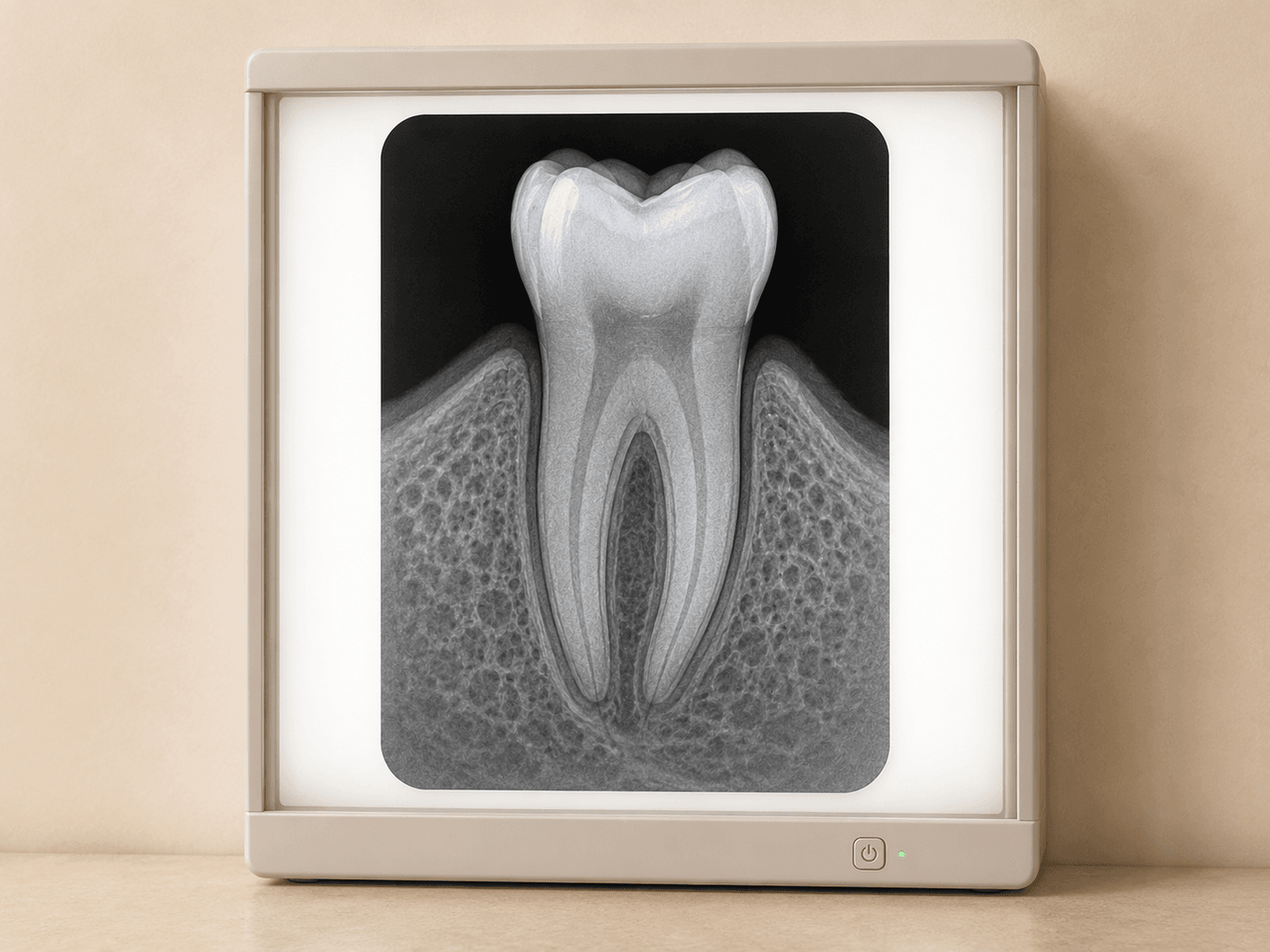
D0220 is the CDT code for the first intraoral periapical radiograph taken at an appointment — a film showing one tooth, its full root, and the surrounding bone. Each additional periapical that visit is D0230.
It's a billing-only distinction (the X-ray itself is the same as any other PA), used so carriers can pay the first film at a different rate than subsequent films of the same series. Nearly every billing problem on D0220 traces back to one thing: pairing it incorrectly with D0210 (FMX) or D0274 (bitewings), which can trigger bundling denials.
What D0220 covers
D0220 reports the first intraoral periapical radiograph taken at an appointment. A periapical (PA) film shows one tooth (sometimes two) including the entire root and the surrounding bone to the apex. The code applies to the first PA at a given visit. Additional PAs at the same visit report as D0230 with the quantity reflecting how many additional films.
It does not cover:
- Additional PAs at the same visit. Use D0230 for each additional.
- Bitewing radiographs. Use D0270 (one), D0272 (two), D0273 (three), or D0274 (four).
- A complete intraoral radiographic series (FMX). Use D0210.
- Panoramic radiographs. Use D0330.
- Occlusal radiographs. Use D0240.
- Cephalometric or other extraoral imaging.
The first-versus-additional distinction is purely a billing structure. The physical X-ray taken first and the X-ray taken fifth at the same visit are the same procedure clinically.
When to bill D0220
Bill D0220 when:
- The dentist takes a single periapical radiograph at a visit.
- Or, the dentist takes multiple PAs at a visit and the first one bills as D0220 while subsequent films bill as D0230.
Do not bill D0220 for:
- The second, third, or any subsequent PA at the same visit. Those are D0230.
- A full mouth series. Use D0210.
- Bitewings.
- Radiographs reviewed but not taken at this visit.
The D0220 plus D0230 series logic
For visits where the dentist takes more than one PA, the billing structure is:
- The first PA = D0220 (quantity 1).
- Each additional PA at the same visit = D0230. If three more PAs were taken, D0230 quantity 3.
Example: a new adult patient gets four bitewings and three PAs at the first visit. The billing is:
- D0274 quantity 1 (four bitewings)
- D0220 quantity 1 (first PA)
- D0230 quantity 2 (two additional PAs)
The first-and-additional structure is a holdover from when radiograph codes priced the first film at a higher allowable than subsequent films at the same visit. Modern allowables on D0220 and D0230 are often the same, but the coding structure persists.
When PAs bundle with FMX
The most common billing mistake on D0220 is billing it alongside D0210 (full mouth series) on the same date. Carriers typically bundle individual PAs into the FMX when both appear on the same claim.
The rule: if a full mouth series was taken, bill D0210 and only D0210. The individual film codes are absorbed into the FMX charge.
If selected PAs were taken without a full series, bill D0220 plus D0230 with the appropriate quantity. The carrier will pay each individual film up to the plan’s annual radiograph limit.
A common scenario: a dentist takes a full mouth series at a new patient’s first visit but the clearinghouse software (or a billing assistant) defaults to listing each individual PA as a separate line. The claim then has D0210 plus D0220 plus D0230 quantity 12 (or similar). The carrier reads this as duplicate billing and either denies the individual films or pays only D0210 and writes off the rest.
The cleaner workflow: when a full mouth series is taken, the PMS should bill D0210 only. The individual PAs are part of the series, not separate procedures.
How D0220 works with bitewings
PAs and bitewings serve different diagnostic purposes (interproximal caries vs apical pathology) and bill separately. A new patient might get four bitewings (D0274) plus two PAs on specific teeth (D0220 + D0230 quantity 1). Each code reports on its own line. The total film count should match the clinical need documented in the chart. Excessive radiographs without justification get flagged by carriers, especially on patients with recent X-ray history at another office.
There’s a catch on the cumulative fee. Most carriers apply a “remap to complete series” rule: when the total fee of the individually billed intraoral films (PAs plus bitewings) on a single date of service meets or exceeds the plan’s D0210 (FMX) allowable, the payer generally remaps the films to a complete series, reimburses at the FMX rate, and consumes the patient’s once-per-3-to-5-year FMX frequency. That can also block a later FMX or panoramic within the frequency window. A new patient who gets four bitewings plus several selected PAs is a common trigger. This is a per-payer policy, not universal, but it’s common enough that you should bill the individual films when clinically indicated and documented, check the cumulative fee against the FMX allowable first, and set the patient’s expectations accordingly.
Top reasons D0220 gets denied
Four issues account for most denials on this code:
- Bundled with FMX on the same date. As described above. Bill D0210 only when a full series is taken.
- Frequency limit on radiographs. The patient hit the plan’s annual radiograph dollar limit or film count limit. Additional films deny for frequency.
- No diagnostic justification. Some plans require chart documentation of why the PA was taken (specific symptom, suspected pathology, treatment planning need). A PA on a healthy patient with no chief complaint may pend for clarification.
- D0220 billed quantity > 1. D0220 is per visit, not per film. The first PA at a visit is one D0220 regardless of how many PAs are subsequently taken. Quantity should be 1. Additional films are D0230. A claim with D0220 quantity 5 will get rejected or downgraded.
Documentation that supports the claim
The claim needs:
- Date of service.
- Tooth or teeth imaged (for some carriers).
- Diagnostic reason if a narrative is requested.
For the patient record, document:
- Clinical reason for the PA (specific symptom, suspected pathology, periodontal assessment, treatment planning).
- The tooth or teeth imaged.
- Findings on the radiograph.
A diagnostic PA without a documented reason looks like a routine screening film, which it isn’t. The chart note should specify why this particular film was needed.
Frequency limits
Most plans cap the total radiograph benefit either by dollar amount per year (often $50–$150) or by film count, with type-specific rules layered on top (one FMX per 3–5 years, four bitewings per year, individual PAs up to a cap). When a patient hits the cap mid-year, additional films become patient responsibility. That’s a benefit limitation, not a coding error. Patients sometimes ask why a single PA isn’t covered when the plan has “X-ray coverage.” The answer is that the X-ray category has its own internal limits and they’ve been reached.
Example case
A 35-year-old patient presents with sharp pain on chewing on tooth #19. The dentist suspects a cracked tooth and takes a single PA to evaluate the root and surrounding bone.
Billing steps:
- Verify the patient has X-ray benefits remaining in the current benefit year.
- Submit D0140 (limited oral evaluation for the problem-focused exam) and D0220 quantity 1 on the same date of service.
- The carrier pays each per the plan’s benefits. D0140 typically pays under diagnostic. D0220 typically pays under radiograph benefit.
- If the carrier denies D0220 for frequency, check the patient’s recent X-ray history. The patient may have had radiographs at a previous office within the benefit year that consumed the cap.
A common follow-up: the PA reveals findings that warrant additional films. The dentist takes a second PA on an adjacent tooth at the same visit. Billing becomes D0140 plus D0220 quantity 1 plus D0230 quantity 1.
What to get right in your PMS
The specifics vary across Open Dental, Dentrix, Eaglesoft, Curve, and Carestream. The steps that matter:
- Code by film and visit structure. First PA at the visit = D0220. Each additional = D0230 with appropriate quantity.
- Don’t itemize films when an FMX was taken. When the patient has a full mouth series, bill D0210 only.
- Set the quantity correctly. D0220 is always quantity 1 (it’s the first film, by definition). D0230 carries the quantity of additional films.
- Document the diagnostic reason in the chart. This matters for audit and for any clarification requests from the carrier.
- Verify radiograph benefits during eligibility. New patients sometimes have hit their annual radiograph cap at a previous office.
If your office sees recurring D0220 bundling denials, the cause is almost always a PMS workflow that itemizes individual films when a full mouth series was taken. Fix this at the procedure-code template level rather than addressing each claim manually.
FAQs
- What's the difference between D0220 and D0230?
- D0220 is the first periapical at an appointment. D0230 is each additional periapical at the same appointment. The first PA bills as D0220. Subsequent PAs at the same visit bill as D0230 (with the quantity reflecting how many additional films). The codes report the same physical X-ray. The distinction is for billing structure.
- Can I bill D0220 the same day as D0210 (FMX)?
- Usually no. Most carriers bundle individual periapicals into an FMX when both are billed on the same date. If a full mouth series was taken, bill D0210 only. If only selected periapicals were taken (not a full series), bill D0220 plus D0230 for the additional films.
- How does D0220 work with bitewings on the same day?
- D0220 and bitewings (D0270, D0272, D0273, D0274) usually bill separately. A new patient might get four bitewings (D0274) plus two periapicals on selected teeth (D0220 plus D0230 quantity 1). Each code reports separately, but watch the cumulative fee: most carriers apply a remap-to-complete-series rule, so if the individually billed films total at or above the plan's D0210 (FMX) allowable, the payer may pay at the FMX rate instead. The body of this page explains the mechanic and its frequency consequences. Bill the individual films when clinically indicated, but check the running total against the FMX allowable first.
- Why did the carrier deny D0220 for frequency?
- Some plans limit total radiograph charges per year to a specific dollar amount or number of films. A patient who has had recent radiographs may hit the cap, and additional PAs deny for frequency. Verify radiograph benefits and check the patient's recent X-ray history before scheduling additional films.
- Do I have to take a PA for every emergency exam?
- No. PAs are diagnostic films taken when the clinical situation calls for one. An emergency exam (D0140) doesn't require a PA. If the dentist takes a PA to diagnose the problem, bill D0220 alongside D0140. If no PA was needed, no PA bills.
Related codes
Need help billing this code?
We handle D0220 claims daily.
If your team is spending time on denials, narratives, or carrier follow-up for this code, our dental insurance verification service can take it off your plate. We work inside your PMS and post payments the same week.
CDT codes are maintained by the American Dental Association. This page is an editorial billing guide, not the official ADA code descriptor. Verify current coverage policies with each carrier before submitting claims.