D2792 is the CDT code for an all-metal cast crown made from a noble alloy, at least 25% noble metal but below high noble.
- When to use: The lab invoice shows an all-metal crown in an alloy with at least 25% noble metal that falls short of the high noble cutoff.
- When not to use: High noble alloy is D2790, base metal under 25% noble is D2791, titanium is D2794, and porcelain fused to noble metal is D2752.
- Billing note: Some plans pay D2792 at the base metal D2791 fee, so confirm the plan's crown downgrade rules at treatment planning and keep the lab invoice.
What D2792 covers
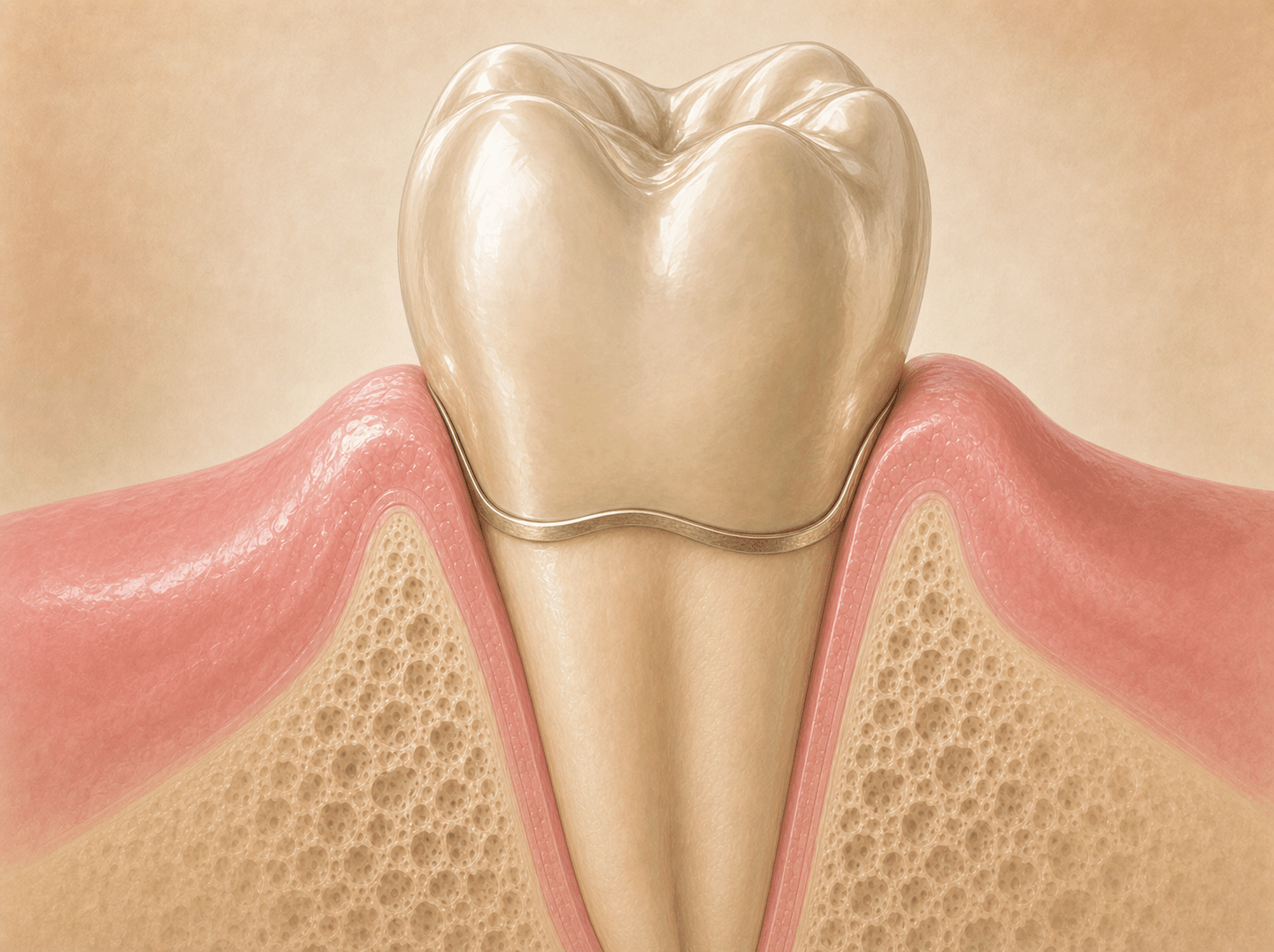
D2792 reports a full-cast crown made entirely of noble metal alloy. Full cast means all metal, with no porcelain or ceramic on any surface. Noble means the middle tier of the ADA’s casting-alloy classification: at least 25% noble metal by weight, but below the high noble threshold.
The code covers the prep, impression, lab fabrication, try-in, and cementation. It does not include a separate core buildup, a post, or the bite registration as its own charge. Bill D2792 when the lab invoice confirms an all-metal crown in the noble tier and the crown is seated and cemented at the delivery visit.
It does not cover:
- A full-cast crown in high noble alloy. That’s D2790.
- A full-cast crown in predominantly base-metal alloy. That’s D2791.
- A full-cast crown in titanium or titanium alloy. That’s D2794.
- A crown with porcelain on any surface. That’s the PFM series, such as D2752 for porcelain fused to noble metal.
- A core buildup. That’s D2950.
- A post and core. That’s D2952 (indirectly fabricated) or D2954 (prefabricated).
- A provisional or temporary crown. That’s D2799 (interim crown).
- Recementing an existing crown. That’s D2920.
The distinguishing axis: noble metal percentage, not the tooth
The four full-cast crown codes are identical except for the alloy class, defined by how much noble metal the casting contains. The tooth and the look of the crown play no part.
- D2790 is high noble: at least 60% noble metal with at least 40% gold.
- D2792 is noble: at least 25% noble metal, but below the high noble cutoff. The noble tier has no gold requirement.
- D2791 is predominantly base metal: under 25% noble metal.
- D2794 is titanium and titanium alloys, a separate material category.
The noble metals counted are gold, palladium, and platinum. The classification also recognizes rhodium, ruthenium, iridium, and osmium, which rarely appear in crown alloys. A crown is D2792 because the lab invoice shows a noble-tier alloy, not because it sits on a back tooth or the metal looks pale.
In the PMS, keep all four full-cast codes as distinct, clearly labeled line items so the alloy class is a deliberate pick, not a default. The family has a long history of being miscoded by one alloy tier.
Full cast versus porcelain fused to metal
Once any porcelain is fused to the metal, the crown leaves the D2790 to D2794 range for the porcelain-fused-to-metal series, which mirrors the same alloy classes. D2752 is the porcelain counterpart to D2792: both use a noble alloy with the same noble percentage, and the only difference is whether porcelain was layered onto the metal.
All metal with no porcelain is D2792. Metal with porcelain fused over it is D2752. Carriers pay these at different fees.
Coverage reality: the noble crown is a downgrade magnet
A full-cast noble crown costs more than a base-metal casting but is functionally a posterior all-metal crown, which is the kind of claim plans write alternate-benefit rules around. Plans vary, so verify each pattern:
- Pay D2792 at the full benefit. More likely on older indemnity-style plans that pay by the billed code.
- Downgrade to the base-metal fee (D2791). The plan pays the predominantly base-metal allowed amount, reasoning that any full-cast crown delivers the same function regardless of alloy cost.
- Apply a posterior crown downgrade. The plan pays a standard material allowance on posterior crowns regardless of what was placed and leaves the rest of the fee unpaid.
A downgrade is plan design, not a denial, and no appeal overturns it. The EOB shows the billed code, the allowed amount, the plan’s percentage, and the remainder. Build the patient estimate on the lower allowed amount, not the full D2792 fee, and discuss it at treatment planning.
Some plans exclude full-cast crowns entirely and cover only PFM or all-ceramic. The denial reads as a non-covered service, and the balance falls to the patient, subject to any contract terms on fees for non-covered services. Confirm the plan’s crown rules, including any alloy-based downgrade, before the prep.
Documentation that supports the claim
The claim needs:
- A date of service for the seat (delivery) visit, not the prep. The fee covers the completed restoration, and submitting at the prep gets the claim rejected or pended.
- The tooth number.
- The lab invoice showing noble metal content, when the carrier requests alloy confirmation.
- A narrative when the crown is a remake inside the carrier’s frequency window, citing the clinical reason (fractured original, defective margin, recurrent decay under the old crown).
In the patient record, keep:
- The lab invoice with the alloy composition. D2792 is the code most likely to be questioned on alloy content, so this is the most important document. Keep it for the carrier’s audit window; most plans audit crown material claims back several years, and the window is plan-dependent.
- The prep, impression, and seat dates.
- The clinical reason for the crown.
- Any prior crown on the same tooth and its placement date, in case of a frequency review.
FAQs
- What is the dental code for a full cast noble metal crown?
- D2792. It reports a crown cast entirely from noble metal alloy, which the ADA classification defines as at least 25% noble metal, counting gold together with the platinum-group metals, but under the high noble threshold of 60% noble with 40% gold. The neighboring full-cast codes are D2790 for high noble, D2791 for predominantly base metal, and D2794 for titanium and titanium alloys. Confirm the percentage on the lab invoice before you pick the code.
- What's the difference between D2790, D2791, D2792, and D2794?
- Only the alloy class. All four are full-cast crowns, all metal with no porcelain. D2790 is high noble (at least 60% noble metal with 40% or more gold). D2792 is noble (at least 25% noble, below the high noble cutoff). D2791 is predominantly base metal (under 25% noble). D2794 is titanium or titanium alloy. They pay at different fees because the metals cost different amounts, so the lab invoice composition decides the code, not the look of the crown or the tooth.
- Why did the carrier downgrade my D2792 crown claim?
- On most plans it is an alternate-benefit downgrade, not a denial. Some plans pay any full-cast crown at the predominantly base-metal fee (D2791) on the theory that the function is the same regardless of alloy cost. Others apply a posterior crown downgrade to the PFM allowed amount. The EOB shows the billed code, a lower allowed amount, and an unpaid difference, which is not automatically patient responsibility. The participating-provider agreement decides whether it can be billed to the patient or must be written off, and Medicaid prohibits balance-billing the member. A plan-design downgrade is not appealable, so confirm the plan's crown alternate-benefit rules and the contract's terms at treatment planning.
- Does D2792 require a lab invoice showing the metal content?
- Not usually at submission, but it is the standard request on audit. D2792 sits between D2790 and D2791 on alloy content, so a reviewing carrier will ask for the lab invoice to confirm the alloy met at least 25% noble metal and stayed under the high noble threshold. If the invoice shows a base-metal alloy, the claim downgrades to D2791. Keep the invoice in the patient record for the carrier's audit window, commonly 5 to 7 years, though the exact window is plan-dependent.
- Is D2792 a current CDT code for 2026?
- Yes. D2792 is active in CDT 2026, reporting a full-cast noble metal crown. All four full-cast crown codes by alloy class (D2790 high noble, D2791 predominantly base metal, D2792 noble, D2794 titanium) are in place for 2026, and none was deleted or changed in meaning for the year.
- Does D2792 include the core buildup or the post?
- No. D2792 covers the crown only: the prep, impression, lab fabrication, and cementation. Bill a core buildup separately on the same claim as D2950. If a post is placed in a treated canal, bill D2952 for an indirectly fabricated (custom) post and core or D2954 for a prefabricated one instead of D2950. Most plans adjudicate the buildup or post on its own rules.
Related codes
Need help billing this code?
We handle D2792 claims daily.
If your team is spending time on denials, narratives, or carrier follow-up for this code, our outsourced dental insurance billing service can take it off your plate. We submit the claims, post what comes back, and follow up on anything unpaid.
“Claims, posting, denials, all of it gets handled, and it costs far less than hiring another employee. My front desk got hours of their week back, and honestly I just don't think about billing anymore.”
CDT codes are maintained by the American Dental Association. This page is an editorial billing guide, not the official ADA code descriptor. Verify current coverage policies with each carrier before submitting claims.