D2928 is the CDT code for a ready-made, stock-size ceramic crown that the dentist fits and cements chairside on a numbered (permanent) tooth.
- When to use: A stock ceramic crown, not one custom-made in a lab or milled from a scan, is seated on a numbered permanent tooth.
- When not to use: The same crown on a primary tooth is D2929, a custom lab or milled ceramic crown is D2740, and a stock steel crown is D2931.
- Billing note: Some plans treat D2928 as a provisional restoration included in a later crown, so verify the benefit before quoting the patient a fee.
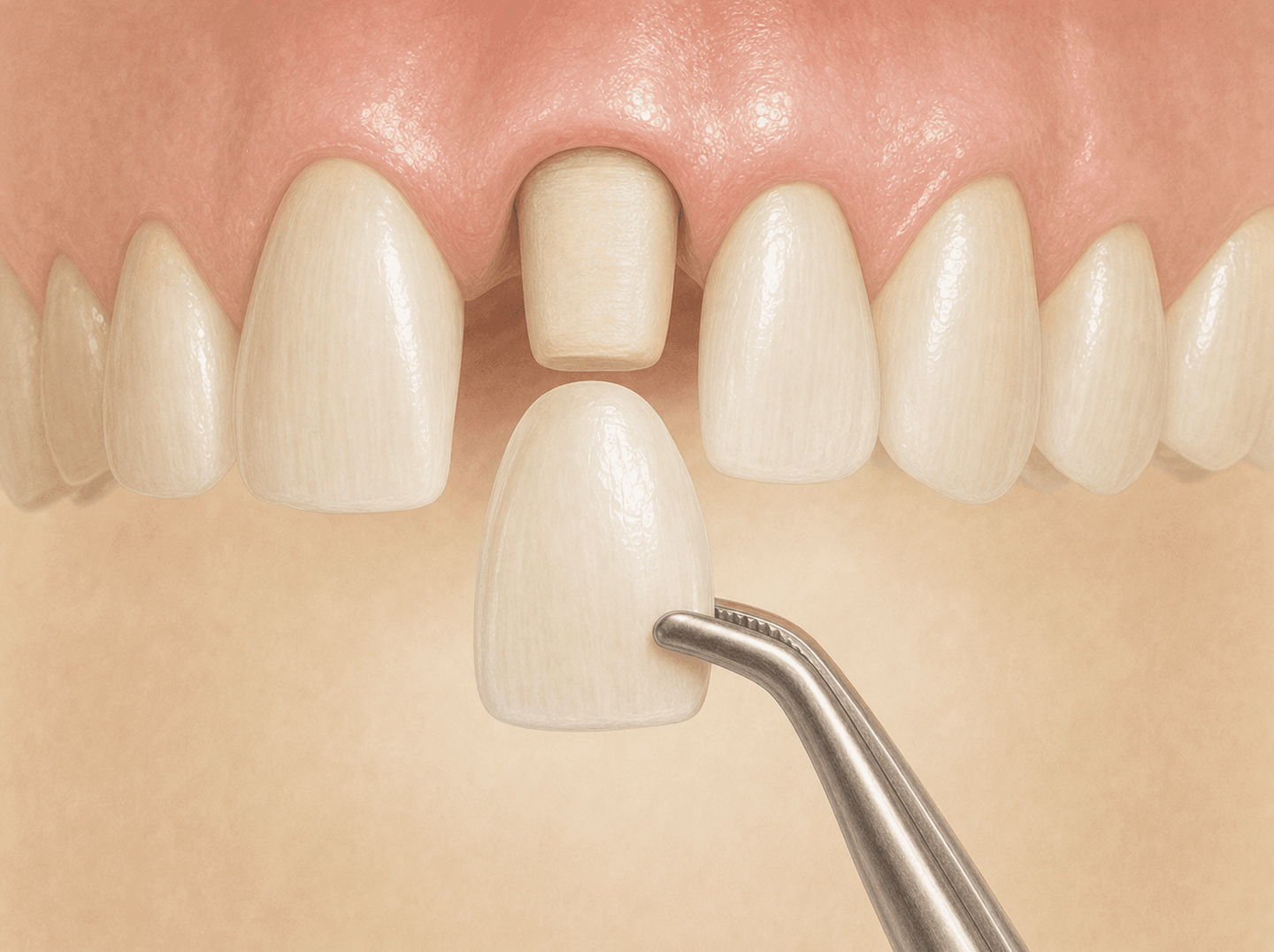
Stock versus custom decides the code
Two crowns can both be zirconia, both go on a permanent tooth, and both be seated in one visit, yet take different codes. The question is how the crown was made.
- D2928: the crown comes from a manufacturer’s kit in stock sizes. The dentist preps the tooth to fit the crown, tries sizes, and cements the best match.
- D2740: the crown is made for that tooth from an impression or scan, whether a lab fabricates it or the office mills it chairside.
Write the fabrication method in the chart note. “Zirconia crown #9” alone does not tell a reviewer which code it supports.
Where D2928 sits in the prefabricated family
Prefabricated crown codes split on two axes, material and dentition. Not every material has both a primary and a permanent code.
| Material | Primary tooth | Permanent tooth |
|---|---|---|
| Porcelain/ceramic | D2929 | D2928 |
| Stainless steel | D2930 | D2931 |
| Esthetic coated stainless steel | D2934 | No code |
| Resin | D2932 | D2932 |
| Stainless steel with resin window | D2933 | D2933 |
D2932 and D2933 have no dentition split, so the same code goes on a lettered or numbered tooth. For ceramic, the code itself changes: a crown on a lettered tooth is D2929, and on a numbered tooth, D2928.
The provisional-restoration problem
The biggest payment risk on D2928 is not a coding error. It is how the plan views the crown.
Aetna’s dental clinical policy bulletin on D2928 treats a prefabricated crown on a permanent tooth as a provisional restoration. It reasons that most dental plans consider provisional work part of the permanent restoration, and the bulletin says a separate charge to the patient for the prefabricated crown is not permitted. Other carriers may take the same view, so ask about it during verification.
That matters most when the stock crown is a bridge to something else. If a lab crown is planned, the prefabricated crown is likely to be treated as included. If the stock crown is the intended long-term restoration, document that clearly and attach the reasoning.
Denial scenario: an adolescent front tooth
A 14-year-old fractures tooth #8 in a sports injury. The dentist places a prefabricated zirconia crown and notes that a custom crown is planned after growth is complete. The office bills D2928 and plans to collect the balance from the parent.
The carrier denies the line as a provisional restoration included in the future definitive crown. Under a policy like Aetna’s, the office also cannot bill the parent for it. The chart note, which mentions the planned custom crown, is what supports that reading.
Before treatment, the office could have run a predetermination and learned how the plan classifies D2928. With that answer, the parent decides with real numbers in hand, and the office avoids a write-off it did not expect.
FAQs
- Is a same-day milled crown billed as D2928?
- No. A crown designed from a scan and milled for that specific tooth is custom-made, even when it is finished in one visit, so it reports as D2740. D2928 is for a crown that comes in a stock size from a kit and is adapted to the tooth chairside.
- Does Medicaid cover D2928?
- It varies by state. California's 2026 Medi-Cal Dental Provider Handbook lists D2928 as not a benefit while covering the steel crown D2931 on permanent teeth. Maryland Medicaid's 2026 fee schedule does list a fee for D2928. Check your state's current schedule before treatment.
- Can D2928 go on a back tooth?
- Yes, as far as the code goes. The code is defined by material and by the tooth being permanent, with no front or back restriction. Individual plans may limit it to certain teeth, so check the plan's tooth limitations during verification.
Related codes
Need help billing this code?
We handle D2928 claims daily.
If your team is spending time on denials, narratives, or carrier follow-up for this code, our outsourced dental insurance billing service can take it off your plate. We submit the claims, post what comes back, and follow up on anything unpaid.
“Claims, posting, denials, all of it gets handled, and it costs far less than hiring another employee. My front desk got hours of their week back, and honestly I just don't think about billing anymore.”
CDT codes are maintained by the American Dental Association. This page is an editorial billing guide, not the official ADA code descriptor. Verify current coverage policies with each carrier before submitting claims.