D2931 is the CDT code for a prefabricated stainless steel crown, or SSC, fitted and cemented chairside on a permanent tooth.
- When to use: A numbered permanent tooth, often a child's first molar or a molar after root canal treatment, gets a stock steel crown.
- When not to use: A primary tooth is D2930, a steel crown with a resin window is D2933, and a prefabricated ceramic crown on a permanent tooth is D2928.
- Billing note: Some plans give D2931 a longer replacement window than D2930 and exclude third molars, so check crown history on that tooth before seating.
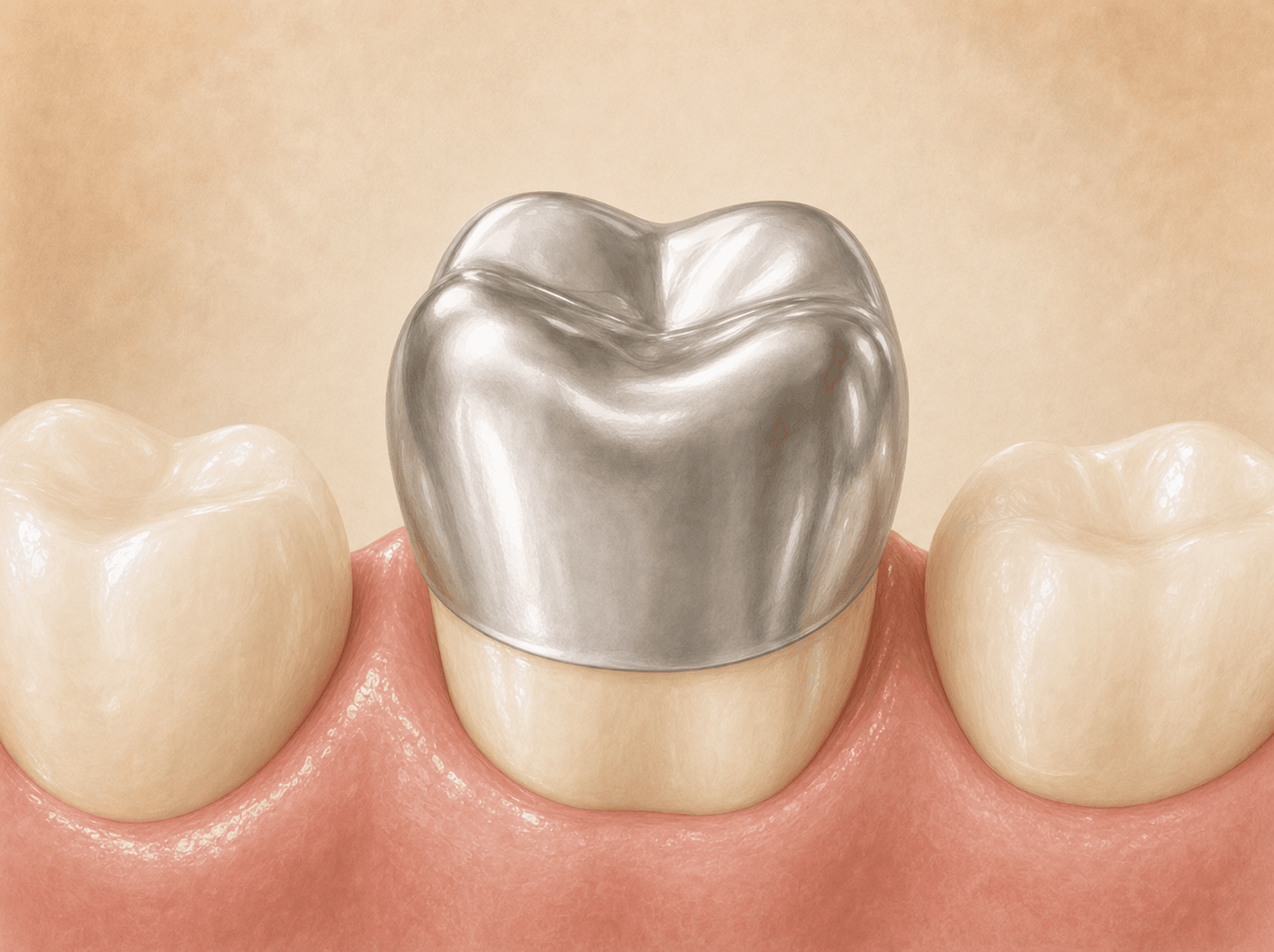
What D2931 covers
D2931 reports a stock stainless steel crown that is sized, trimmed, adapted, and cemented in one visit on a permanent tooth. There is no impression and no lab. The tooth is numbered 1 through 32 on the claim, and that number is what the carrier checks against the code. Put a lettered primary tooth on a D2931 line, or a numbered tooth on D2930, and most carriers’ claim edits reject it before anyone reviews it.
Where an SSC ends up on a permanent tooth
Stainless steel crowns are a pediatric staple, so most D2931 claims come from pediatric offices treating permanent teeth that erupted early in childhood. Typical cases:
- A young first or second molar with decay or an enamel defect too extensive for a filling, in a child not ready for a lab crown.
- A molar after root canal treatment that needs full cuspal coverage now, while a definitive crown waits for growth, finances, or a later phase of treatment.
- An adult patient for whom a lab crown is not practical, such as a medically compromised patient or one who cannot tolerate long appointments.
The second case carries a billing question. If the steel crown is a short-term cover and a lab crown follows soon, some plans treat the SSC as provisional and fold it into the later crown. If it is meant to last years, chart it that way.
What a payer policy looks like: Medi-Cal 2026
California’s Medi-Cal dental program publishes its 2026 criteria, and they show the rules a plan can attach to this code:
- A 36-month replacement window for D2931, against 12 months for the primary-tooth D2930.
- No prior authorization, though the program can request radiographs.
- No benefit on third molars unless the tooth sits in the first or second molar position.
- On a root canal treated tooth, the crown is payable only after the endo is complete, with a post-treatment radiograph.
- Buildups, pins, and local anesthesia are included in the crown fee, while a post (D2952 or D2954) can be covered when it is needed for retention.
Commercial plans set their own rules, but these are the same checkpoints to look for on any benefit summary.
Denial scenario: a child’s molar billed as a baby tooth
A 9-year-old has extensive decay on tooth #30, the lower right first molar. The front desk sees a pediatric patient and a steel crown and enters D2930, the primary-tooth code, with tooth #30 from the clinical note. The claim rejects for a tooth-code mismatch, because a primary-tooth code cannot carry a permanent tooth number.
The fix is D2931 on tooth #30. The first permanent molar erupts around age 6, so it is a permanent tooth even in a young child, and it sits behind the primary second molar rather than replacing it. Check the tooth chart, not the patient’s age, before choosing between D2930 and D2931.
FAQs
- What is the difference between D2931 and D2930?
- Only the tooth. D2931 is a prefabricated stainless steel crown on a permanent tooth, and D2930 is the same crown on a primary tooth. The patient's age does not decide it: a 7-year-old's erupted first molar is permanent and takes D2931, while a retained baby molar in an adult still takes D2930.
- Is there a tooth-colored coated steel crown code for permanent teeth?
- No. The esthetic coated stainless steel crown, D2934, is defined for primary teeth only. On a permanent tooth, the tooth-colored prefabricated options are a steel crown with a resin window (D2933, which covers either dentition), a prefabricated resin crown (D2932), or a prefabricated ceramic crown (D2928).
- Can I bill a core buildup with D2931?
- Usually not with success. Many plans treat foundation material under a prefabricated crown as part of the crown, so D2950 on the same tooth and date tends to bundle or deny. A post on an endodontically treated tooth is a different question; some programs cover a post, such as D2954, when it is needed to retain the crown.
- Does D2931 count toward the plan's crown frequency?
- It depends on the plan. Some plans track prefabricated crowns on their own clock, and others count any crown on the tooth. If a lab crown such as D2740 is planned later, ask whether a paid D2931 starts a replacement window that would block it.
Related codes
Need help billing this code?
We handle D2931 claims daily.
If your team is spending time on denials, narratives, or carrier follow-up for this code, our outsourced dental insurance billing service can take it off your plate. We submit the claims, post what comes back, and follow up on anything unpaid.
“Claims, posting, denials, all of it gets handled, and it costs far less than hiring another employee. My front desk got hours of their week back, and honestly I just don't think about billing anymore.”
CDT codes are maintained by the American Dental Association. This page is an editorial billing guide, not the official ADA code descriptor. Verify current coverage policies with each carrier before submitting claims.