D2952 is the CDT code for a custom post and core cast as one piece, usually by a lab, for a root canal treated tooth.
- When to use: A treated canal needs a custom-made post, often because a stock post will not fit a wide or tapered canal, and a crown will follow.
- When not to use: A stock post is D2954, a buildup with no post is D2950, and each additional cast post on the same tooth is D2953.
- Billing note: Carriers reprice D2952 when the note does not show custom fabrication, so keep the lab slip and the root canal history with the claim.
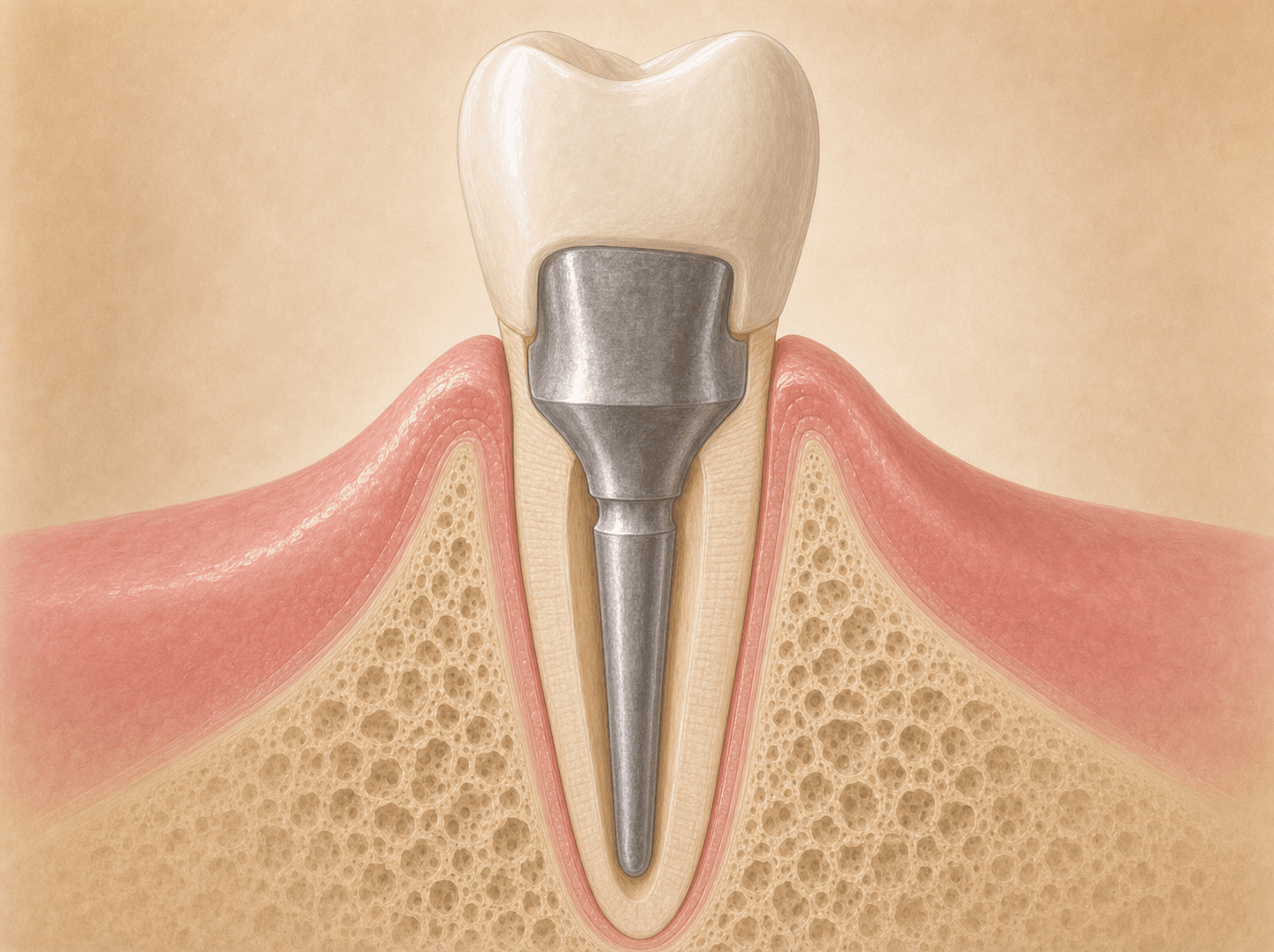
What D2952 covers
D2952 reports a cast post and core, fabricated indirectly, placed in addition to a crown. Two things define it. It is a post and core: a post seated in a root-canal-treated canal, with a core over it to support a crown. And it is cast: the post and core are custom-made as a single unit, typically by sending an impression or pattern to a lab rather than assembling stock parts chairside.
A cast post and core is the choice when a prefabricated post will not give the right fit or retention, often on a tooth with an irregular or tapered canal where a custom shape holds better. The tooth must have a completed root canal, because the post seats in the treated canal space.
It does not cover:
- A core buildup with no post in the canal. That is D2950.
- A prefabricated post and core. That is D2954.
- An additional cast post on the same tooth. That is D2953, used with D2952.
- An additional prefabricated post on the same tooth. That is D2957, used with D2954.
- The crown itself, which is billed separately (D2740, D2750, and the rest of the crown series).
D2952 versus D2950: the post is the dividing line
A buildup and a post and core look similar from across the room. The difference is whether anything seats into the root canal.
- D2950 rebuilds missing structure with buildup material (and pins if needed), with nothing anchored in the canal. It is used on teeth with enough structure to hold the buildup.
- D2952 anchors a custom cast post into a treated canal, with the core integral to it.
Because a post requires a treated canal, carriers cross-check D2952 against the endodontic history. D2952 on a vital, untreated tooth is a contradiction the carrier will catch. D2950 billed when a post was actually seated understates the procedure and mismatches the chart. The operative note decides the code with one fact: was a post placed in the canal.
The cast-versus-prefab axis is what carriers reprice on
Once a post is in the canal, the code depends on how it was made:
- D2952 is a cast (indirectly fabricated) post and core, custom-made as one piece, usually with a lab step.
- D2954 is a prefabricated post and core: a stock post seated in the canal, with the core packed around it chairside.
The two fill the same role under a crown, but they are not interchangeable. Some plans benefit them at different amounts, and carriers reprice when the code and the procedure disagree. A lab slip or a note describing the custom-cast pattern supports D2952; a note naming a stock post by manufacturer and size supports D2954. Billing the cast code for a chairside prefab post is a misrepresentation, not a billing preference.
The additional-post codes follow the same split. Each additional cast post on the same tooth is D2953, used with D2952. Each additional prefabricated post is D2957, used with D2954. Do not cross them.
Top billing problems with D2952
- Cast-versus-prefab mismatch. D2952 billed for a prefabricated post, or the reverse. This is the classic post-and-core coding error and a clean reason to reprice or deny.
- No root canal on file. If the tooth has no documented endodontic treatment, the carrier questions the post entirely. The root canal history needs to be on the claim or in the carrier’s records.
- Bundled into the crown. Some plans treat the post and core as inclusive to the crown benefit. Plan-dependent; the patient often owes the post-and-core fee.
- Post and buildup codes swapped. D2950 submitted when a post was placed, or D2952 submitted when only a buildup was done.
Documentation that supports the claim
The claim and the chart should carry:
- Evidence of the completed root canal on the tooth (date and code, or a radiograph showing the obturated canal).
- An operative note stating that a cast (indirectly fabricated) post and core was placed, distinguishing it from a prefabricated post.
- A post-treatment radiograph showing the post seated in the canal.
- The crown billed separately, ideally on the same claim, so the carrier reviews the unit together.
In the patient record, document the canal treated, the fabrication method, the number of posts if more than one, and the planned crown.
Example case
An established patient has tooth #8 with a completed root canal and extensive coronal breakdown. A prefabricated post will not seat well in the wide, tapered canal, so the dentist takes an impression for a custom cast post and core, which the lab fabricates. The dentist cements it and prepares the tooth for a crown.
Billing steps:
- Confirm the canal is treated and the post is custom-cast, not a stock prefab post. That makes the code D2952, not D2954.
- Code D2952 with a note describing the custom cast fabrication and the treated canal.
- Bill the crown (for example D2740) separately, on the same claim where the plan allows.
- Attach the post-treatment radiograph and the endodontic history.
- Read the EOB. If the post and core bundles into the crown, that is plan language; post the payment and handle the balance per the plan. If it denies for a missing root canal, supply the endodontic documentation.
FAQs
- What is the difference between D2952 and D2954?
- How the post is made. D2952 is a cast post and core, indirectly fabricated as one custom piece, usually with a lab. D2954 is a prefabricated post and core: a stock post seated in the canal with the core built up around it chairside. The clinical situation drives the choice, and the codes are not interchangeable.
- How is D2952 different from D2950?
- D2952 includes a cast post seated in a treated canal; D2950 is a core buildup with no post, for a tooth with enough structure to retain a buildup without one. If there is a post in the canal, D2950 is the wrong code.
- What code is the second post on the same tooth?
- It depends on the post type. An additional cast post is D2953, used with D2952. An additional prefabricated post is D2957, used with D2954. Cast pairs with cast and prefab pairs with prefab.
- Does the crown get billed separately from D2952?
- Yes. D2952 is the post and core, placed in addition to the crown, and the crown is billed under its own code (for example D2740 or D2750). Many plans review the two together and want the endodontic history on file, so submitting them on the same claim with the treated-canal documentation helps adjudication.
- Why did the carrier deny or bundle the post and core?
- Usually one of three plan-dependent reasons: the plan considers the post and core inclusive to the crown, the tooth has no documented root canal on file, or the code did not match the procedure (cast billed when prefab was placed, or a post code billed for a buildup with no post). Endodontic documentation and the correct cast-versus-prefab code prevent most of these.
Related codes
Need help billing this code?
We handle D2952 claims daily.
If your team is spending time on denials, narratives, or carrier follow-up for this code, our outsourced dental insurance billing service can take it off your plate. We submit the claims, post what comes back, and follow up on anything unpaid.
“Claims, posting, denials, all of it gets handled, and it costs far less than hiring another employee. My front desk got hours of their week back, and honestly I just don't think about billing anymore.”
CDT codes are maintained by the American Dental Association. This page is an editorial billing guide, not the official ADA code descriptor. Verify current coverage policies with each carrier before submitting claims.