D2991 is the CDT code for applying a hydroxyapatite regeneration medicament to one tooth, a scaffold treatment that rebuilds enamel on an early lesion instead of just stopping it.
D2991 is a young code, effective for CDT 2024, and it sits in the restorative section even though the procedure looks more like a preventive medicament application. That placement, plus the brand-new clinical idea behind it, is where the billing gets messy. The two recurring problems are confusing it with the caries-arresting code D1354 and the preventive code D1355, and assuming a plan covers it when many still treat regeneration medicaments as not-yet-a-benefit.
What D2991 covers
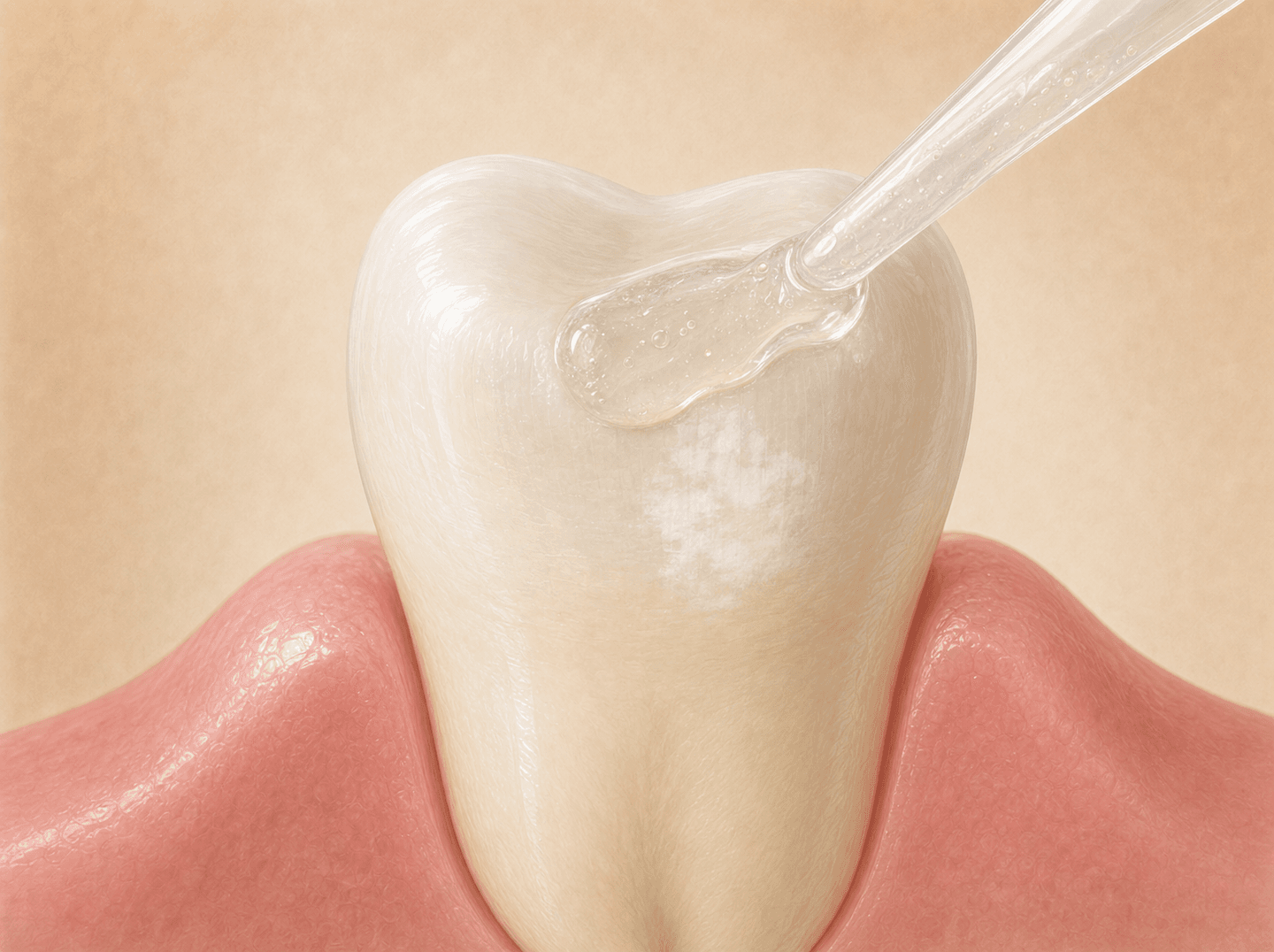
D2991 reports applying a hydroxyapatite regeneration medicament to one tooth. The procedure involves preparing the tooth surface and placing a medicament that forms a scaffold on an early, non-cavitated lesion. The scaffold draws calcium and phosphate back into the enamel so the affected surface rebuilds, rather than the clinician simply slowing the decay or filling the tooth. It is reported per tooth, so two treated teeth means two units.
The clinical idea is newer than most codes on a fee schedule. Products built for this approach, such as Curodont Repair and CrystLCare, are guided enamel-regeneration medicaments aimed at incipient lesions and white-spot demineralization. D2991 is the code that lets a practice report that work as its own line item instead of forcing it into a fluoride or restoration code that doesn’t describe it.
D2991 does not cover:
- A caries-arresting medicament like silver diamine fluoride. That’s D1354.
- A preventive medicament on a tooth with no lesion. That’s D1355.
- Topical fluoride varnish (D1206) or non-varnish topical fluoride (D1208).
- A filling or an interim restoration. An interim direct restoration that protects the tooth until definitive treatment is D2940. A definitive filling is its own restorative code.
The distinguishing axis: regenerate, not arrest, not prevent
This is the thing to get right on D2991, and the thing most likely to get coded wrong. The medicament codes near it all involve painting something onto a tooth without drilling, so they look interchangeable. They are not. The line between them is what the medicament does to the lesion.
- D1355 is prevention. The tooth has no lesion yet, and the medicament is applied to keep one from forming or to remineralize a surface at risk. It excludes topical fluorides.
- D1354 is arrest. There is an active lesion, and the medicament, commonly silver diamine fluoride, halts its progression without removing sound tooth structure. It stops the decay. It does not rebuild the tooth.
- D2991 is regeneration. There is an early lesion, and the medicament forms a scaffold that rebuilds the affected enamel. It goes past arrest to actually restoring the surface, which is why the code lives in the restorative section, not preventive.
So the sequence is prevent (D1355), arrest (D1354), regenerate (D2991), and the right code follows the clinical goal for that tooth. It is not the patient’s age, the tooth number, or the brand of material that picks the code. It is whether you’re keeping a lesion from starting, stopping one that’s active, or rebuilding enamel on an early one.
Coverage reality: a new code many plans haven’t adopted
The biggest billing trap on D2991 is treating an active code as a covered benefit. It is active, but hydroxyapatite regeneration is a recent category of care, and a meaningful number of plans still classify it as not a benefit or as experimental and decline to pay. An eligibility check that confirms the code exists tells you nothing about whether this plan pays it.
When a plan does cover D2991, the terms vary by contract:
- Frequency caps. Some plans that pay it limit it per tooth per benefit year. The cap and the counting method are plan-specific.
- Bundling with restorations. A common rule is that the regeneration medicament is not separately payable when a restoration is placed on the same tooth on the same date, and sometimes not when a restoration follows within a set window. This is contract language, not a clinical judgment.
- Patient responsibility. Where the plan doesn’t cover it or bundles it away, the patient generally owes the fee, subject to your participating-provider agreement. Because patients don’t expect to pay for a “no-drill” treatment, set that expectation before you provide it, not after the EOB.
When to bill D2991
Bill D2991 when the clinician applies a hydroxyapatite regeneration medicament to a single tooth with an early, non-cavitated lesion to rebuild the affected enamel. Report it once per treated tooth.
Do not bill D2991 for:
- Arresting an active lesion with silver diamine fluoride. That’s D1354.
- A preventive medicament on a tooth with no lesion. That’s D1355.
- A topical fluoride application, varnish (D1206) or otherwise (D1208).
- A filling or an interim restoration on the tooth. Use the appropriate restorative code, such as D2940 for an interim direct restoration.
Documentation that supports the claim
Because D2991 is new and often reviewed by hand, the record needs to make the case that this was regeneration on an early lesion, not a fluoride application or an arrest. The chart should show:
- The lesion status. Document that the tooth had an early, non-cavitated lesion or white-spot demineralization, with the tooth number and surface noted.
- The treatment goal. State that the intent was enamel regeneration, which separates it from D1354 (arrest) and D1355 (prevention).
- The medicament used. Name the product applied so the procedure matches a guided hydroxyapatite regeneration medicament.
- Supporting images where available. A pre-treatment radiograph or intraoral photo of the lesion strengthens a claim a carrier is likely to scrutinize on a newer code.
If the plan requires prior authorization for newer non-restorative procedures, get it before treatment. A claim for a code the carrier hasn’t fully adopted is more likely to pend or deny without it.
What to get right in your PMS
The menus differ across Open Dental, Dentrix, Eaglesoft, Curve, and Carestream, but the setup that prevents miscodes is the same:
- Add D2991 as its own line item, distinct from the medicament codes near it. Keep D2991, D1354, and D1355 as separate, clearly labeled codes so picking one is a deliberate choice. They describe different clinical goals and live in different CDT sections.
- Don’t default it to “covered” in your fee and estimate setup. Because adoption is uneven, set the patient estimate to reflect that the plan may not pay it, then update once you’ve verified the specific benefit.
- Flag the same-tooth bundling rule. If your system can note plan rules, record that some carriers won’t pay D2991 separately when a restoration is placed on the same tooth, so the estimate doesn’t double-count.
- Capture lesion status and the medicament in the note at the time of treatment. That single detail is what defends D2991 against a “should have been D1354” or “should have been a fluoride code” review.
- Set the patient-responsibility expectation up front. For a treatment patients assume is free or covered, the financial conversation belongs before the appointment, not after the EOB posts.
FAQs
- Is D2991 a current CDT code for 2026?
- Yes. D2991 took effect for CDT 2024 and remains active in CDT 2026, unchanged. It reports applying a hydroxyapatite regeneration medicament to a single tooth. Because it is a recent addition, plenty of plans have not built a benefit around it yet, so an active code does not mean a covered procedure. Verify the specific plan before you bill it.
- What's the difference between D2991 and D1354?
- What the medicament does to the lesion. D1354 reports a caries-arresting medicament, often silver diamine fluoride, that stops an active lesion from progressing without removing sound tooth structure. D2991 reports a hydroxyapatite regeneration medicament that goes a step further and rebuilds enamel on an early lesion through a scaffold the product forms. Arrest versus regenerate is the line, not the tooth or the patient. D1354 sits in the preventive section. D2991 sits in restorative.
- What's the difference between D2991 and D1355?
- D1355 is a caries preventive medicament for a tooth with no lesion yet, used for primary prevention or remineralization, and it excludes topical fluorides. D2991 is for a tooth that already has an early lesion and uses a regeneration medicament to rebuild the affected enamel. So D1355 is prevent-before-it-starts and D2991 is regenerate-an-existing-early-lesion. They are also in different CDT sections: D1355 is preventive, D2991 is restorative.
- Does dental insurance cover D2991?
- It depends on the plan, and many do not cover it. Hydroxyapatite regeneration is a new category of treatment and a recent code, so a fair number of carriers still classify it as not a covered benefit or as experimental. When a plan does cover it, the terms vary widely. Some cap it per tooth per benefit year and some bundle it with a restoration placed on the same tooth. Verify coverage and frequency on the specific plan before you promise the patient anything.
- What products are billed under D2991?
- D2991 reports the procedure, not a specific brand. The materials it covers are guided enamel-regeneration medicaments, such as Curodont Repair and CrystLCare, that form a scaffold on an early lesion to draw minerals back into the enamel. The code is intended for that scaffold-and-regenerate approach to incipient decay, not for a standard fluoride varnish or a filling.
- Can I bill D2991 and a filling on the same tooth the same day?
- Some plans specifically disallow it. Where a carrier has a policy on D2991, a common rule is that the regeneration medicament is not separately payable when a restoration is placed on the same tooth on the same date, and sometimes not when a restoration follows within a set window. This is plan language, so confirm the carrier's policy before billing both. If the plan bundles them, the patient generally owes whatever portion the carrier won't pay, subject to your participating-provider agreement.
Related codes
Need help billing this code?
We handle D2991 claims daily.
If your team is spending time on denials, narratives, or carrier follow-up for this code, our outsourced dental insurance billing service can take it off your plate. We work inside your PMS and post payments the same week.
CDT codes are maintained by the American Dental Association. This page is an editorial billing guide, not the official ADA code descriptor. Verify current coverage policies with each carrier before submitting claims.