D2940 is the CDT code for an interim direct restoration, a temporary filling that protects a tooth until the final restoration is done.
- When to use: An interim restoration is the only work on that tooth that day, with the final restoration scheduled for a later visit.
- When not to use: A final filling takes its own restorative code, pain relief without a restoration is D9110, and D2941 was deleted and folded into D2940.
- Billing note: Most plans bundle D2940 into definitive work on the same tooth the same day, so bill only the final restoration code in that case.
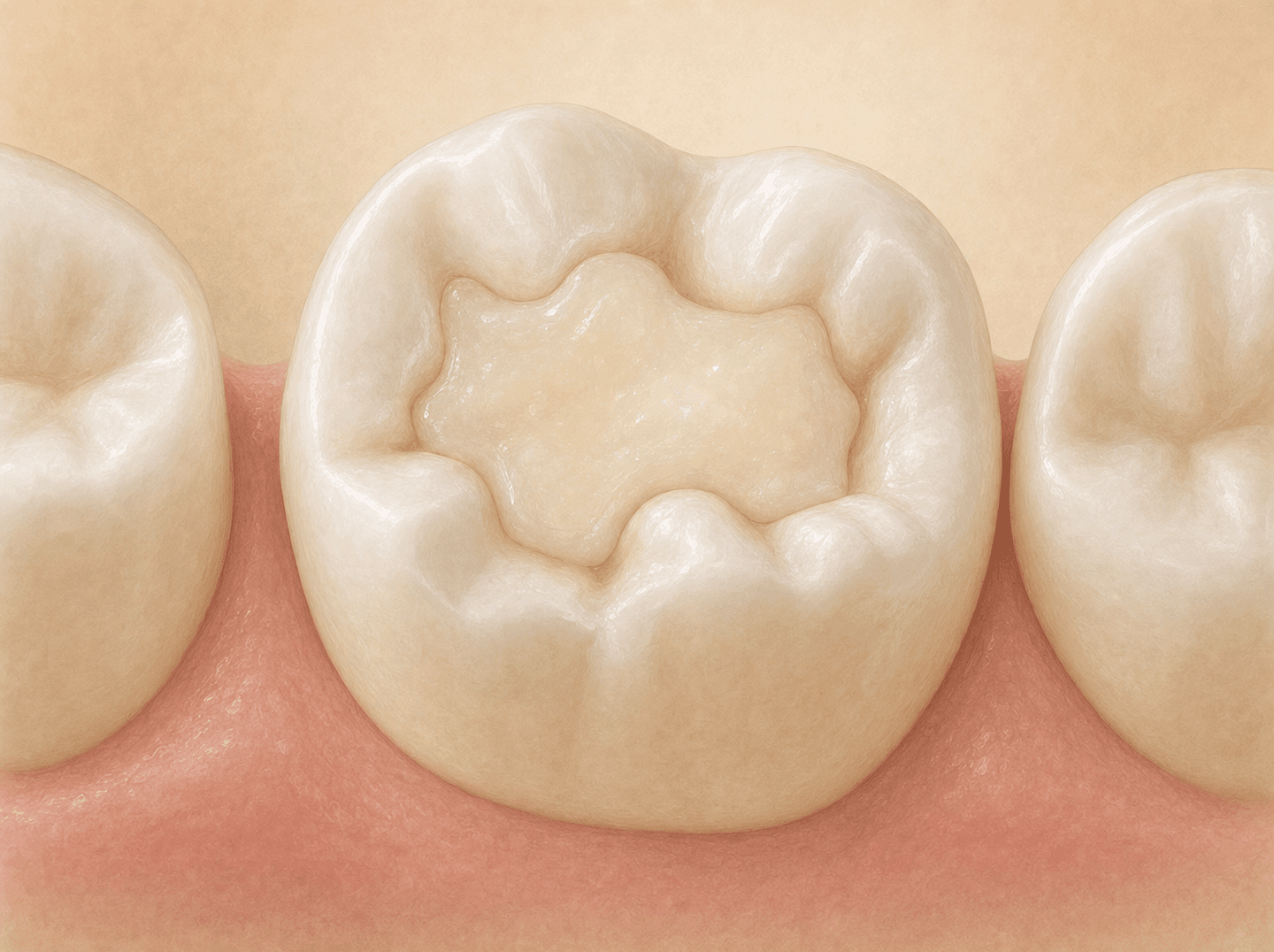
What D2940 reports
D2940 reports the placement of an interim direct restoration: a temporary restoration placed directly in the tooth to protect the tooth and surrounding tissue, relieve symptoms, and hold the situation until a definitive restoration can be done. The code covers the chairside work of placing that interim material.
After the CDT 2025 revision, the scope is deliberately broad. D2940 captures any restorative material placed as an interim restoration, by any method, on any tooth, as long as the provider is acting within their scope of licensure. There is no separate code for the material used or the dentition involved. One code does the job.
What it is not:
- A definitive restoration. The final filling has its own code based on material, surface count, and tooth position (for example D2140 for a one-surface amalgam or D2391 for a one-surface posterior composite). D2940 is the temporary that precedes the definitive work, not the definitive work itself.
- A base or liner under a restoration. Material placed beneath a permanent restoration as a base or liner is part of that restoration, not a separately reportable interim restoration.
- Endodontic access closure. Sealing an endodontic access opening is part of the endodontic procedure, not a D2940.
- Palliative treatment. Pain relief that does not involve placing a restoration is D9110, not D2940. See the distinction below.
The CDT 2025 rename: same code, broader meaning
If you learned this code as the “protective restoration” or, going further back, the “sedative filling,” the number has not changed but the official name has. CDT 2025 revised the nomenclature from “protective restoration” to “placement of interim direct restoration.”
The rename traveled with a deletion. The ADA also deleted D2941, the old code for an interim therapeutic restoration on primary teeth, and folded that work into D2940. Instead of one code for permanent teeth and a separate code for baby teeth, there is now a single interim-direct-restoration code that covers both dentitions.
The practical takeaway: you still submit D2940. What changed is that the code now covers more ground, so there is no longer a reason to reach for a primary-dentition variant or to treat the material as the deciding factor.
Same-day bundling: the main billing trap
The single most common D2940 billing problem is placing it on the same tooth, the same day, as the definitive treatment. When that happens, most carriers treat the interim restoration as a component of the definitive procedure and deny the D2940 line as inclusive.
The logic is straightforward from the carrier’s side. If the tooth was restored to completion that day, the interim restoration was a step within that restoration, not a separate service. So the plan pays for the definitive code and pays nothing extra for the D2940. On many plans, the bundled amount is also not billable to the patient, because it is considered part of a service the plan already covered.
Some plans that do reimburse a standalone D2940 also expect a gap between the interim restoration and the definitive restoration before they will pay both, sometimes a month or more. That is plan-specific. Treat the time gap as a coverage condition to verify, not a universal rule.
D2940 versus D9110
These two get confused because both can show up at an emergency or problem-focused visit, but they report different things.
D2940 (placement of an interim direct restoration) answers: did you place interim restorative material in the tooth? The work is packing a temporary restoration into the tooth to protect it and hold it until the definitive restoration.
D9110 (palliative treatment) answers: did you relieve pain or discomfort without a more specific procedure code applying? Typical examples are adjusting a sore spot, smoothing a sharp fractured edge, or opening a tooth to relieve pressure, where no restoration was placed.
The distinguishing axis is whether an interim direct restoration went into the tooth. Placed temporary restorative material, it is D2940. Relieved the problem without placing a restoration, it is D9110. Code the procedure you actually performed, and write the chart note so the code and the documentation tell the same story. A reviewer who sees D2940 with a note that describes only pain relief, or D9110 with a note describing a temporary filling, has a reason to question the claim.
When to bill D2940
Bill D2940 when you place an interim direct restoration and the definitive restoration is not completed on that tooth the same day. Common situations:
- Deep caries near the pulp. You excavate decay, place an interim restoration, and want to monitor the tooth’s response before committing to a definitive restoration or root canal.
- An emergency or problem-focused visit. The patient presents with a broken-down or symptomatic tooth, you stabilize it with an interim restoration, and schedule the definitive treatment for a later appointment.
- Caries control across multiple teeth. You place interim restorations to control active decay before finalizing a treatment plan and phasing the definitive work.
Do not bill D2940 for:
- A definitive filling. Use the restorative code that matches material, surfaces, and tooth position.
- A base or liner placed under a permanent restoration on the same visit.
- Sealing an endodontic access opening, which is part of the endodontic procedure.
- Pain relief with no restoration placed. Use D9110.
Documentation that supports the claim
D2940 lives or dies on whether the chart shows it was a genuine interim step, not a same-day component of finished work. The note should capture:
- The tooth and the clinical reason. Tooth number plus why an interim restoration was the right call: deep caries near the pulp, a symptomatic tooth being monitored, active decay being controlled before definitive treatment.
- That it was interim, not definitive. State that the restoration is temporary and that the definitive restoration is planned for a later visit. This is the line that separates a clean standalone D2940 from a bundled same-day claim.
- What you placed. The interim restorative material and that it was placed directly in the tooth.
- The plan for the definitive restoration. The intended next step and, where relevant, the expected timeframe, which also helps on plans that require a gap before they will pay both procedures.
For the claim, a one-line narrative noting that the restoration is interim and the definitive treatment is scheduled separately helps the carrier process it against the right benefit on plans that cover a standalone interim restoration.
Top reasons D2940 gets denied
Four issues account for most denials:
- Bundled into same-day definitive treatment. D2940 was billed on the same tooth and date as a permanent restoration, endodontic procedure, or other definitive work. The carrier denies it as inclusive. This is the most common single denial reason and it is the carrier’s stated policy, not an error to appeal.
- Plan excludes interim restorations. Some plans simply do not cover interim restorations as a separate benefit. The denial is plan language, not a coding error.
- Frequency or time-gap rule. On plans that pay both the interim and the definitive restoration, the definitive work came too soon after the D2940 for the plan’s gap requirement. The carrier denies one of the two for timing.
- Deleted-code carryover. A claim still going out under D2941 for a primary tooth bounces as an invalid code. Retire D2941 and submit D2940.
What to get right in your PMS
The menus differ across Open Dental, Dentrix, Eaglesoft, Curve, and Carestream, but the setup that prevents problems is the same:
- Update the description to the current name. Relabel D2940 as the interim direct restoration in your code table so the front desk and billing team are not still picking it as a “protective restoration” or “sedative filling” without understanding the broadened 2025 scope.
- Remove D2941 from the table. It was deleted in CDT 2025. Leaving it active invites someone to pick it for a primary tooth and trigger an invalid-code rejection.
- Watch for same-day stacking at posting. If D2940 and a definitive restoration land on the same tooth and date, flag it before the claim goes out. On most plans the D2940 will bundle, and stacking the two is the fastest path to an inclusive denial.
- Note the interim intent at point of care. A chart note that says the restoration is temporary, with the definitive treatment planned for a later visit, is what defends a standalone D2940 if the claim is reviewed.
FAQs
- What is the D2940 dental code?
- D2940 reports the placement of an interim direct restoration: a temporary filling placed directly in the tooth to protect it and relieve symptoms until a definitive restoration is done. CDT 2025 renamed it from 'protective restoration' to 'placement of interim direct restoration.' The five-character code did not change, so you still submit D2940. What changed is the scope. It now covers any restorative material placed as an interim restoration, by any method, on any tooth, within the provider's scope of practice. It is not the final filling and it is not a base or liner placed under a permanent restoration.
- Why did the D2940 description change in 2025?
- The ADA revised D2940's nomenclature for CDT 2025 from 'protective restoration' to 'placement of interim direct restoration,' and at the same time deleted D2941 (interim therapeutic restoration, primary dentition). The two changes go together. Rather than keep a separate code for interim restorations on baby teeth, the ADA consolidated everything into D2940. The result is one code for any interim direct restoration regardless of dentition. If your code table still lists D2941, retire it and route that work to D2940.
- Does insurance cover D2940?
- It depends on the plan, and the biggest variable is what else you do to the same tooth that day. Many plans cover D2940 as a standalone interim restoration when no definitive treatment is performed on that tooth on the same date. When you place a permanent restoration, do endodontic treatment, or otherwise complete the tooth the same day, most plans bundle D2940 into that definitive procedure and pay nothing extra. On those plans the bundled amount is usually not billable to the patient either. Verify the specific plan's bundling and patient-billable rules before you quote anything.
- Can I bill D2940 and a permanent filling on the same tooth, same day?
- You can report both, but on most plans D2940 will not pay when a definitive restoration is completed on the same tooth the same day. Carriers treat the interim restoration as a component of the definitive work in that scenario, deny the D2940 line as inclusive, and often prohibit billing the difference to the patient. The clean use of D2940 is when the interim restoration is the only thing done to that tooth that day and the definitive restoration happens at a later visit. If you complete the tooth the same day, bill the definitive code, not D2940.
- What is the difference between D2940 and D9110?
- D9110 is palliative treatment, a pain-relief service when no more specific code describes what you did, such as adjusting a denture sore spot or smoothing a sharp fractured edge. D2940 is specifically the placement of restorative material in the tooth as an interim restoration. The distinguishing axis is whether you placed an interim direct restoration. If you packed temporary restorative material into the tooth, that is D2940. If you relieved pain without placing a restoration, that is D9110. Document which one you actually did so the code and the chart match.
- Does the same D2940 code apply to baby teeth?
- Yes. Before 2025, interim restorations on primary teeth had their own code, D2941. That code was deleted in CDT 2025 and the work was folded into D2940. There is now a single interim-direct-restoration code that applies to both primary and permanent dentition. Submit D2940 with the correct tooth number and let the tooth designation, not a separate code, indicate it is a primary tooth.
Related codes
Need help billing this code?
We handle D2940 claims daily.
If your team is spending time on denials, narratives, or carrier follow-up for this code, our outsourced dental insurance billing service can take it off your plate. We submit the claims, post what comes back, and follow up on anything unpaid.
“Claims, posting, denials, all of it gets handled, and it costs far less than hiring another employee. My front desk got hours of their week back, and honestly I just don't think about billing anymore.”
CDT codes are maintained by the American Dental Association. This page is an editorial billing guide, not the official ADA code descriptor. Verify current coverage policies with each carrier before submitting claims.