D1208 is the CDT code for a topical fluoride treatment that is not varnish — the gel or foam seated in a tray, or any non-varnish application that washes off in minutes, as opposed to the varnish reported under D1206.
There are two professionally-applied fluoride codes, and they split by delivery form, not by who got the treatment or how high the risk is. D1208 is the gel-and-foam code. D1206 is varnish. Pick by what you actually applied.
On this page
- What D1208 covers
- D1208 vs. D1206: the distinction that drives the code
- What D1208 is not
- When to bill D1208
- Coverage reality: age, risk, and frequency all gate the claim
- Fluoride alongside the cleaning and exam
- Top reasons D1208 gets denied
- Documentation that supports the claim
- What to get right in your PMS
- FAQs
What D1208 covers
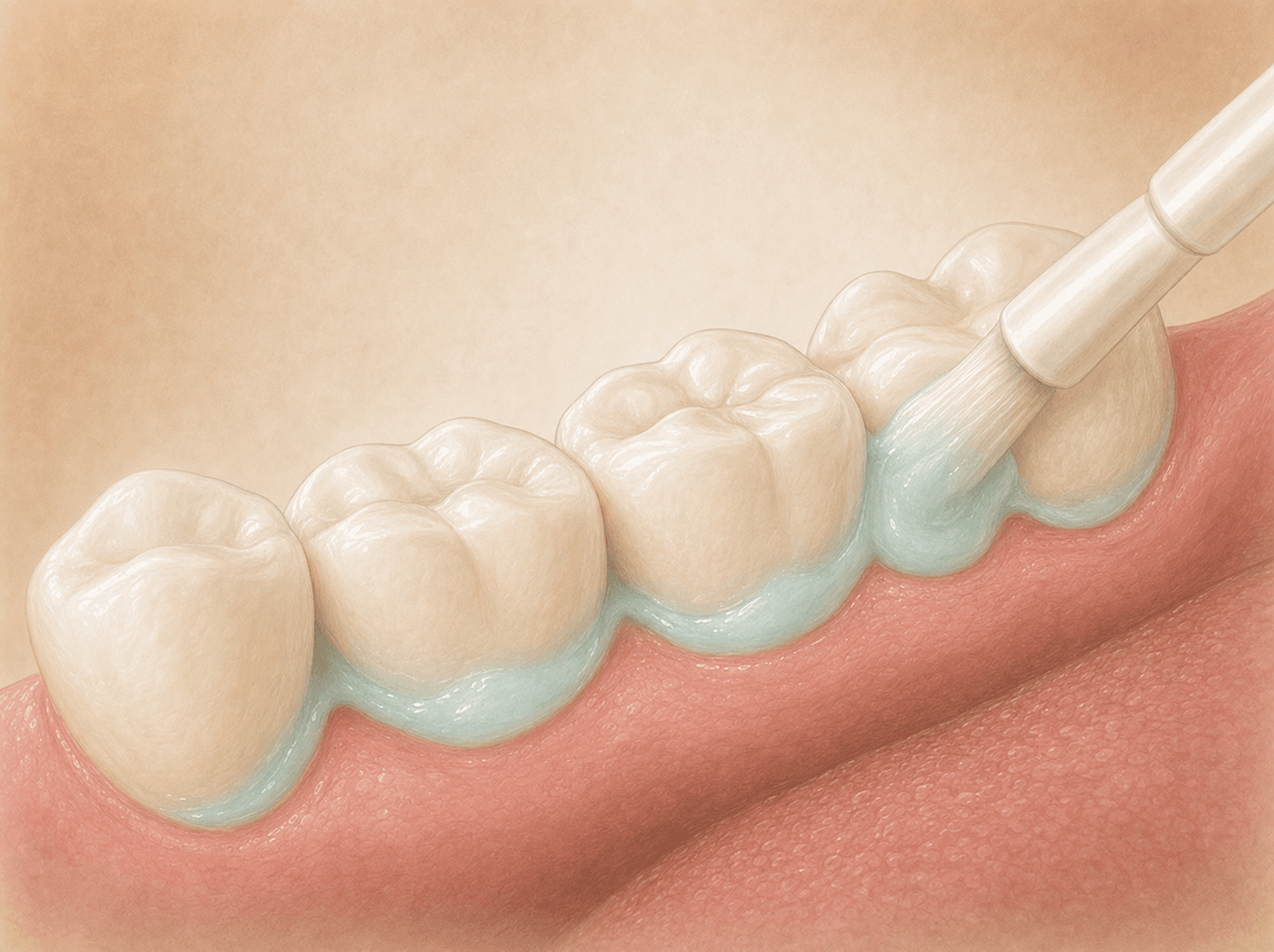
D1208 reports the professional application of topical fluoride in any form other than varnish: the gel or foam seated in a tray, and other non-varnish applications. These contact the teeth for a few minutes and then get rinsed or wiped away. The code covers the application itself, once per visit, regardless of how many teeth were treated.
The defining feature is the delivery form. D1208 is everything-but-varnish. The fluoride sits against the teeth briefly in a tray or carrier and is removed, as opposed to a varnish that adheres to the surface and keeps releasing fluoride for hours. That form distinction is the whole basis for the code, and it is the thing billers most often get wrong.
D1208 vs. D1206: the distinction that drives the code
This is where the fluoride codes get miscoded, so be precise. There are two professionally-applied topical fluoride codes, and one axis separates them: delivery form.
- D1208 is every other form of topical fluoride: the gels and foams applied in trays, and other non-varnish applications that contact the teeth for minutes.
- D1206 is fluoride varnish. The paint-on coating that adheres to the tooth and releases fluoride over hours.
What does not separate them: age, caries risk, fluoride concentration, or whether the patient is a child or an adult. A child who gets a foam tray is D1208. An adult who gets varnish is D1206. The patient’s age affects the patient’s benefit; it does not change which code matches the procedure.
What D1208 is not
- Fluoride varnish. The paint-on coating that adheres and works over hours is D1206, not D1208. The form is the line between them.
- Silver diamine fluoride. SDF is a caries-arresting agent applied to active decay, reported under D1354 (per tooth). It contains fluoride but is a different procedure with a different purpose.
- The cleaning. The prophylaxis is a separate procedure: D1110 (adult) or D1120 (child). D1208 reports only the fluoride.
- The exam. The evaluation is separate again, D0120 periodic or D0150 comprehensive. D1208 doesn’t include it.
- Fluoride toothpaste or take-home product. D1208 is the in-office professional application, not a prescription or dispensed product.
When to bill D1208
Bill D1208 when a clinician applies a non-varnish topical fluoride in the office, typically a gel or foam in a tray. Common situations:
- A recall visit where a fluoride tray is run after the cleaning, often for a child or a teen.
- A patient with active or recent decay, where the fluoride treatment is part of the caries-management plan.
- A patient with dry mouth, exposed root surfaces, orthodontic appliances, or a high caries history, where the clinical record supports the application.
Do not bill D1208 for:
- A varnish application. That’s D1206.
- An SDF application to arrest decay. That’s D1354.
- Dispensing a take-home fluoride product rather than applying fluoride chairside.
Coverage reality: age, risk, and frequency all gate the claim
Fluoride coverage is one of the more plan-variable preventive lines, and three different levers can each block the claim. Treat all three as plan-dependent, not universal.
Age. Fluoride has historically been a children’s benefit, with many plans capping coverage somewhere around age 12 to 18. Adult coverage exists and is growing, but it is far from standard. Pediatric fluoride is the most reliably covered scenario.
Caries risk. Where adult fluoride is covered, it is often tied to documented elevated caries risk. The chart needs to show why: active decay, xerostomia, high caries history, orthodontic appliances, exposed root surfaces. Without a documented risk indication, an adult fluoride claim is the one most likely to deny as not covered.
Frequency. Plans that cover fluoride usually cap it. Many commercial plans allow one or two applications per benefit year, and they count D1208 and D1206 against the same fluoride allowance. Some Medicaid programs allow more for high-risk patients but require a minimum interval, commonly three months, between any fluoride treatments. A second application too soon, or one beyond the annual cap, denies for frequency.
Fluoride alongside the cleaning and exam
D1208 reports the fluoride only. On a typical recall visit it sits next to two other distinct procedures, and all three belong on the claim when all three were performed:
- The prophylaxis. D1110 for a patient with permanent or mixed dentition, or D1120 for a patient with primary or mixed dentition. The prophy code follows the dentition, not strictly the age, even though the benefit is often gated by age.
- The evaluation. D0120 periodic or D0150 comprehensive, depending on the visit type.
- The fluoride. D1208.
Each is its own line, each documented separately. The plan adjudicates each on its own rules. The exam and cleaning can be covered while the fluoride line denies on an age or frequency limit. That is the plan’s benefit design, not a coding error. Bill each procedure correctly and let each pay or deny on its own terms.
Top reasons D1208 gets denied
Most problems on this code come from a small set of issues:
- Age limit exceeded. The plan covers fluoride only through a certain age, often 12 to 18, and the patient is past it. The EOB reads as not a covered benefit for the patient’s age. Usually plan language, not appealable. Patient owes the fee.
- Frequency limit met. The patient already had a fluoride application this benefit year, counting any varnish too, or two too close together against a minimum-interval rule. Denies for frequency.
- No documented caries risk on an adult. The plan covers adult fluoride only for elevated-risk patients and the chart shows no risk indication. Denies as not medically necessary or not covered.
- Wrong fluoride code for the form. D1208 billed for a varnish application, or D1206 billed for a gel or foam. Some carriers reprocess at the correct code; others deny on the mismatch.
- Plan excludes adult fluoride entirely. Different from an age cap: the plan simply doesn’t cover fluoride for adults at any risk level. Patient-pay.
Documentation that supports the claim
The chart note for D1208 should capture:
- The product and form. That a non-varnish topical fluoride was applied, with brand and concentration as good practice, so the chart confirms the form matches D1208 and not D1206.
- The clinical indication. Especially for an adult: the caries-risk factor that justifies the application, such as active decay, dry mouth, high caries history, orthodontic appliances, or exposed roots. This is the line that keeps an adult fluoride claim from looking like a routine add-on.
- The date and interval. The date of service, which the carrier keys frequency edits to. If a prior fluoride application is in the record, note the interval so a minimum-interval rule isn’t tripped silently.
For the claim itself, the form match and the date carry most of the weight. For adult claims on plans that require it, a one-line narrative naming the caries-risk indication helps the carrier process it against the right benefit.
What to get right in your PMS
The exact menus differ across Open Dental, Dentrix, Eaglesoft, Curve, and Carestream, but the setup that prevents problems is the same:
- Keep D1208 and D1206 as separate, clearly-labeled codes. A single fuzzy “fluoride” entry is the fastest way to bill the wrong form. Make non-varnish (D1208) and varnish (D1206) distinct line items so the right one is picked from the form applied.
- Carry the plan’s fluoride age limit and frequency on the carrier record. The two most common denials are age and frequency, and the cap usually counts D1208 and D1206 together. If your system can flag the patient’s age against the plan’s fluoride cap and track the last fluoride date against the frequency rule, those denials never reach the EOB.
- Prompt for the caries-risk note on adult fluoride. For plans that require it, the risk indication in the chart is what gets the adult claim paid. Build the prompt into the workflow so it isn’t missed at point of care.
- Don’t auto-bundle fluoride into the prophy line. D1208 is its own procedure and its own claim line, separate from D1110 or D1120 and from the exam. Posting it separately is what lets each procedure adjudicate on its own benefit.
FAQs
- What is the dental code for fluoride gel or foam?
- Non-varnish topical fluoride is D1208. The thing to watch is that there are two professionally-applied topical fluoride codes, and they split by delivery form. D1208 is the gel or foam applied in a tray, plus any other non-varnish topical that contacts the teeth for a few minutes and then washes off. D1206 is the paint-on varnish that sets on the tooth and releases fluoride for hours. Code what you actually applied. If you seated a foam tray, it's D1208 even for a child; if you painted on varnish, it's D1206 even for an adult.
- What is the difference between D1208 and D1206?
- Delivery form, and that is the only thing that separates them. D1208 is topical fluoride excluding varnish: the gels and foams placed in trays, and other non-varnish applications that sit on the teeth for minutes. D1206 is fluoride varnish, the coating that adheres and keeps releasing fluoride over hours. The split is not about age, not about caries risk, and not about fluoride concentration. It is purely what you put on the teeth and how. Billing D1208 for a varnish application, or D1206 for a foam, is a coding error that can deny on the mismatch and can read as a compliance problem if a plan audits the chart against the claim.
- Does insurance cover D1208 for adults?
- Sometimes, but don't assume it. Historically fluoride was a children's benefit, with many plans capping coverage somewhere around age 12 to 18. Adult coverage exists and is growing, usually tied to documented elevated caries risk such as dry mouth, active decay, orthodontic appliances, or high caries history, but it is far from universal and the rules vary by plan. Some plans cover adult fluoride only at certain risk levels; some exclude it. Verify the plan's age limit and risk requirement before you treat, and be ready to present it as patient-pay when the plan excludes it.
- How often will a plan pay for D1208?
- It varies by plan, so don't quote a universal number. Many commercial plans allow one or two fluoride applications per benefit year, counting D1208 and D1206 against the same allowance because both are topical fluoride. Some Medicaid programs allow more for high-risk patients, often with a minimum interval, commonly three months, between any fluoride treatments. Two applications in the same benefit period, or two too close together, is a common frequency denial. Check the plan's fluoride frequency and any minimum-interval rule before scheduling a second application in a year.
- Can I bill D1208 and a cleaning on the same visit?
- Yes. D1208 reports the fluoride only. The prophylaxis is a separate procedure, D1110 (adult) or D1120 (child), and the exam is separate again, D0120 or D0150. All three can be billed for the same visit because they are distinct procedures, each documented on its own. What you cannot assume is that all three pay. The fluoride line is gated by the plan's age and frequency rules even when the cleaning and exam are covered. Bill each correctly and let the plan adjudicate each on its own terms.
Related codes
Need help billing this code?
We handle D1208 claims daily.
If your team is spending time on denials, narratives, or carrier follow-up for this code, our dental insurance verification service can take it off your plate. We work inside your PMS and post payments the same week.
CDT codes are maintained by the American Dental Association. This page is an editorial billing guide, not the official ADA code descriptor. Verify current coverage policies with each carrier before submitting claims.