D3220 is the CDT code for a therapeutic pulpotomy — taking out the pulp inside the crown of the tooth and dressing the stumps with a medicament so the pulp still in the roots stays alive, with the restoration that follows billed separately.
The code is almost always billed on primary teeth in pediatric and general practices, paired with a stainless steel crown or other restoration. The same few things drive its denials — the wrong code for permanent teeth, age cutoffs on Medicaid and commercial plans, and the same-day restoration question.
What D3220 covers
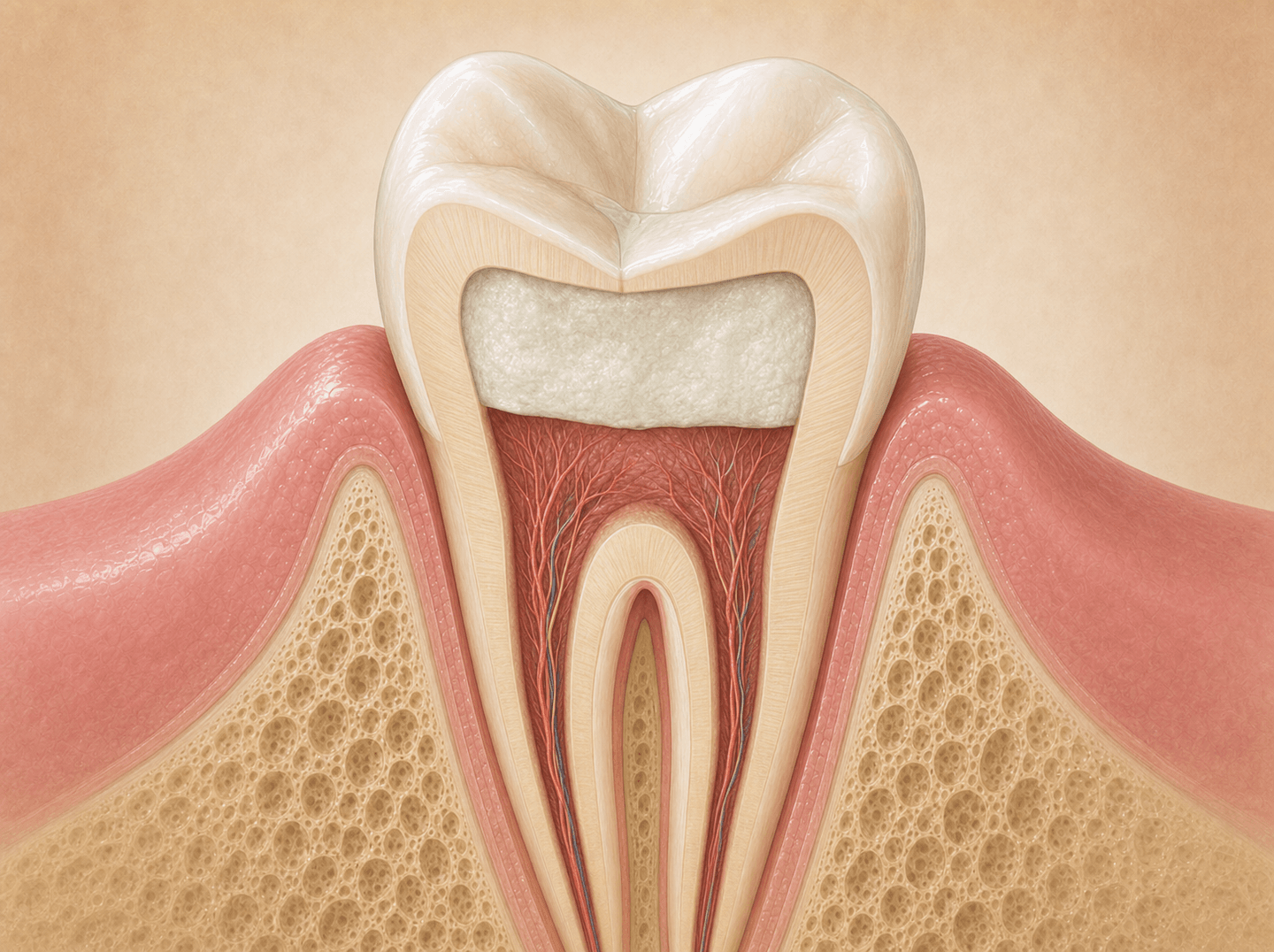
D3220 reports a therapeutic pulpotomy: a procedure in which the coronal pulp tissue is removed, the pulp chamber is irrigated and disinfected, and a medicament (commonly mineral trioxide aggregate, ferric sulfate, or formocresol depending on the practice’s protocol) is placed over the remaining vital radicular pulp tissue. The intent is to preserve the radicular pulp so the tooth can be retained until natural exfoliation. The code includes the access opening, the coronal pulp removal, the medicament placement, and the temporary or interim restoration placed at the same visit.
It does not cover:
- Pulpal debridement for acute pain relief. Use D3221.
- Pulpal therapy on primary anterior teeth where the radicular pulp is removed and the canal filled. Use D3230.
- Pulpal therapy on primary posterior teeth where the radicular pulp is removed and the canal filled. Use D3240.
- Complete root canal therapy on a permanent tooth. Use D3310 (anterior), D3320 (premolar), or D3330 (molar).
- Apexification or pulpal regeneration on a permanent tooth with incomplete root formation. Use D3351–D3354 or D3355–D3357 series.
- The final restoration placed after the pulpotomy. Stainless steel crowns are billed as D2930. Composite restorations follow the D2391–D2394 surface-count rules.
The code is intended for vital pulp procedures where the radicular pulp is preserved. If the radicular pulp is removed, the case is a different code.
When to bill D3220
Bill D3220 when:
- A primary tooth (or, less commonly, a permanent tooth with vital but compromised coronal pulp) has been diagnosed with a vital pulp condition requiring intervention.
- The coronal pulp has been removed and a medicament placed over the radicular pulp.
- The case has been temporized or restored at the same visit.
Do not bill D3220 for:
- Pulpal debridement done for pain relief on a tooth scheduled for definitive treatment later. Use D3221.
- Complete root canal therapy. Use D3310/D3320/D3330 on permanent teeth, D3230/D3240 on primary teeth requiring full radicular treatment.
- Indirect or direct pulp caps. Use D3110 (direct) or D3120 (indirect).
Where D3220 actually gets billed
The code lives in the world of pediatric dentistry and the pediatric portion of general practice. The typical case is a primary molar with deep caries approaching the pulp, a young patient who needs to keep the tooth until natural exfoliation, and a parent’s insurance or state Medicaid coverage to pay for the work. The pulpotomy is paired with a stainless steel crown (D2930) at the same visit; the two codes together are the standard restoration for a pulpally involved primary molar.
On permanent teeth, the code shows up rarely. Most permanent teeth with vital pulp pathology go straight to a full root canal at the same visit; the dentist doesn’t stop at coronal pulp removal. A genuine D3220 on a permanent tooth fits only when the therapeutic pulpotomy is the definitive vital-pulp treatment: the radicular pulp is preserved and no root canal is planned. The descriptor is explicit that the procedure is not to be read as the opening stage of a root canal, so do not bill D3220 for a pulpotomy performed as a precursor to a planned RCT. When the procedure is an emergency stop-gap to relieve pain ahead of a referral for definitive endo, the defensible codes are D3221 (pulpal debridement, which covers baby and adult teeth alike, when endo is not started the same day) or D9110 (palliative treatment), not D3220. D3221 is pulpal debridement rather than a coronal pulpotomy, so the choice is driven by intent: stop-gap before RCT points to D3221 or D9110, definitive vital-pulp preservation points to D3220.
Top reasons D3220 gets denied or downgraded
Five issues account for most problems on this code:
- Age cap on Medicaid or commercial plan. State Medicaid programs typically cap pediatric procedures at age 14, sometimes lower. A pulpotomy on a primary tooth above the age cap denies as non-covered. Some commercial plans apply similar caps. Check the rule before treatment planning.
- Wrong code for clinical situation. D3220 billed when the radicular pulp was actually removed (should be D3230 or D3240) or when the tooth was permanent and got full endo (should be D3310/D3320/D3330). Carriers reviewing chart notes may downgrade or deny.
- Same-day bundling with D2930. Most plans pay both separately, but a small number bundle the pulpotomy into the crown allowable. The denial reads as “bundled with other service.” Appeal with documentation of the two distinct procedures if the plan’s contract supports separate billing.
- Missing pre-op radiograph. Some carriers require a pre-op periapical or bitewing showing the carious lesion and the proximity to the pulp. Most claims that don’t include the radiograph pend rather than deny.
- Crossover confusion with D3221. D3220 (therapeutic pulpotomy) gets billed in place of D3221 (pulpal debridement for pain) or vice versa. The intent of the visit dictates the code: pain relief on a tooth scheduled for later definitive treatment is D3221; vital pulp preservation as the definitive treatment is D3220.
The pulpotomy-plus-stainless-steel-crown sequence
On primary molars, the standard restoration after a pulpotomy is a stainless steel crown (D2930). The reasoning is structural: a primary molar with a large pulpotomy access is too compromised to hold a composite restoration through to natural exfoliation, and a stainless steel crown provides reliable coverage until the tooth sheds.
The billing sequence:
- D3220 for the pulpotomy.
- D2930 for the stainless steel crown, same date of service, same tooth number.
Most plans pay both as separate procedures. Documentation should reflect both procedures clearly: the pulpotomy with the medicament used and the radicular pulp status, the crown with the size and the cementation material.
Documentation that supports the claim
The claim needs:
- Date of service.
- Tooth number (primary tooth letter for primary teeth: A–T for primary dentition).
- Pre-op periapical or bitewing for carriers that request it.
- Narrative for permanent-tooth cases documenting that the pulpotomy is the definitive vital-pulp treatment, not a precursor to root canal therapy.
For the patient record, document:
- Pulpal diagnosis (reversible pulpitis with coronal exposure, deep caries approaching pulp with vital tissue, traumatic coronal exposure).
- Pre-op pulp testing if performed.
- Medicament used (MTA, ferric sulfate, formocresol, biodentine).
- Radicular pulp status at completion (vital, hemorrhage controlled).
- Restoration placed at the same visit.
- Patient and parent instructions, including signs of failure to watch for.
The chart should distinguish a pulpotomy from a pulpectomy clearly. Notes that read “pulp treatment on tooth K” without specifying which procedure are an audit problem.
Example case
A 5-year-old patient presents with a large carious lesion on primary tooth K (lower right second primary molar). The pre-op bitewing shows decay extending into the dentin and approaching the pulp. The dentist accesses the tooth, encounters vital pulp tissue, removes the coronal pulp, controls hemorrhage with cotton and pressure, places mineral trioxide aggregate over the radicular pulp, and seats a stainless steel crown at the same visit.
Billing steps:
- Verify the patient’s pediatric coverage and confirm pulpotomy and stainless steel crown coverage.
- Submit D3220 with tooth letter K on the date of service.
- Submit D2930 with tooth letter K on the same date of service.
- Attach the pre-op bitewing if the carrier requires it.
If the patient is on a state Medicaid program, check the state’s coverage rules for pulpotomy and stainless steel crown together. Most state Medicaid programs cover both for primary teeth in patients under the age cap.
What to get right in your PMS
The specifics vary across Open Dental, Dentrix, Eaglesoft, Curve, and Carestream. The steps that matter:
- Use the right code for the procedure. D3220 only when the radicular pulp is preserved. If the canal is filled, the code is D3230 (primary anterior) or D3240 (primary posterior).
- Use primary tooth letters for primary teeth. A–T, not 1–32. A claim with a primary tooth procedure and a permanent tooth number triggers a rejection.
- Pair D3220 with D2930 (or other appropriate restoration) on the same date. The case is incomplete without the restoration.
- Document the medicament used. Carriers occasionally ask for this on audit.
- Check age limits before treatment planning. State Medicaid age caps are the most common reason a pulpotomy gets denied.
If your office sees recurring denials on pulpotomy claims, the cause is usually age cap or a chart-claim inconsistency about which procedure was actually performed. A short pre-visit verification call to the carrier on borderline-age cases prevents most of the denials.
FAQs
- Is D3220 for primary or permanent teeth?
- Either, in theory, but in practice the code is overwhelmingly billed on primary teeth. On a permanent tooth with a vital pulp diagnosis, the dentist usually completes a full root canal at the same visit and bills D3310, D3320, or D3330 depending on tooth type. A genuine D3220 on a permanent tooth fits only when the therapeutic pulpotomy is the definitive vital-pulp treatment: radicular pulp preserved, no root canal planned. The descriptor rules out reading the procedure as step one of a root canal, so don't bill D3220 for a pulpotomy done as a precursor to a planned RCT. When the procedure is an emergency stop-gap for pain ahead of a referral for definitive endo, the defensible codes are D3221 (pulpal debridement) or D9110 (palliative treatment), not D3220.
- What's the difference between D3220 and D3221?
- D3220 is therapeutic pulpotomy: vital pulp diagnosis, coronal pulp removed, medicament placed to preserve the radicular pulp, restoration follows. D3221 is pulpal debridement for relief of acute pain: the pulp is removed for emergency pain control on a tooth that will get definitive endo or extraction later. Different intent, different code.
- What's the difference between D3220 and D3230 or D3240?
- D3230 is pulpal therapy on a primary front tooth and D3240 is pulpal therapy on a primary back tooth, both with the restoration billed separately. Both are filled-canal procedures on primary teeth that are non-vital or have necrotic pulp tissue. D3220 keeps the radicular pulp alive; D3230 and D3240 fill it. The clinical decision is based on the diagnosis at the visit.
- Why did Medicaid deny D3220 on a 13-year-old?
- Most state Medicaid programs apply an age cap on pediatric procedures, often at age 14, sometimes lower. A pulpotomy on a primary tooth above the age cap may deny as non-covered. Check the state's age rules before treatment planning. For older patients, the case may require recoding as full pulpectomy or extraction-plus-spacer depending on the clinical situation.
- Can D3220 and D2930 (stainless steel crown) be billed on the same day?
- Yes. The pulpotomy plus stainless steel crown sequence is standard on primary molars and the two codes are routinely billed at the same visit. Some plans have specific bundling language, but most pay the pulpotomy and the crown as separate procedures. Submit both on the same date of service with the same tooth number.
Related codes
Need help billing this code?
We handle D3220 claims daily.
If your team is spending time on denials, narratives, or carrier follow-up for this code, our outsourced dental insurance billing service can take it off your plate. We work inside your PMS and post payments the same week.
CDT codes are maintained by the American Dental Association. This page is an editorial billing guide, not the official ADA code descriptor. Verify current coverage policies with each carrier before submitting claims.