D3221 is the CDT code for pulpal debridement, the emergency removal of inflamed or infected pulp to relieve acute pain on a primary or permanent tooth before the root canal is completed at a later visit.
Carriers treat D3221 as interim care, so a plan that pays it will usually fold that payment into the completed root canal fee when the same office finishes the case, and some deny it outright when the definitive RCT lands on the same tooth the same day.
What D3221 covers
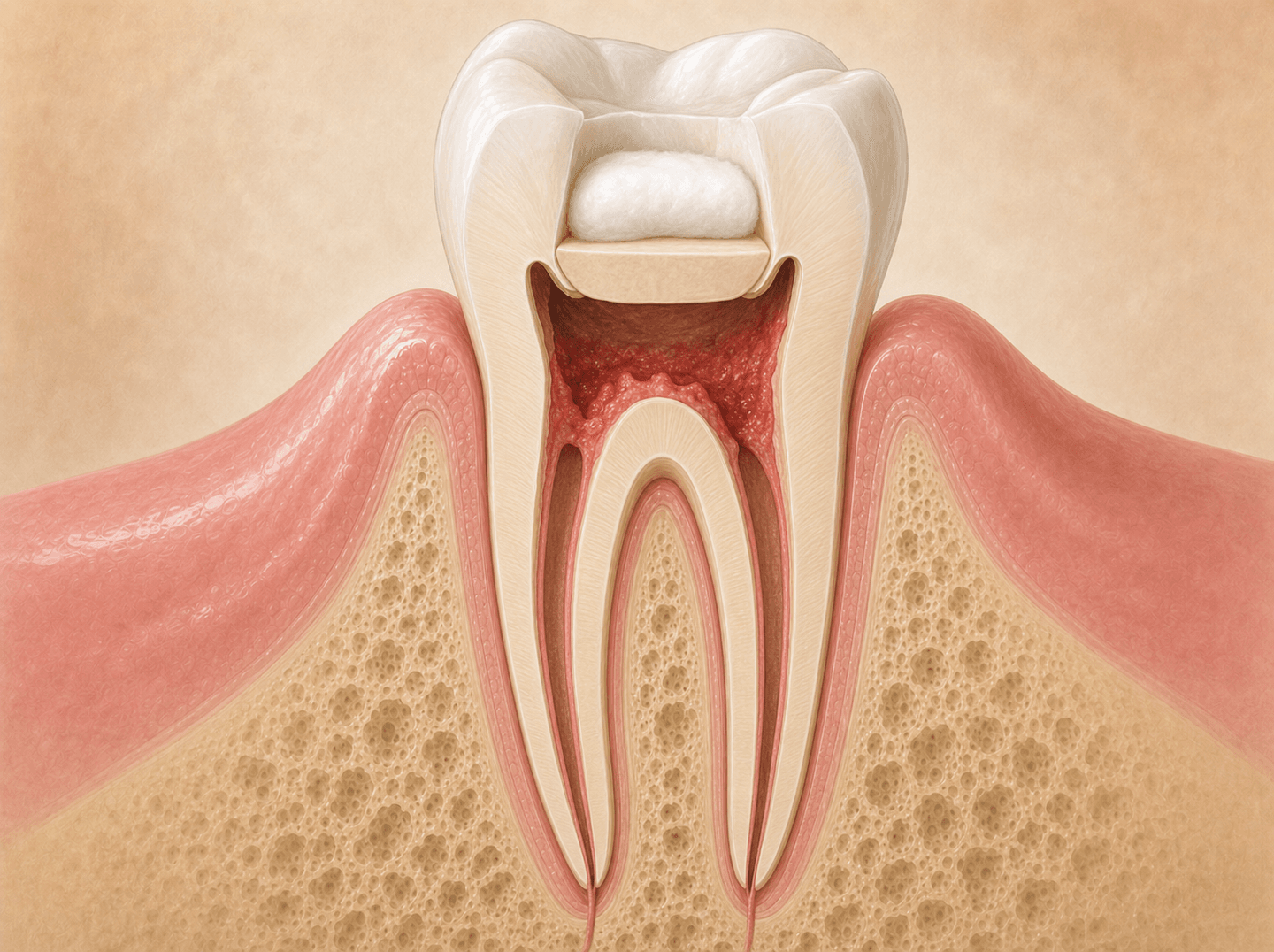
D3221 reports pulpal debridement done to relieve acute pain. The clinician opens the tooth, removes the inflamed or infected pulp tissue from the chamber and accessible canal space, and places a temporary seal. The goal is to get the patient out of pain, not to finish the tooth. Definitive treatment (a full root canal or an extraction) happens at a later visit, frequently after a referral. The nomenclature names both primary and permanent teeth, so there is no dentition split on this code.
It does not cover:
- A completed root canal on an anterior tooth. That’s D3310.
- A completed root canal on a premolar. That’s D3320.
- A completed root canal on a molar. That’s D3330.
- A therapeutic pulpotomy that preserves the radicular pulp as the definitive treatment. That’s D3220.
- A partial pulpotomy for apexogenesis on an immature permanent tooth. That’s D3222.
- Palliative treatment that relieves pain without entering the pulp. That’s D9110.
When to bill D3221
Bill D3221 when:
- A patient presents in acute pain and the clinician removes the pulp for relief.
- The tooth is temporized and definitive endo or extraction is deferred to a later visit.
- The visit’s intent is pain control, not completion of the root canal.
Do not bill D3221 for:
- A root canal completed the same visit. Bill D3310, D3320, or D3330 for the finished tooth instead. The debridement is part of the completed procedure.
- A therapeutic pulpotomy where the radicular pulp is intentionally preserved. Use D3220.
- Pain relief that did not involve entering the pulp (occlusal adjustment, a medicated dressing, drainage of a swelling). D9110 is the palliative code.
What separates D3221 from a completed root canal
The distinguishing axis is completion, not tooth type. D3221 sits before the finished root canal on the treatment timeline. D3310, D3320, and D3330 report a tooth that has been cleaned, shaped, and obturated. D3221 reports a tooth that was opened and debrided to stop pain, with the canals left to be finished later.
That single fact drives the billing behavior. When the same office later completes the case, most carriers view the debridement as the opening phase of the eventual root canal and pay for the completed procedure only. When the debridement and the completed RCT happen the same day on the same tooth, the debridement is subsumed entirely. Separate reimbursement for D3221 is most defensible when the patient is stabilized and then referred out, so a different provider completes (or the tooth is later extracted). Even then, treat the separate payment as plan-dependent.
Top reasons D3221 gets denied or bundled
- Same-day completion. D3221 and D3310, D3320, or D3330 billed on the same tooth the same date. The carrier pays the completed root canal and drops the debridement line.
- Same-office completion within a short window. The debridement gets folded into the RCT allowable when the same office finishes the tooth a week or two later. Plan-dependent, but common.
- Coded in place of D3220. The visit was actually a therapeutic pulpotomy (radicular pulp preserved as the definitive treatment), which is D3220, not an emergency debridement.
- Coded in place of D9110. The clinician did not enter the pulp. Palliative pain treatment is D9110. A D3221 with a chart note that never documents pulp removal will not survive an audit.
- No documentation of the acute condition. The claim reads as routine care. D3221 is an emergency code, and the note needs to show the pain, the diagnosis, and why definitive treatment was deferred.
Documentation that supports the claim
The claim needs:
- Date of service.
- Tooth number (letters A through T for primary teeth, 1 through 32 for permanent).
- A narrative establishing the emergency: the presenting pain, the pulpal diagnosis (irreversible pulpitis, pulpal necrosis, acute apical abscess), and that definitive treatment was deferred.
For the patient record, document:
- The pain history and findings on presentation.
- Pulp testing results if performed.
- That the pulp was removed for relief and the tooth temporized.
- The plan for definitive treatment (RCT to be completed, referral made, or extraction planned).
A note that reads only “opened tooth #19, temp placed” is thin. A note that documents the acute pulpitis, the debridement, the temporary seal, and the referral supports the code and survives review.
Example case
A patient presents on a Friday afternoon with severe throbbing pain in the lower left first molar (tooth #19). Cold testing produces a lingering response and the tooth is tender to percussion. The clinician diagnoses irreversible pulpitis, administers local anesthetic, opens the tooth, removes the coronal and accessible pulp tissue to relieve the pressure, places a cotton pellet and a temporary seal, and refers the patient to an endodontist for the definitive root canal the following week.
Billing steps:
- Submit D3221 for tooth #19 on the date of the emergency visit.
- Add a narrative: acute irreversible pulpitis with lingering cold response and percussion tenderness, pulp debrided for pain relief, tooth temporized, patient referred to endodontist for completion.
- Do not add a D3330 line for this visit. The root canal was not completed here.
- When the endodontist completes the RCT, that office bills D3330 on the completion date. Because a different provider finished the case, separate payment for the earlier D3221 is more likely, though still plan-dependent.
What to get right in your PMS
- Reserve D3221 for the emergency, deferred-completion case. If the root canal was finished the same visit, bill D3310, D3320, or D3330 for the completed tooth instead.
- Attach the narrative every time. D3221 is an emergency code. Without the acute diagnosis and the deferral, it reads as routine care and pends.
- Do not pair D3221 with a same-day completed RCT on the same tooth. The carrier pays the completed procedure and drops the debridement.
- Keep D3221 and D3220 straight in your code favorites. Emergency debridement before definitive care is D3221. Definitive vital-pulp preservation is D3220. The intent of the visit decides.
- Use the correct tooth designation. Primary tooth letters for primary teeth, permanent numbers for permanent teeth. A primary procedure billed with a permanent tooth number rejects at the clearinghouse.
FAQs
- What is the code for opening a tooth to relieve pain before a root canal?
- D3221, pulpal debridement. It reports removing the inflamed or infected pulp for acute pain relief when the definitive root canal or extraction will happen at a later visit, often after a referral to an endodontist. It applies to both primary and permanent teeth.
- Can I bill D3221 and the root canal on the same tooth the same day?
- Usually no. Once the definitive root canal (D3310 anterior, D3320 premolar, or D3330 molar) is completed on that tooth the same day, the debridement is considered part of the completed procedure. Billing both on the same date and tooth typically pends or denies the D3221 line. This is plan-dependent, but it is the common carrier behavior.
- What is the difference between D3221 and D3220?
- D3221 and D3220 differ by intent. D3221 is pulpal debridement for emergency pain relief on a tooth that will get definitive endo or extraction later. D3220 is a therapeutic pulpotomy, a vital-pulp procedure that removes the coronal pulp and places a medicament to keep the radicular pulp alive as the definitive treatment, most often on a primary tooth. Different goal, different code.
- Does D3221 apply to baby teeth?
- Yes. The code covers primary and permanent teeth, which is why the nomenclature names both. On a primary tooth the more common vital-pulp procedure is D3220 (therapeutic pulpotomy), so use D3221 only when the intent is emergency debridement for pain ahead of definitive treatment, not radicular-pulp preservation.
- Why did the carrier deny D3221 after the endodontist finished the root canal?
- Most plans bundle the debridement into the completed root canal when the same provider or office finishes the case. If the patient was seen for pain, D3221 was billed, and the RCT was completed shortly after, the carrier may apply the D3221 payment against the RCT allowable or deny the D3221 line. When a different office completes the RCT, separate payment is more likely, but it stays plan-dependent.
Related codes
Need help billing this code?
We handle D3221 claims daily.
If your team is spending time on denials, narratives, or carrier follow-up for this code, our outsourced dental insurance billing service can take it off your plate. We work inside your PMS and post payments the same week.
CDT codes are maintained by the American Dental Association. This page is an editorial billing guide, not the official ADA code descriptor. Verify current coverage policies with each carrier before submitting claims.