D5650 is the CDT code for adding a new tooth to a patient's existing partial denture, billed once for each tooth added.
- When to use: A natural tooth was extracted or lost, and the patient's current partial is modified to carry a replacement for it.
- When not to use: Replacing a prosthetic tooth the partial already carried is D5640, a new clasp is D5660, and a complete denture tooth is D5520.
- Billing note: Carriers often match D5650 to an extraction date, and the missing-tooth clause can apply if the tooth was lost before coverage.
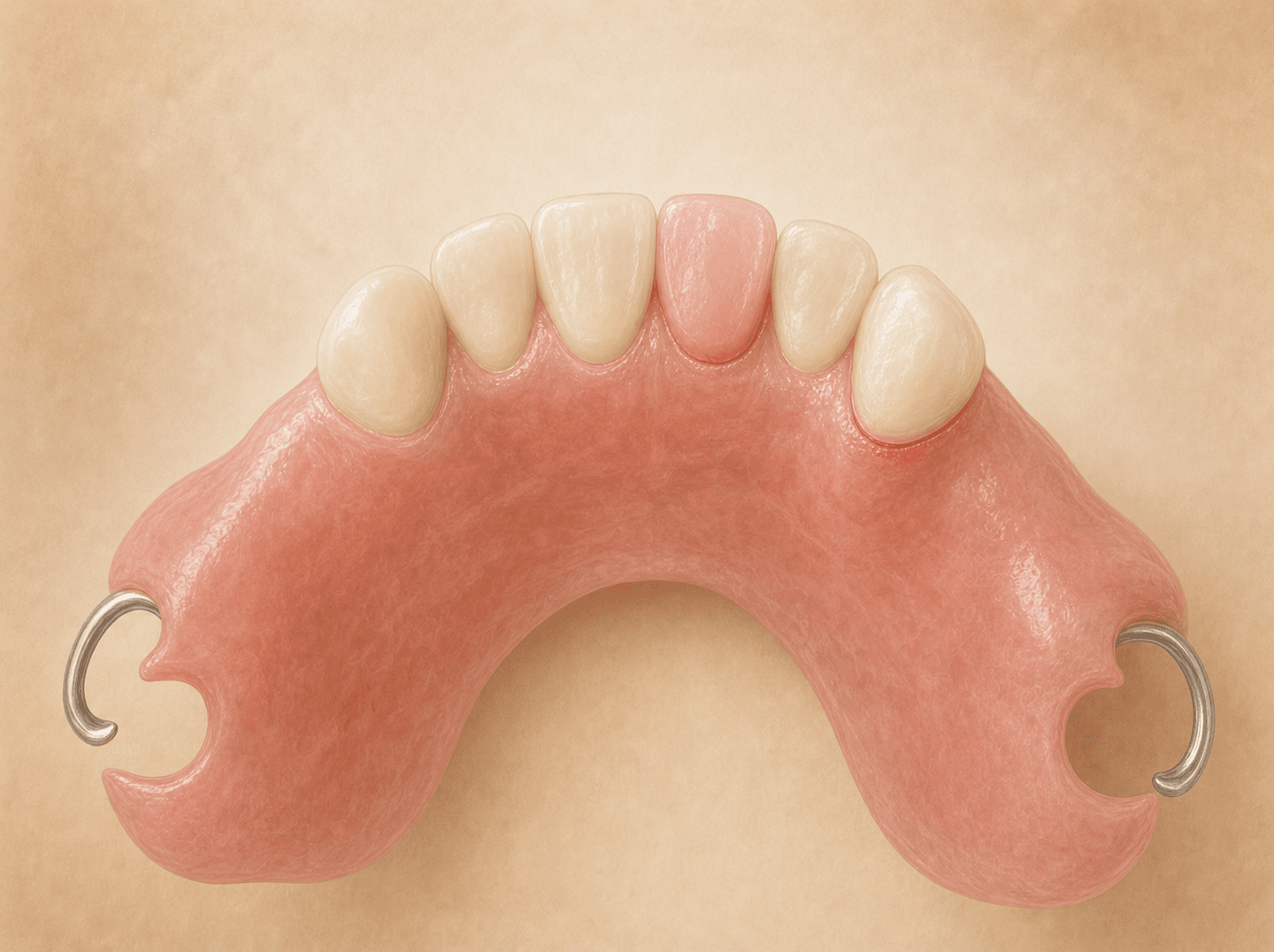
The event behind D5650 is an extraction
D5650 is an alteration code. The patient’s mouth changed: a natural tooth next to or between the replaced teeth was extracted, fractured beyond saving, or lost. Rather than make a new partial, the lab adds a prosthetic tooth to the existing one, usually with new acrylic on the saddle, and the dentist delivers and adjusts it.
The unit is each tooth added. A partial that gains a premolar and a molar after two extractions is two units.
Because the clinical event is the tooth loss, carriers tend to review D5650 against the extraction. They look for the extraction on the history, check its date, and compare the added tooth number to the extracted one. A claim where those three facts line up usually processes cleanly.
Repair or addition: the CDT 2025 wording
CDT 2025 revised the wording of both partial-denture tooth codes, adding the per-tooth unit to D5650. D5640 was reworded to cover missing or broken teeth on a partial, the same scope its complete-denture counterpart D5520 already had; D5520 was edited in the same revision so all three codes now end in the same per-tooth form. Some payer fee schedules still print the older short names.
The practical effect is a cleaner line between the two partial codes. A prosthetic tooth that fell off the saddle was always closer to a repair, and the descriptor now says so. D5650 is left with one job: adding a tooth the partial never carried. Neither code changed for CDT 2026.
The missing-tooth clause still applies
Many plans exclude replacing teeth that were missing before the patient’s coverage began. An addition is a replacement of a lost tooth, so the clause can reach D5650 the same way it reaches a new partial.
A tooth extracted during coverage, with the extraction billed through the same plan, usually passes. A tooth extracted years ago at another office, added to the partial now, may not. When the extraction isn’t in the carrier’s history, a short narrative with the extraction date and where it was done saves a round of correspondence.
Example: a lateral incisor added to an upper partial
A patient has a four-year-old upper resin partial, D5211 when delivered, replacing teeth 8 and 9. Tooth 7 fractures at the gumline and is extracted. Before the extraction, the dentist takes an impression with the partial seated so the lab can process a lateral incisor onto the existing base.
The partial goes back in the same day as the extraction. Billing:
- The extraction, under its own code, on tooth 7.
- D5650, one unit, tooth 7, same date of service.
- Chart note tying the two together: tooth 7 lost to fracture, added to existing maxillary partial.
Tooth 7 was not a clasp abutment, so nothing else changes. When the extracted tooth was carrying a clasp, the partial also needs retention somewhere else, which is the D5660 case.
When an addition isn’t enough
An added tooth sits on new acrylic over a fresh extraction site, and the ridge keeps remodeling for months. Some patients come back with a loose saddle and need a reline later. For an upper partial processed in the lab, that is D5760.
When a patient has lost several teeth since the partial was made, a string of additions can approach the cost of a new D5213 or D5214 cast partial. If the replacement frequency has elapsed, a new partial may be the better plan for the patient and the simpler claim.
FAQs
- Is D5650 billed per tooth?
- Yes. Since CDT 2025 the descriptor says per tooth outright, so two teeth added to the same partial is two units, each charted by tooth number. Before that revision the per-tooth unit was common practice but not spelled out, and some older fee schedules still show the short name without it.
- What's the difference between D5650 and D5640?
- Whether the partial ever carried that tooth. D5640 replaces a prosthetic tooth the partial already had that broke or went missing from the saddle. D5650 adds a tooth the partial never had, because the patient lost the natural tooth in that space. A prosthetic tooth that came off and was lost is still D5640, because the partial carried it.
- Can a tooth be added to a flexible partial?
- Often not. Many flexible nylon partials, billed as D5225 or D5226 when made, can't be modified the way acrylic or cast partials can, so losing another tooth may mean a new partial. Whether a particular flexible partial can take an addition is a question for the lab.
- Does adding a tooth reset the partial's replacement clock?
- Generally no. An addition modifies the existing prosthesis, so the replacement frequency usually still runs from the partial's original delivery date. Repair and addition benefits are plan-dependent, though, and some plans count D5650 against the same limit as the repair codes.
Related codes
Need help billing this code?
We handle D5650 claims daily.
If your team is spending time on denials, narratives, or carrier follow-up for this code, our outsourced dental insurance billing service can take it off your plate. We submit the claims, post what comes back, and follow up on anything unpaid. Already sitting on older claims that never paid? Our AR cleanup project works the backlog.
“Claims, posting, denials, all of it gets handled, and it costs far less than hiring another employee. My front desk got hours of their week back, and honestly I just don't think about billing anymore.”
CDT codes are maintained by the American Dental Association. This page is an editorial billing guide, not the official ADA code descriptor. Verify current coverage policies with each carrier before submitting claims.