D6190 is the CDT code for the radiographic template, surgical guide, or positional index used to plan or guide implant placement.
- When to use: A template or guide is fabricated for an implant case, whether made digitally or conventionally, and reported with a narrative.
- When not to use: The implant placement itself is D6010, second-stage uncovering is D6011, and a bone graft at placement is D6104.
- Billing note: D6190 is by report, so a claim without a narrative naming the index and why the case needed it stalls before coverage is reviewed.
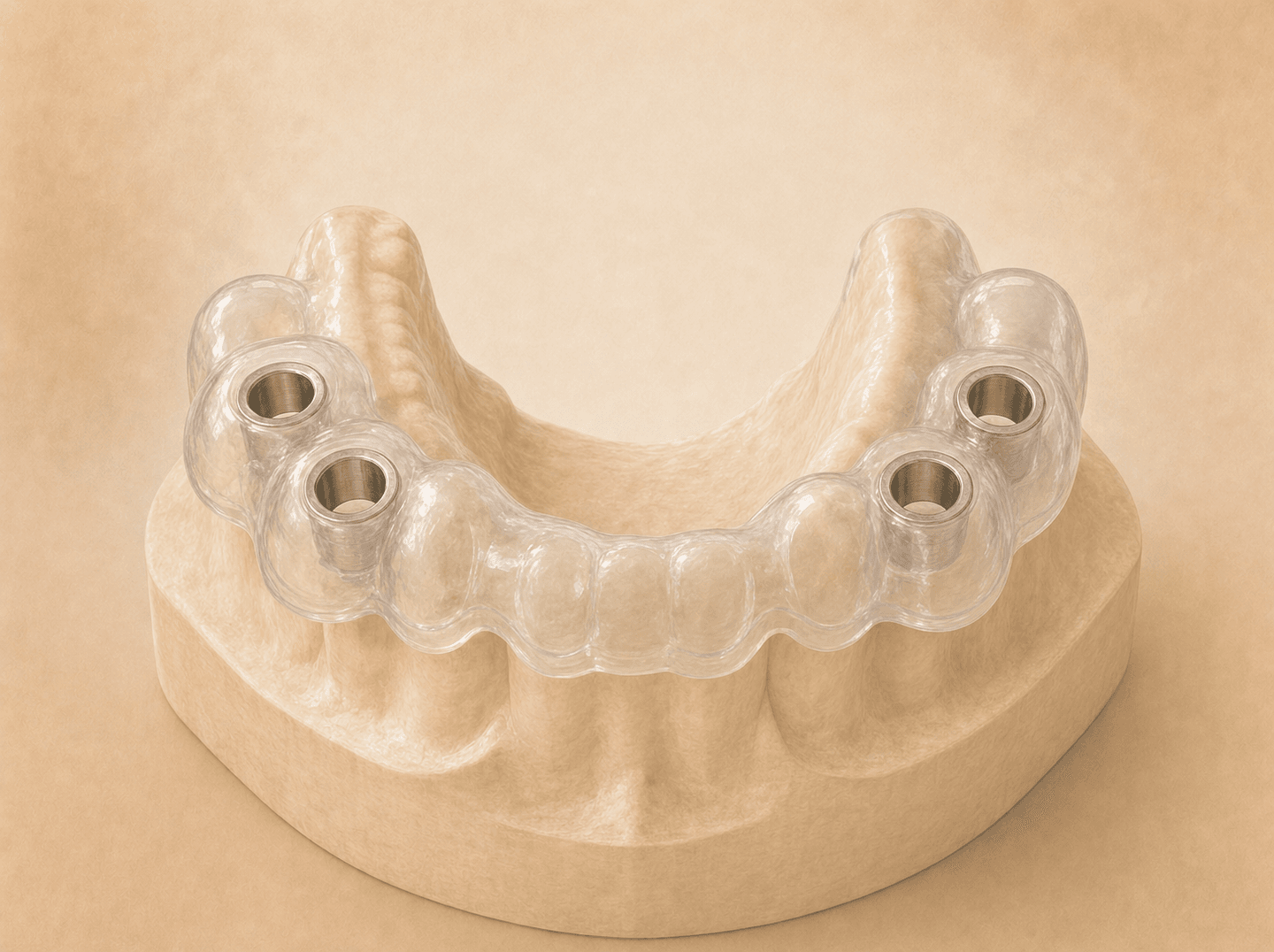
What D6190 covers
D6190 reports the radiographic or surgical implant index: the planning aid a dentist uses to position an implant accurately. That can be a radiographic template to evaluate the site on imaging, a surgical guide to direct the drill at surgery, or a positional index that records implant orientation for the restorative phase. The code reports the index only.
D6190 is a by report code. Every claim needs a narrative describing what the index was and why the case needed it. A D6190 line with no report is a claim the carrier cannot adjudicate.
The distinguishing axis: it is a planning aid, not a procedure
D6190 is not a step in the surgery. It is the aid that supports the surgery, billed on its own line and adjudicated on its own terms. Do not bill D6190 for:
- The surgical placement of the implant body. That is D6010, which seats the fixture in bone. The D6010 page refers to the guide as fabricated in advance.
- Second-stage surgery to uncover an integrated implant. That is D6011.
- A bone graft placed at the time of implant placement. That is D6104.
- The abutment or crown. Those are the restorative codes that follow, such as D6056 prefabricated abutment, D6057 custom abutment, and D6058 abutment-supported ceramic crown.
Coverage reality: standalone, bundled, or excluded
Plans handle D6190 in one of three ways, and they differ enough that guessing wrong creates a patient-billing problem:
- Paid as a standalone service. The plan pays an allowable on the D6190 line as a separate planning step.
- Bundled into the global implant fee. The plan treats the index as part of the surgery, as it treats surgical prep, and pays nothing extra. The line is absorbed rather than denied.
- Excluded with the rest of the case. If implants are not a covered benefit, D6190 is not either.
The general benefit summary will not tell you which applies. Verify the carrier’s handling before the index is fabricated, record it on the plan record for the next implant case, and build the patient estimate around it. The dental implant codes guide covers how D6190 fits with the placement and second-stage codes and which carriers fold it into the implant fee.
Documentation that supports the claim
The narrative does most of the work. Include:
- What the index is: radiographic template, surgical guide, or positional index.
- Why the case needed it: planning around an anatomical structure, positioning multiple implants, or guiding placement in a site that calls for precision.
- The implant site or sites it serves, so the index connects to the surgical case on the record.
A bare D6190 line item is the most common reason the code stalls or denies for insufficient information. Flag D6190 as by report in the PMS so the line cannot go out without a narrative, and keep a narrative template with these three parts for the team to fill in per case.
In the patient record, keep the index design, the imaging or models it was built from, and the fabrication date. That record answers any request for support after submission.
FAQs
- What is the dental code for a surgical guide?
- D6190, the radiographic or surgical implant index. It covers a radiographic template, surgical guide, or positional index used to plan and place implants. It is a by-report code, so the claim needs a narrative describing what was fabricated and why. The surgery that places the implant is D6010, on a separate line.
- Is D6190 a current CDT code for 2026?
- Yes. D6190 is active and unchanged in CDT 2026, in the implant services section. No implant codes were deleted for 2026 (the six deletions that year were elsewhere, including D9248 and D1352), so D6010 and the abutment and crown codes around it also remain. The by-report designation is part of the code, not a recent change.
- Does insurance pay for D6190 separately?
- It depends on the plan. Some pay the index as a separate planning service, some bundle it into the implant surgery fee, and plans that exclude implants usually exclude D6190 too. Verify the carrier's handling before fabricating the index and set the patient estimate to match.
- Why was D6190 denied for no documentation?
- Because it is a by-report code, and a claim without a report has nothing to adjudicate. The carrier expects a narrative naming the index (radiographic template, surgical guide, or positional index), why the case needed it, and the implant it serves. Attach it on the first submission.
- What's the difference between D6190 and D6010?
- D6190 is the planning aid; D6010 is the surgery. D6190 reports the index used to plan or guide where the implant goes, and D6010 reports placing the implant body in bone. They often appear on the same case at different times, but they are adjudicated separately, and coverage of one says nothing about the other.
- Can D6190 be billed for a digital surgical guide?
- Yes. The code covers the implant index however it was produced, so a digitally planned and printed guide is reported the same way as a conventional one. The claim depends on the narrative, not the fabrication method, and whether the carrier pays is a separate, plan-dependent question.
Related codes
Need help billing this code?
We handle D6190 claims daily.
If your team is spending time on denials, narratives, or carrier follow-up for this code, our outsourced dental insurance billing service can take it off your plate. We submit the claims, post what comes back, and follow up on anything unpaid. Already sitting on older claims that never paid? Our AR cleanup project works the backlog.
“Claims, posting, denials, all of it gets handled, and it costs far less than hiring another employee. My front desk got hours of their week back, and honestly I just don't think about billing anymore.”
CDT codes are maintained by the American Dental Association. This page is an editorial billing guide, not the official ADA code descriptor. Verify current coverage policies with each carrier before submitting claims.