D6245 is the CDT code for an all-porcelain or ceramic bridge pontic, the replacement tooth in the span, with no metal underneath.
- When to use: Bill one D6245 for each pontic made entirely of ceramic, such as zirconia or lithium disilicate, on the same claim as the retainers.
- When not to use: A pontic over high noble metal is D6240, a cast high noble pontic is D6210, and all-ceramic retainer crowns are D6740.
- Billing note: Some plans pay an all-ceramic pontic at a PFM or metal allowable, especially on posterior teeth, so estimate the whole bridge before prep.
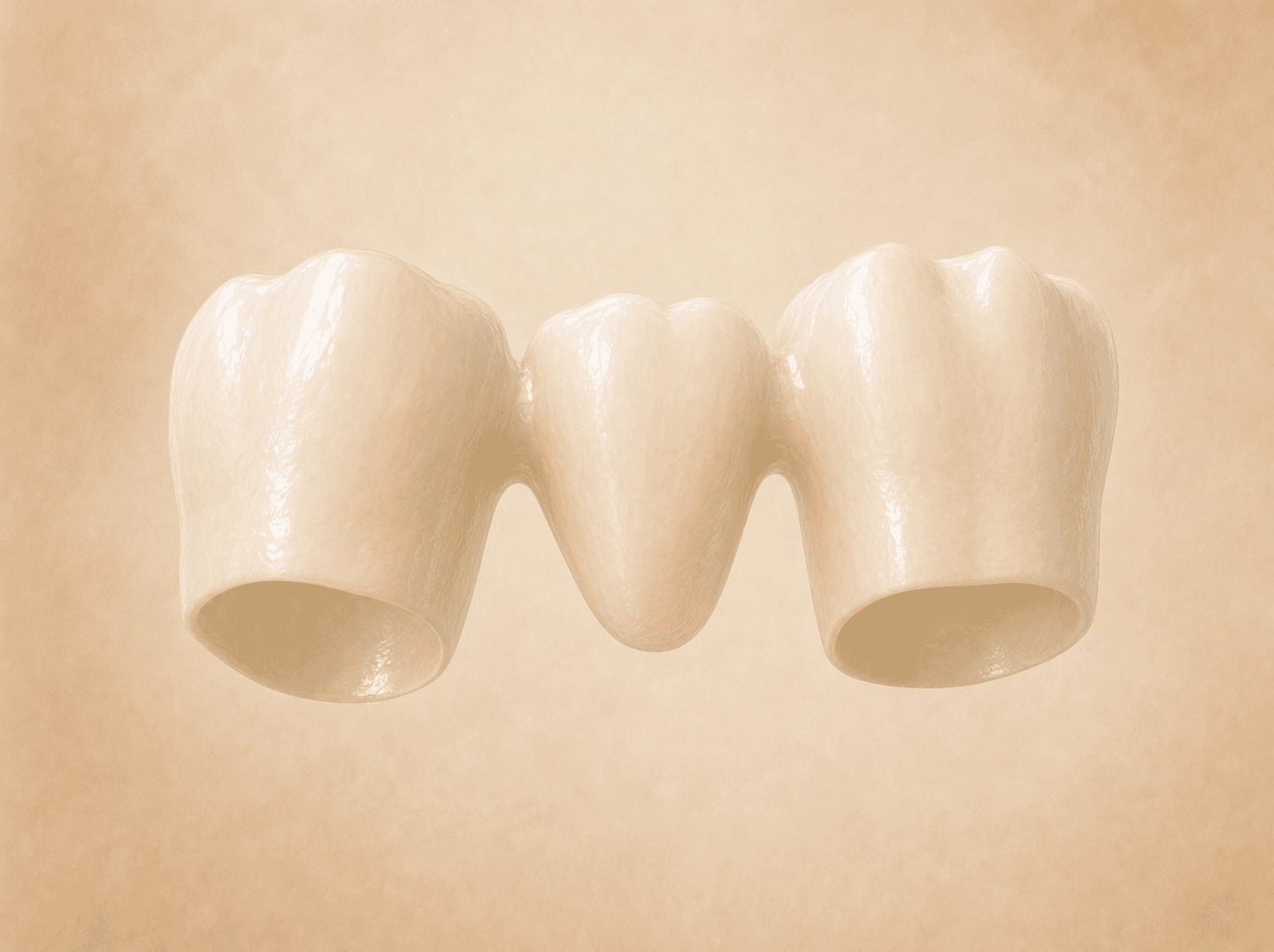
What D6245 covers
D6245 reports the pontic of a fixed bridge fabricated entirely in porcelain or ceramic, with no metal substructure. The pontic is the artificial tooth suspended in the bridge span, the unit that replaces the missing tooth and bridges the gap between the abutment teeth. The code covers the pontic unit only: the lab fabrication of that ceramic tooth form, fitted to the span and the occlusion.
It does not cover:
- The retainer crowns that cap the abutment teeth on either end of the bridge. Use the retainer codes, D6740 for an all-ceramic retainer or D6750 for porcelain fused to high noble metal.
- Pontics of other materials. Use D6210 (cast high noble), D6240 (porcelain fused to high noble), and the parallel base and noble alloy codes.
- A single crown on a natural tooth. Use the D2700 series (e.g., D2740 for all-ceramic).
- Implant-supported single crowns. Use D6058, D6065, or the related codes.
- The pontic of an implant-supported bridge as a separate concept. The pontic codes (D6240, D6245) are used for the pontics of implant-supported bridges too, paired with implant-supported retainer codes.
Two things define the code: it’s a pontic (the suspended replacement tooth, not the abutment cap), and it’s all porcelain or ceramic (no metal).
When to bill D6245
Bill D6245 when:
- A fixed bridge replaces a missing tooth with a suspended pontic.
- The pontic is fabricated entirely in porcelain or ceramic, with no metal substructure.
- The pontic is billed as its own line item, alongside the retainer crowns and any other pontics.
Do not bill D6245 for:
- The retainer crowns. Use D6740 (porcelain/ceramic retainer) or D6750 (PFM-to-high-noble retainer).
- A pontic of a different material. Use D6210, D6240, or the parallel codes.
- A single crown on a standing tooth. Use the D2700 series.
- A removable partial denture replacing the tooth. That’s the D5000 series.
What separates a pontic from a retainer
The pontic-versus-retainer distinction is the structural question on every fixed-bridge claim. A bridge has two kinds of units, and they carry different codes.
Pontic (D6245 for all-ceramic):
- The artificial tooth suspended in the span.
- Replaces the missing tooth. It doesn’t sit on a prepared abutment.
- One pontic code per missing tooth in the span.
Retainer crown (D6740 or D6750):
- The crown that caps a prepared abutment tooth at the end of the bridge.
- Anchors the prosthesis. It’s seated on a natural tooth (or an implant) that was prepared to receive it.
- One retainer code per abutment.
A standard three-unit bridge replacing one tooth is two retainers plus one pontic: two D6740 (or D6750) retainer crowns and one D6245 pontic, three line items on the claim. Billing the pontic as a retainer crown, or the retainer as a pontic, misrepresents the bridge and produces a code-mismatch denial. The retainer caps a tooth; the pontic fills a gap.
The material-based pontic codes
The pontic codes are organized by the material the lab fabricated, the same way the retainer-crown codes are. The ones in the common span:
- D6210 is a cast high noble metal pontic (full metal).
- D6240 is a porcelain-fused-to-high-noble-metal pontic (a ceramic veneer over a metal substructure).
- D6245 is an all-porcelain or all-ceramic pontic (no metal), typically zirconia or lithium disilicate.
There are parallel codes for predominantly base metal and noble metal in both the cast and porcelain-fused families. Code to what the lab actually made. A zirconia pontic is D6245. A pontic with a metal coping under porcelain is D6240, not D6245, even though both look ceramic in the mouth. The lab work order or the prescription is the source of truth for the material.
The alternate-benefit downgrade
Some plans apply an alternate-benefit clause that pays an all-ceramic pontic at a lower-material allowable. The math:
- The office submits D6245 at the all-ceramic pontic office fee.
- The carrier processes and applies the alternate-benefit clause.
- The carrier pays D6245 at a lower-material allowable (often a PFM or metal pontic rate), particularly on posterior teeth where the plan considers a less esthetic material adequate.
- The remaining balance is the difference plus coinsurance on the lower allowable. Whether the office can collect the difference from the patient depends on the plan and the provider agreement, so read the adjustment codes before posting it.
Anterior teeth are more likely to be paid at the ceramic allowable on esthetic grounds. Posterior teeth are more likely to be downgraded. Hawaii Dental Service’s 2023 guidelines, for one, process porcelain and ceramic units on molars as the metal equivalent for most plans. This is plan-dependent, and the plan booklet usually spells out the material rules by tooth position. The other alternate benefits bridges run into are collected in the bridge dental codes guide.
Top reasons D6245 gets denied or downgraded
Five issues account for most problems on this code:
- Alternate-benefit downgrade. Plan pays the all-ceramic pontic at a lower-material allowable, often on posterior teeth. The plan still pays, so this is not a denial. Check the provider agreement before billing the patient the difference.
- Pontic billed without the rest of the bridge. The carrier expects the full span and requests the retainer crowns. Submit the bridge as a unit.
- Material mismatch. D6245 billed for a pontic that actually has a metal substructure (should be D6240). The lab work order resolves which code is correct.
- Missing-tooth clause. The plan won’t cover replacement of a tooth that was already missing before the patient’s coverage started. The pontic denies under the missing-tooth clause, and on plans worded around the initial placement of a bridge the retainers deny with it. Our guide to the missing tooth clause covers the wording patterns. Verify the tooth’s extraction date against the coverage start date.
- Coded as a retainer. D6245 used for the abutment cap instead of the suspended tooth, or a retainer code used for the pontic. The carrier pays the code the bridge design supports.
Documentation that supports the claim
The claim needs:
- The full bridge on one claim: each retainer crown and each pontic as its own line.
- Tooth numbers for the abutments and the pontic spans.
- The material designation (all ceramic).
- Prep and seat dates.
For the patient record, document:
- The span design (which teeth are abutments, which are pontics).
- The pontic material (zirconia, lithium disilicate) from the lab prescription.
- The reason for the fixed bridge over an alternative (implant, removable partial), when relevant to the case.
- The extraction date of the replaced tooth, which matters for the missing-tooth clause.
The extraction date is the documentation that most often decides coverage on a pontic. A tooth lost before the coverage start date triggers the missing-tooth clause on many plans, and the pontic denies regardless of how well the rest of the claim is built. Confirming the date before treatment planning prevents the surprise.
Example case
A 53-year-old patient is missing tooth #19 (lower left first molar), extracted two years ago while covered under the current plan. Teeth #18 and #20 are sound and suitable as abutments. The plan calls for a three-unit all-ceramic (zirconia) fixed bridge: zirconia retainer crowns on #18 and #20 with a zirconia pontic at #19.
Bridge design:
- Retainer crown on #18 (D6740, all-ceramic).
- Pontic at #19 (D6245, all-ceramic).
- Retainer crown on #20 (D6740, all-ceramic).
Billing steps:
- Verify benefits and confirm bridge coverage. Check the missing-tooth clause against the #19 extraction date and check the plan’s material rules by tooth position.
- Run a pre-treatment estimate on the full bridge. If the plan downgrades all-ceramic to PFM on posterior teeth, quote the gap on all three units.
- Submit the bridge on one claim: D6740 on #18, D6245 on #19, D6740 on #20, with prep and seat dates.
- Document the zirconia material from the lab prescription and the #19 extraction date.
- If the carrier downgrades, post the payment and read the adjustment codes before transferring any difference to the patient. If it denies under the missing-tooth clause, the appeal turns on the extraction date.
If the plan covers the bridge at the all-ceramic allowable, the claim pays per the plan’s bridge rules and the patient owes the standard coinsurance. If the plan downgrades to PFM, the gap across all three units is usually the patient’s responsibility where the contract allows it, which the pre-treatment estimate should have flagged.
Fixed-bridge billing checks
The specifics vary across Open Dental, Dentrix, Eaglesoft, Curve, and Carestream. The steps that matter:
- Bill the bridge as a unit. Each retainer and each pontic is its own line on one claim. Submitting the pontic alone triggers a request for the rest.
- Match each unit’s code to its role and material. Pontic at the gap (D6245 for all-ceramic), retainer on the abutment (D6740 or D6750). The lab prescription confirms the material.
- Check the missing-tooth clause before treatment planning. The extraction date against the coverage start date decides coverage on the pontic more often than anything else.
- Run the pre-treatment estimate on the whole bridge. An all-ceramic downgrade usually hits every unit, not just the pontic.
- Keep the lab prescription in the record. It’s the source of truth for the material code and the defense against a material-mismatch downgrade.
If your office sees recurring D6245 problems, the cause is usually the missing-tooth clause or an all-ceramic material downgrade the practice didn’t flag. Confirming the extraction date and the plan’s material rules before the prep appointment prevents most of them.
FAQs
- What's the difference between a pontic and a retainer crown?
- A pontic is the artificial tooth in the middle of a bridge, the part suspended over the gap to replace the missing tooth. A retainer crown is the cap on an abutment tooth at either end of the bridge that anchors the prosthesis. A standard three-unit bridge bills as two retainer crowns plus one pontic. D6245 is the pontic. The retainer crowns carry their own codes (D6740 for an all-ceramic retainer, D6750 for porcelain fused to high noble metal).
- How do I pick the right pontic code by material?
- The pontic codes are organized by material. D6210 is a cast high noble metal pontic, D6240 is porcelain fused to high noble metal, and D6245 is all porcelain or ceramic. There are parallel codes for predominantly base and noble alloys. Code to the material the lab actually fabricated. D6245 is the all-ceramic option, typically zirconia or lithium disilicate, with no metal substructure.
- How many pontic codes go on a bridge claim?
- One pontic code per missing tooth in the span. A three-unit bridge replacing one tooth has one pontic (one D6245) plus two retainer crowns. A bridge replacing two adjacent teeth has two pontics. Each pontic and each retainer is its own line item, so the carrier can adjudicate the bridge unit by unit.
- Why did the carrier downgrade D6245 to a metal pontic allowable?
- Some plans apply an alternate-benefit clause that pays an all-ceramic pontic at a lower-material allowable, often a metal or PFM pontic rate, especially on posterior teeth. The plan considers the lower-cost material adequate for the tooth's function. Hawaii Dental Service's 2023 procedure code guidelines, for example, apply D6240 or D6210 as the alternate benefit for D6245 on most plans. It is a reduced allowance, not a denial, and whether the difference can be billed to the patient depends on the plan and the provider agreement. Anterior teeth are more likely to be paid at the ceramic rate for esthetics.
- Does D6245 require the retainer crowns on the same claim?
- Usually yes. A bridge is adjudicated as a unit, so most carriers expect the pontic and both retainer crowns on the same claim with the same prep and seat dates. Submitting the pontic alone can trigger a request for the rest of the bridge. The claim should show the full span: each retainer and each pontic as its own line.
Related codes
Need help billing this code?
We handle D6245 claims daily.
If your team is spending time on denials, narratives, or carrier follow-up for this code, our outsourced dental insurance billing service can take it off your plate. We submit the claims, post what comes back, and follow up on anything unpaid. Already sitting on older claims that never paid? Our AR cleanup project works the backlog.
“Claims, posting, denials, all of it gets handled, and it costs far less than hiring another employee. My front desk got hours of their week back, and honestly I just don't think about billing anymore.”
CDT codes are maintained by the American Dental Association. This page is an editorial billing guide, not the official ADA code descriptor. Verify current coverage policies with each carrier before submitting claims.