D1352 was the CDT code for a preventive resin restoration on a permanent tooth, deleted effective January 1, 2026.
- When to use: It should no longer be billed, but D1352 remains correct on claims with a date of service on or before December 31, 2025.
- When not to use: Early-lesion restorations on posterior teeth are now D2391, and a sealant on a sound tooth is D1351.
- Billing note: Claims under D1352 with 2026 dates of service reject, so deactivate it in the PMS and point old templates at D2391.
What D1352 used to report
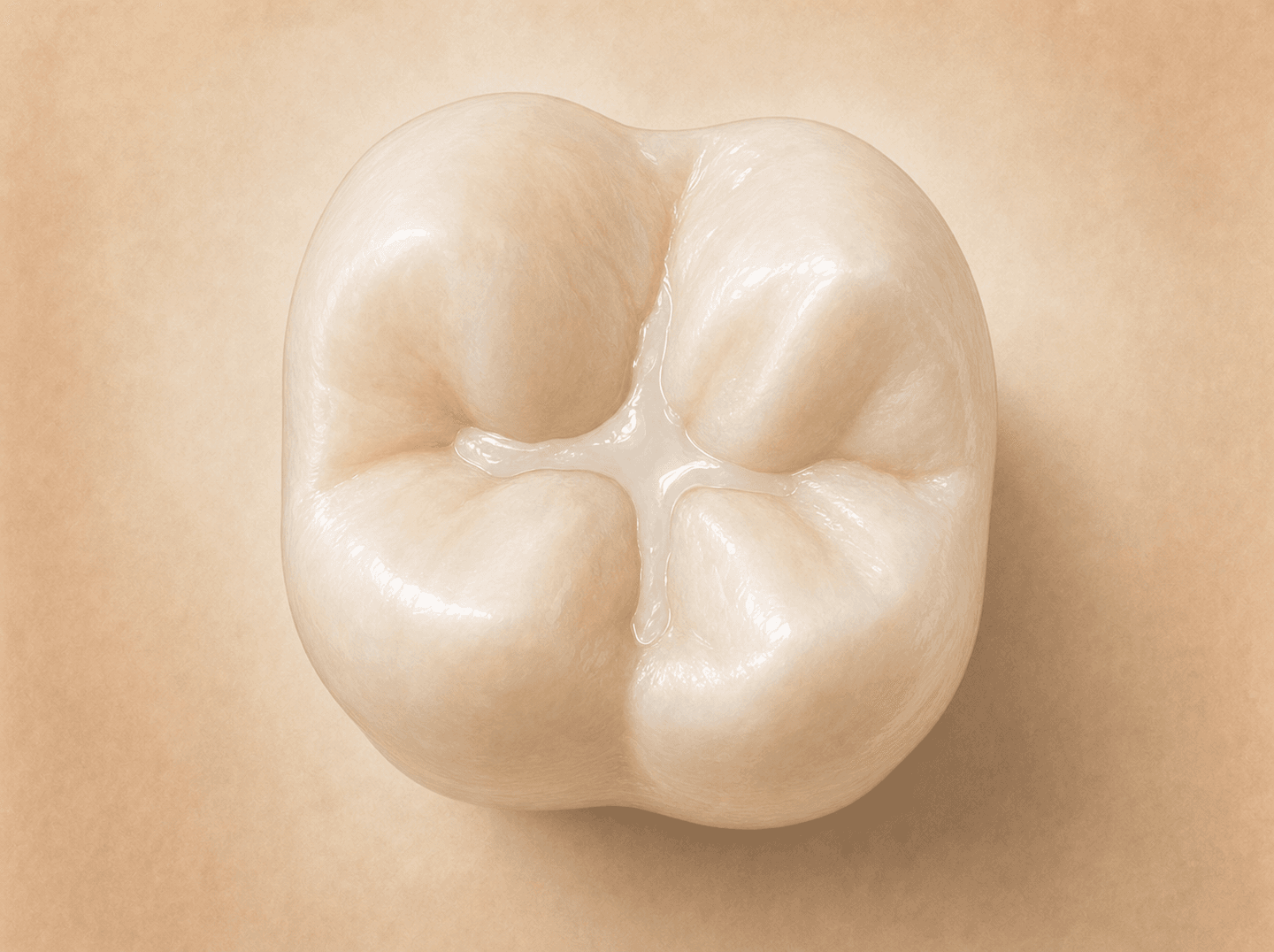
D1352 reported a preventive resin restoration, or PRR, on a permanent tooth in a patient at moderate-to-high caries risk. It sat between a sealant and a filling.
A sealant, D1351, goes on a sound tooth: a coating bonded into intact grooves to keep decay from starting. A PRR was for a tooth that already had an early lesion in the pits and fissures. The dentist removed the small amount of affected structure, restored that spot with resin, and typically sealed the remaining sound grooves at the same time. The incipient lesion, the elevated caries risk, and the permanent-tooth limitation defined the code.
In practice, many offices used D1352 when a tooth was past a pure sealant but the restoration was minimal: a shallow one-surface composite on a back tooth that did not clearly reach dentin.
Why the ADA deleted it
The procedure overlapped with D2391, resin-based composite, one surface, posterior. The two were performed essentially the same way, but the codes split them by lesion depth.
D2391’s old descriptor limited the code to restorations that penetrated into dentin. A shallow one-surface lesion that had not clearly reached dentin did not fit cleanly under D2391, so it tended to be reported as D1352. The line was hard to apply consistently and created documentation friction.
The ADA made two changes, both effective January 1, 2026:
- It removed the dentin-depth restriction from D2391, which now reports a one-surface posterior composite regardless of lesion depth.
- It deleted D1352, since its work now falls under the broadened D2391.
What to bill now
Code by what the clinician did. The question is the same one that always separated a PRR from a sealant: was there an early lesion that required removing affected structure, or was the tooth sound?
- Early-lesion restoration on a posterior tooth. Structure was removed and restored, so it is restorative: D2391 (resin-based composite, one surface, posterior), at any lesion depth, including the shallow lesions that used to route to D1352. If the restoration spans more than one surface, move up the series: D2392 (two surfaces), D2393 (three), D2394 (four or more).
- Sealant on a sound tooth. No lesion, only a protective coating on intact grooves: D1351 (sealant, per tooth). D1352 was never the code for a plain sealant.
Coverage notes for the replacement codes
The plan-dependent rules now follow the code you bill:
- D2391 is restorative. It is adjudicated against the plan’s restorative benefit, with its own frequency and downgrade rules, and usually carries patient cost-share where a sealant would not. Moving early-lesion work from a preventive code to a restorative one can change the patient’s out-of-pocket cost, so set expectations before treatment.
- D1351 is preventive. Most plans that cover sealants restrict them by patient age, by tooth (often permanent molars), and by a per-tooth frequency window.
Confirm the specific plan’s restorative and preventive rules rather than assuming the early-lesion restoration will be treated the way D1352 was.
What to get right in your PMS
- Deactivate D1352 in the code table so no one selects it out of habit.
- Point the old PRR workflow at D2391. Any macro, favorite, or template that dropped in D1352 should now drop in D2391 for the early-lesion posterior restoration.
- Keep D1351 distinct. Sealants on sound teeth stay on D1351 and should not collapse into the restorative code.
- Code to the date of service. D1352 remains valid for dates of service through December 31, 2025. When reworking or appealing an older claim, leave its original code intact.
FAQs
- Is D1352 still a valid CDT code in 2026?
- No. D1352, preventive resin restoration in a moderate-to-high caries-risk patient on a permanent tooth, was deleted effective January 1, 2026. A claim using D1352 on a 2026 date of service will reject for an invalid or deleted code. If your practice management software still lists D1352, remove or deactivate it so it cannot be selected by mistake.
- What do I bill instead of D1352 now?
- It depends on what was done. An early carious lesion restored on a posterior tooth is now D2391 (resin-based composite, one surface, posterior). When the ADA deleted D1352, it also dropped the language that limited D2391 to lesions reaching dentin, so D2391 now reports a one-surface posterior composite regardless of lesion depth. A sealant on a sound, decay-free tooth is D1351 (sealant, per tooth).
- Why did the ADA delete D1352?
- Because the procedure overlapped with D2391. The two were done essentially the same way, but D2391's old descriptor limited it to lesions that penetrated into dentin, leaving a gray zone for shallow lesions. The ADA removed the dentin-depth restriction from D2391 and deleted D1352, effective January 1, 2026, so one restorative code now covers the one-surface posterior composite at any lesion depth.
- What was the difference between D1352 and a sealant?
- An actual early lesion. A sealant, D1351, goes on a sound tooth with no decay: a coating bonded into intact pits and grooves to stop decay from starting. D1352 was a preventive resin restoration on a permanent tooth with an early or incipient lesion in the grooves, so the dentist removed a small amount of affected structure and restored it, often sealing the remaining grooves at the same time.
- I have an old claim with a 2025 date of service under D1352. Is that a problem?
- No. A deletion applies to dates of service on or after its effective date. D1352 was valid through December 31, 2025, so a 2025 date of service billed under D1352 is correct and can still be processed or appealed on its original terms. Code each claim to the CDT version in effect on its date of service.
Related codes
Need help billing this code?
We handle D1352 claims daily.
If your team is spending time on denials, narratives, or carrier follow-up for this code, our dental insurance verification service can take it off your plate. We submit the claims, post what comes back, and follow up on anything unpaid.
“Claims, posting, denials, all of it gets handled, and it costs far less than hiring another employee. My front desk got hours of their week back, and honestly I just don't think about billing anymore.”
CDT codes are maintained by the American Dental Association. This page is an editorial billing guide, not the official ADA code descriptor. Verify current coverage policies with each carrier before submitting claims.