D1552 is the CDT code for re-cementing a loose space maintainer spanning both sides of the lower arch, such as a lower lingual holding arch.
- When to use: A lower lingual holding arch or other lower bilateral appliance has come loose intact and is reseated with new cement.
- When not to use: A loose one-sided appliance is D1553 per quadrant, the upper arch is D1551, and a lost or remade lower arch is a new D1517.
- Billing note: Some plans deny a re-cement within months of placement or cap it per lifetime, so check the placement date and prior re-cements.
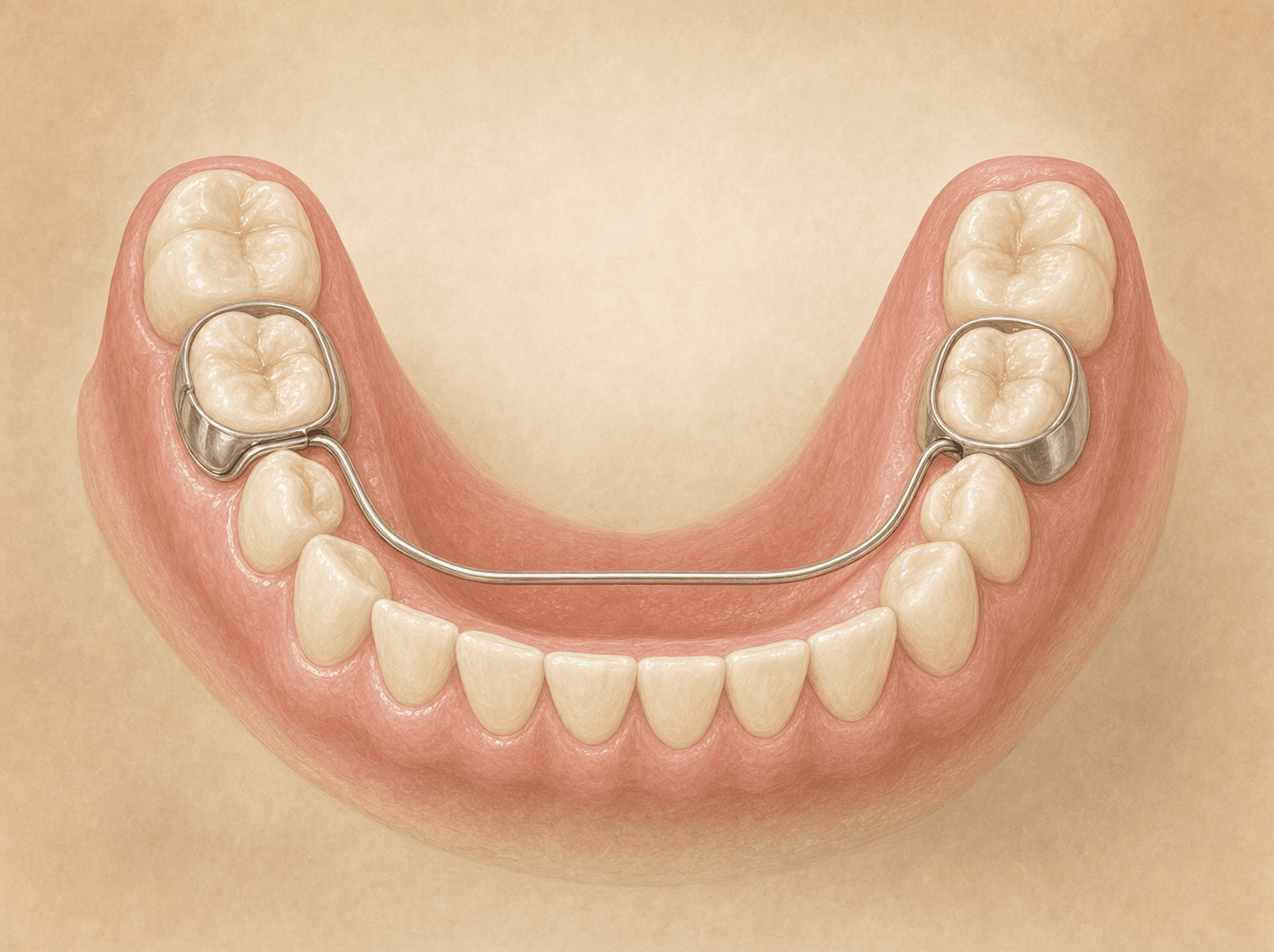
What D1552 reports
D1552 reports re-cementing or re-bonding a loose space maintainer that spans both sides of the lower arch. It follows the appliances placed under D1517, most often the lower lingual holding arch: a wire that runs along the tongue side of the lower teeth between two molar bands.
A removable lower appliance placed under D1527 has nothing to re-cement, so D1552 is in practice a fixed-appliance code. One appliance on the lower arch is one unit of D1552, whether one band or both came loose. Two separate one-sided appliances on the lower arch, such as band and loops placed under D1510, are re-cemented with D1553, one per quadrant. The upper-arch counterpart is D1551.
Early loosening and re-cement limits
The billing problem specific to D1552 is timing. A lingual arch stays in for a long time, often until the premolars erupt, and a band can loosen more than once over that span. Many plans limit how many re-cements they’ll pay, and some limit how soon after placement the first one is allowed.
Illinois Medicaid’s children’s benefits table (April 2025) is the clearest example of the timing rule: no D1552 within six months of placement, and one per six months after that. Count limits look different. Nevada Medicaid’s coverage table (updated March 23, 2026) allows two units of D1552 per lifetime, so a third loosening on the same child is the practice’s cost. The Delta Dental schedule for New York City’s DC 37 members (codes effective February 1, 2024) allows one per 12 months, for children under 14.
A re-cement shortly after placement is where these rules collide with the practice’s expectations. Under a rule like Illinois’s, the office reseats the arch without a separate payment. Know the rule before the patient is seated, so the conversation with the parent about charges happens before the work, not after the EOB.
Documentation
- That the existing arch was intact and reseated.
- Which band or bands had loosened.
- The placement date and any prior re-cements.
FAQs
- What is the code to re-cement a lower lingual holding arch?
- D1552. A lower lingual holding arch is a fixed bilateral mandibular space maintainer, placed under D1517, and re-cementing it is D1552, one unit for the arch. If the arch is lost or has to be remade, the new one is another D1517.
- The lingual arch came loose two months after we placed it. Can we bill D1552?
- Possibly not. Illinois Medicaid's April 2025 children's benefits table doesn't allow a re-cement within six months of placement. Other plans may treat an early failure as part of the placement fee. Check the plan's rule before billing, and chart why the band loosened.
- How many re-cements will a plan pay on the same lingual arch?
- It depends on the plan. Nevada Medicaid's March 2026 table allows two units of D1552 per lifetime. A Delta Dental schedule for New York City's DC 37 members, effective February 2024, allows one per 12 months for children under 14. Delta Dental of Kansas's 2020 notice allowed one, with later claims denied.
Related codes
Need help billing this code?
We handle D1552 claims daily.
If your team is spending time on denials, narratives, or carrier follow-up for this code, our dental insurance verification service can take it off your plate. We submit the claims, post what comes back, and follow up on anything unpaid.
“Claims, posting, denials, all of it gets handled, and it costs far less than hiring another employee. My front desk got hours of their week back, and honestly I just don't think about billing anymore.”
CDT codes are maintained by the American Dental Association. This page is an editorial billing guide, not the official ADA code descriptor. Verify current coverage policies with each carrier before submitting claims.