D2751 is the CDT code for a single-unit porcelain-fused-to-metal crown on a natural tooth where the metal coping is predominantly base metal, meaning less than 25% noble metal content.
Unlike its high noble and noble siblings, D2751 is usually the code carriers pay toward, not the one they downgrade. Many posterior plans set the base-metal PFM allowable as the alternate benefit and pay D2740, D2750, and D2752 crowns at this fee. The error that costs the office is billing D2751 when the lab actually cast a noble alloy, which underpays your own crown.
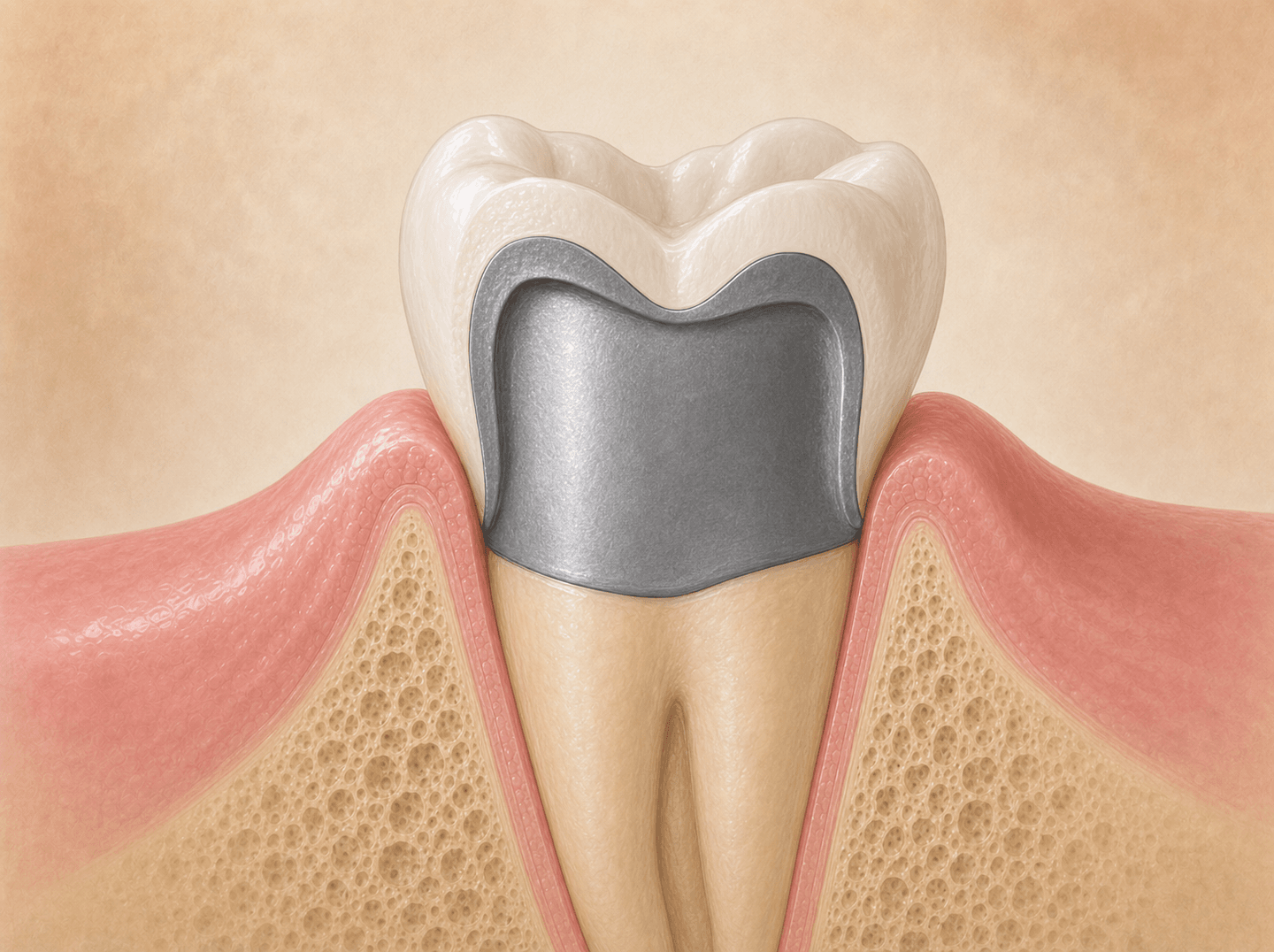
What D2751 covers
D2751 reports a single-unit, full-coverage porcelain-fused-to-metal crown on a natural tooth where the metal coping is predominantly base metal. Predominantly base metal means the alloy contains less than 25% noble metal by weight, the bottom tier of the ADA’s casting-alloy classification. Nickel-chromium and cobalt-chromium are the common base-metal alloys. The porcelain is layered over the metal coping for the visible surface. The code applies to permanent teeth only and covers the prep, impression, lab fabrication, try-in, and cementation.
It does not cover:
- A PFM crown with a high noble coping. That’s D2750.
- A PFM crown with a noble (but not high noble) coping. That’s D2752.
- An all-ceramic or all-porcelain crown with no metal. That’s D2740.
- A full-cast base-metal crown, all metal with no porcelain. That’s D2791.
- A PFM retainer crown supporting a bridge pontic. That’s D6751 for base metal.
- A core buildup. That’s D2950.
- A post and core. That’s D2952 (cast) or D2954 (prefab).
- A provisional crown. That’s D2799.
The distinguishing axis: metal class off the lab slip
The single variable that separates D2751 from D2750 and D2752 is how much noble metal the coping contains. The tooth it lands on, the shade, and the porcelain layered over the coping have no bearing on which of the three codes you use.
- D2750 is high noble: over 60% noble metal with at least 40% gold.
- D2752 is noble: at least 25% noble metal, below the high noble cutoff.
- D2751 is predominantly base metal: under 25% noble metal.
The noble metals counted toward the percentage are gold, palladium, and platinum. A base-metal PFM crown is coded D2751 because the lab slip shows the coping fell under 25% noble, not because the crown went on a back tooth or the office wanted the cheaper code.
When to bill D2751
Bill D2751 when:
- A full-coverage PFM crown is fabricated and seated on a prepared natural tooth.
- The lab slip confirms the coping is predominantly base-metal alloy (under 25% noble).
- The crown is cemented at the delivery visit.
Do not bill D2751 for:
- A crown with a high noble or noble coping. Use D2750 or D2752 by metal class.
- A full-cast base-metal crown with no porcelain. Use D2791.
- A crown serving as a bridge retainer. Use D6751 for a base-metal PFM retainer.
- A provisional or interim crown. Use D2799.
- Recementing an existing crown. Use D2920.
D2751 as the alternate-benefit benchmark
D2751 is unusual in the crown family because it is more often the code carriers pay toward than the code they pay out. On posterior teeth, many plans write the base-metal PFM allowable into the contract as the alternate benefit for crowns. When you submit a D2740, D2750, or D2752 crown, the plan applies its least-expensive-alternative-treatment clause and pays the D2751 allowable, leaving the patient the difference.
This has two consequences for a biller:
- When you bill a higher-grade crown, expect the EOB to show the D2751 allowable on posterior molars and set the patient estimate accordingly at treatment planning.
- When you bill D2751 itself, there is usually no downgrade below it, because it already sits at the base of the PFM fee tiers. The reverse error is what hurts: billing D2751 for a crown the lab actually cast in noble or high noble alloy, so the office collects the base-metal fee on a more expensive restoration.
Whether any specific plan applies the downgrade is plan-dependent. Confirm the crown alternate-benefit rule during verification, not after the seat.
Top reasons D2751 gets denied or reprocessed
- Wrong metal class submitted. The most common problem, running both directions. Billing D2751 on a noble-alloy crown underpays the office. Billing D2750 or D2752 on a base-metal crown gets reprocessed to the D2751 allowable when the carrier pulls the lab slip, and the practice owes back the difference.
- No pre-op radiograph on file. Most carriers require a pre-op film showing the tooth’s condition. Attach it with the initial claim rather than waiting for the request.
- Frequency limit on a replacement crown. Most plans allow one crown per tooth every 5 to 10 years. A replacement inside the window pends or denies without a narrative documenting the clinical failure on the previous crown.
- Code mismatched to construction. D2751 billed on a full-cast base-metal crown that should have been D2791, or on a bridge retainer that should have been D6751.
- Waiting period on a new policy. D2751 is major restorative on most plans, with waiting periods of 6 to 12 months common on new coverage. A claim inside the waiting period denies.
Documentation that supports the claim
The claim needs:
- A pre-operative radiograph showing caries, fracture, failing restoration, or post-endo status.
- Date of service matching the seat date, not the prep date.
- The correct tooth number, double-checked before submission.
- A narrative for anything unusual, such as a replacement crown inside a frequency window.
For the patient record, keep:
- The lab slip with the alloy composition, even though it isn’t sent with the claim. It’s the document that settles a metal-class dispute.
- Prep, impression, and seat dates.
- The clinical reason a direct restoration wasn’t viable.
- Any prior crown on the same tooth and its placement date.
Example case
A 47-year-old patient has tooth #19 with a large failing amalgam and a cracked mesiolingual cusp. The dentist plans a PFM crown and, for cost, specifies a base-metal alloy. The lab confirms nickel-chromium on the slip. The plan covers crowns at 50% with no alternate-benefit downgrade below base metal.
Billing steps:
- Verify crown coverage, the frequency status on tooth #19, and any major-restorative waiting period at treatment planning.
- Confirm the lab slip shows a base-metal alloy so the code matches the casting.
- Place a core buildup if the tooth lacks retention and code D2950 separately on the same claim.
- Submit D2751 at office fee on the seat date, with the pre-op radiograph and a one-line narrative on the fracture.
- Post the carrier’s payment. Because the crown is already base metal, expect no further material downgrade. Bill the patient the coinsurance and any deductible.
What to get right in your PMS
- Keep D2750, D2751, and D2752 as three distinct, clearly labeled line items so the metal class is a deliberate pick and not a default. The PFM family has a long history of one-tier miscodes.
- Tie the code to the lab slip in the workflow. Confirm the noble percentage before the claim goes out. Billing the crown code at the prep visit, before the lab work is back, risks the wrong alloy code.
- Post on the seat date, not the prep date. The date of service the carrier reads comes from posting, and a patient who changes insurance between prep and seat can lose coverage if the prep date is used.
- Don’t bill D2751 on a crown the lab cast in noble alloy. That undercharges your own restoration. If the slip shows 25% noble or higher, the code is D2752, not D2751.
- Confirm the fee comes from your office fee schedule, not the carrier’s allowable. Submitting at the allowable corrupts dual-coverage math and prevents proper write-off accounting on alternate-benefit downgrades.
FAQs
- What is the dental code for a base-metal PFM crown?
- It's D2751, a porcelain-fused-to-metal crown whose coping is predominantly base metal, meaning under 25% noble metal content. Common base-metal alloys are nickel-chromium and cobalt-chromium. The two neighboring PFM codes are D2750 for high noble alloy (over 60% noble with at least 40% gold) and D2752 for noble alloy (at least 25% noble, below the high noble cutoff). The lab slip tells you which alloy class was used.
- What's the difference between D2750, D2751, and D2752?
- All three are porcelain-fused-to-metal crowns. The only difference is the metal coping. D2751 is predominantly base metal (under 25% noble). D2752 is noble (at least 25% noble, but below the high noble threshold). D2750 is high noble (over 60% noble with at least 40% gold). The alloy percentage lives on the lab slip, so confirm it before picking the code. Coding the wrong metal class is the most common avoidable error on PFM crowns.
- Why did the carrier pay my D2750 crown at the D2751 fee?
- That's an alternate-benefit downgrade, not a denial. Many plans treat a base-metal PFM (D2751) as functionally adequate on a posterior tooth, so they pay any higher-grade crown (D2740, D2750, D2752) at the D2751 allowable. The carrier isn't disputing that the high noble crown was placed. The patient owes the difference unless the office writes it off. Whether a given plan downgrades is plan-dependent, so verify at treatment planning.
- Do I bill D2751 or D2791 for a base-metal crown?
- It depends on whether the crown carries porcelain. D2751 is a porcelain-fused-to-metal crown with a base-metal coping under the porcelain. D2791 is a full-cast crown, all metal with no porcelain, in predominantly base-metal alloy. Same alloy class, different construction. Read the lab work order: porcelain over metal is D2751, all metal is D2791.
- Does D2751 include the core buildup or the post?
- No. D2751 covers the crown only. If the tooth needs a core buildup before the prep, bill D2950 separately on the same claim. If a post is placed in a treated root canal, bill D2952 for a cast post and core or D2954 for a prefabricated one instead of D2950. Each is a separate benefit decision on most plans.
Related codes
Need help billing this code?
We handle D2751 claims daily.
If your team is spending time on denials, narratives, or carrier follow-up for this code, our outsourced dental insurance billing service can take it off your plate. We work inside your PMS and post payments the same week.
CDT codes are maintained by the American Dental Association. This page is an editorial billing guide, not the official ADA code descriptor. Verify current coverage policies with each carrier before submitting claims.