D3120 is the CDT code for an indirect pulp cap, a protective dressing placed over a thin layer of dentin left covering a nearly exposed pulp.
- When to use: Caries removal gets close to the pulp, and the dentist deliberately leaves a thin layer of dentin or caries over it to avoid an exposure.
- When not to use: An actual pulp exposure is D3110, and an interim restoration placed after all the decay is removed is D2940.
- Billing note: Most plans bundle a same-day indirect cap into the filling as a base or liner, so chart the near exposure and check the contract before billing the patient.
What D3120 covers
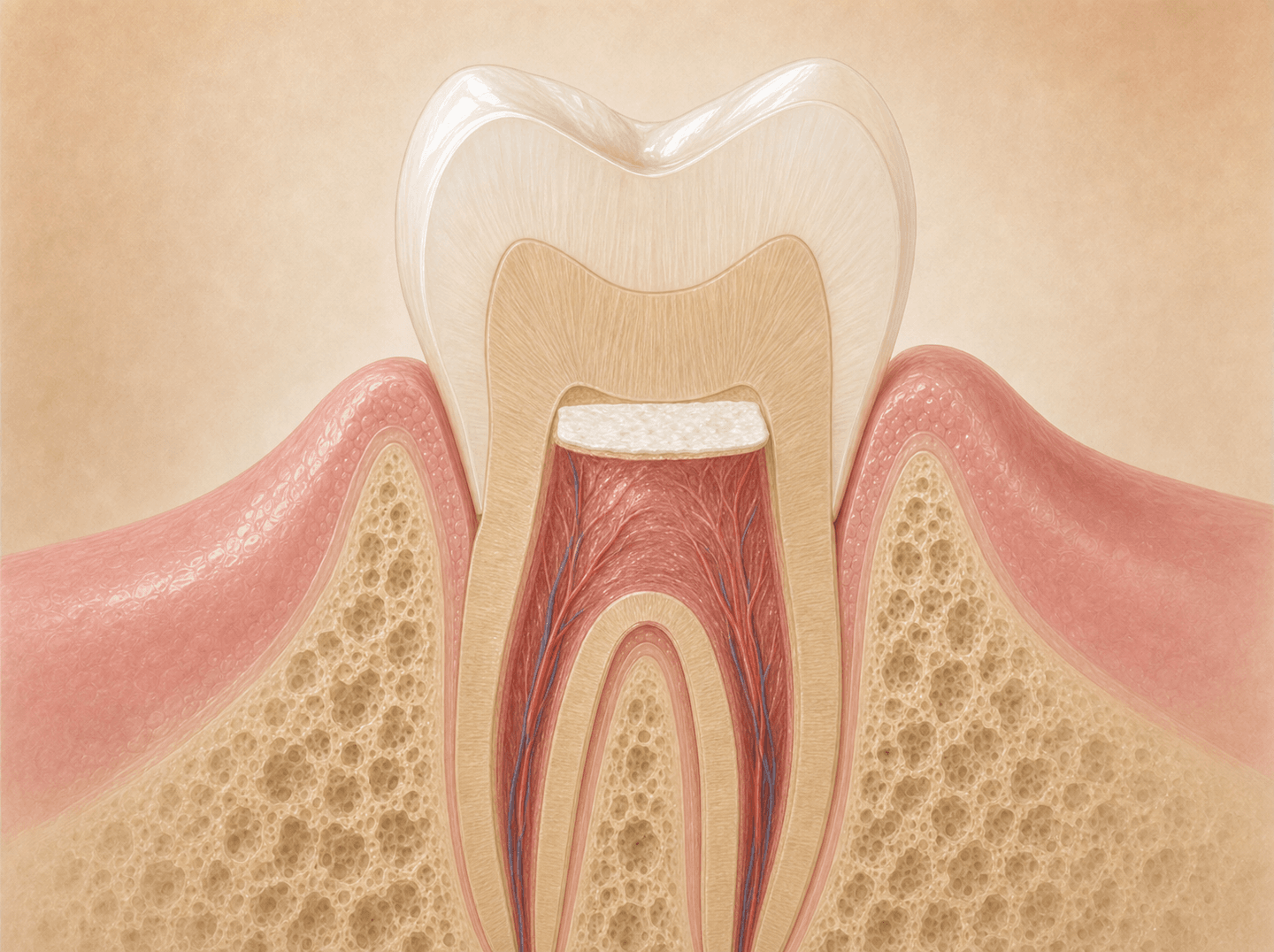
D3120 reports an indirect pulp cap. Caries removal brings the prep very close to the pulp without exposing it, and no pulp tissue is visible. The dentist intentionally leaves a thin layer of dentin or a small amount of affected caries over the pulp and places a protective dressing over that layer. The aim is to let the pulp lay down secondary dentin and heal rather than risk an exposure.
The key fact is that the pulp is not exposed.
The code excludes the final restoration. D3120 reports the cap only; the filling or crown over it is billed under its own code.
D3120 does not cover:
- A cap on an exposed pulp. That is the direct cap, D3110.
- A sedative or protective restoration placed after full caries removal on an unexposed tooth. That is D2940.
- A routine base or liner placed for sensitivity under a filling on a tooth that was nowhere near the pulp. That is part of the restoration.
- Removing the coronal pulp. That is a therapeutic pulpotomy, D3220.
D3120 versus D3110
These two are the classic swap. The axis is pulp exposure, full stop:
- D3120, indirect. The pulp is not exposed. A thin layer still covers it, and the dressing goes over that layer.
- D3110, direct. The pulp is exposed. The dressing sits on pulp tissue.
If the dentist deliberately stopped short of the pulp to keep from exposing it, it is indirect. If the dentist could see or touch pulp, it is direct. Pull the operative note before you pick the code. The chart has to state the finding, because the carrier cannot tell the two apart from the code.
D3120 versus a sedative filling
Both involve a tooth that is not ready for its final restoration. The difference is what is left over the pulp.
A sedative or protective restoration, D2940, is placed after all the caries has been removed. The pulp is not exposed, the tooth is symptomatic, and the interim material buys time before definitive treatment. An indirect pulp cap intentionally leaves a thin layer of caries or dentin over a near-exposed pulp to avoid exposing it. If all the decay came out, it is not an indirect cap.
The bundling reality
When an indirect pulp cap and the final restoration go in at the same visit, most carriers consider the cap a base or liner. Bases and liners are folded into the restorative fee, so the plan pays for the filling and nothing extra for D3120. The denial usually reads as “inclusive to” or “considered part of” the restoration.
This is a payment policy, not a judgment on the clinical work. Two things follow:
- Whether you can bill the patient the cap fee depends on the contract. Some participating agreements prohibit balance-billing on a bundled procedure. Check the plan first.
- A necessity narrative does little, because the carrier is applying a base-and-liner rule, not disputing necessity. If the contract does not address the indirect cap, a short narrative plus an appeal is the path.
Documentation that supports the claim
The claim and chart should show:
- That the pulp was nearly exposed but not exposed.
- That a thin protective layer was intentionally retained over the pulp.
- The capping material used.
- The tooth number and surfaces.
A pre-op radiograph showing deep decay approaching the pulp horn supports the picture. The note that carries the claim names the near-exposure: “Caries excavated to within a thin dentin layer of the pulp horn on the mesial, affected dentin intentionally retained over the pulp, calcium hydroxide placed, no exposure.” A note that just says “pulp cap placed” reads as an ordinary liner. The cap bundles, and the appeal has nothing to stand on.
Example case
A 41-year-old patient has deep decay on tooth #30. During caries removal, the prep reaches very close to the pulp. The dentist judges that removing the last layer of affected dentin would expose the pulp, so leaves it, places a protective dressing over it, and restores the tooth with a composite the same day.
Billing steps:
- Code D3120 for the indirect cap and the appropriate composite code for the restoration, here a posterior composite from the D2391 series, by surface count.
- Document the near-exposure, the retained dentin layer, and the material in the chart.
- Submit and watch the EOB. The cap may bundle into the restoration as a base or liner.
- If it bundles, check the contract before deciding whether the patient owes the fee.
- If the plan is silent on the indirect cap and the near-exposure is documented, appeal with the narrative.
FAQs
- What makes D3120 different from D3110?
- Pulp exposure. D3120 is the indirect cap, placed when the pulp is nearly exposed but still covered by a thin layer of dentin or intentionally retained caries. D3110 is the direct cap, placed when the pulp is actually exposed and the dressing sits on pulp tissue. Swapping the two is the most common pulp-cap coding error.
- Why did the carrier treat D3120 as a base or liner?
- Because when an indirect cap goes in at the same visit as the final restoration, most plans consider it included in the restorative fee, the same way a base or liner is. The denial reads as inclusive to or part of the filling. This is plan policy, not a clinical decision, and whether the patient can be billed depends on the contract.
- Is an indirect pulp cap the same as a sedative filling?
- No. A sedative or protective restoration, D2940, is placed after all the caries is removed, on a tooth with no exposure, to calm symptoms before definitive care. An indirect pulp cap intentionally leaves a thin layer of caries or dentin over a near-exposed pulp to avoid exposing it.
- Does D3120 include the filling placed over it?
- No. The descriptor excludes the final restoration, so D3120 reports only the cap and the filling or crown is coded separately. That is also why carriers so often fold the cap back into the restoration when both are billed for the same visit.
- What documentation supports D3120?
- A note that the pulp was nearly exposed but not exposed, that a thin protective layer was intentionally retained over it, the capping material, and the tooth and surfaces. A pre-op radiograph showing deep decay close to the pulp horn helps. Without the near-exposure in the note, the cap reads as a routine liner.
Related codes
Need help billing this code?
We handle D3120 claims daily.
If your team is spending time on denials, narratives, or carrier follow-up for this code, our outsourced dental insurance billing service can take it off your plate. We submit the claims, post what comes back, and follow up on anything unpaid. Already sitting on older claims that never paid? Our AR cleanup project works the backlog.
“Claims, posting, denials, all of it gets handled, and it costs far less than hiring another employee. My front desk got hours of their week back, and honestly I just don't think about billing anymore.”
CDT codes are maintained by the American Dental Association. This page is an editorial billing guide, not the official ADA code descriptor. Verify current coverage policies with each carrier before submitting claims.