D3230 is the CDT code for a pulpectomy on a primary incisor or canine, cleaning out the canal and filling it with a resorbable material.
- When to use: A primary incisor or canine with a successor developing beneath it has its whole pulp removed and the canal filled with resorbable paste.
- When not to use: Removing only the crown pulp is D3220, a primary molar pulpectomy is D3240, and a primary front tooth with no successor gets D3310.
- Billing note: The crown or filling that restores the tooth afterward is a separate line, so bill it under its own code rather than expecting D3230 to cover it.
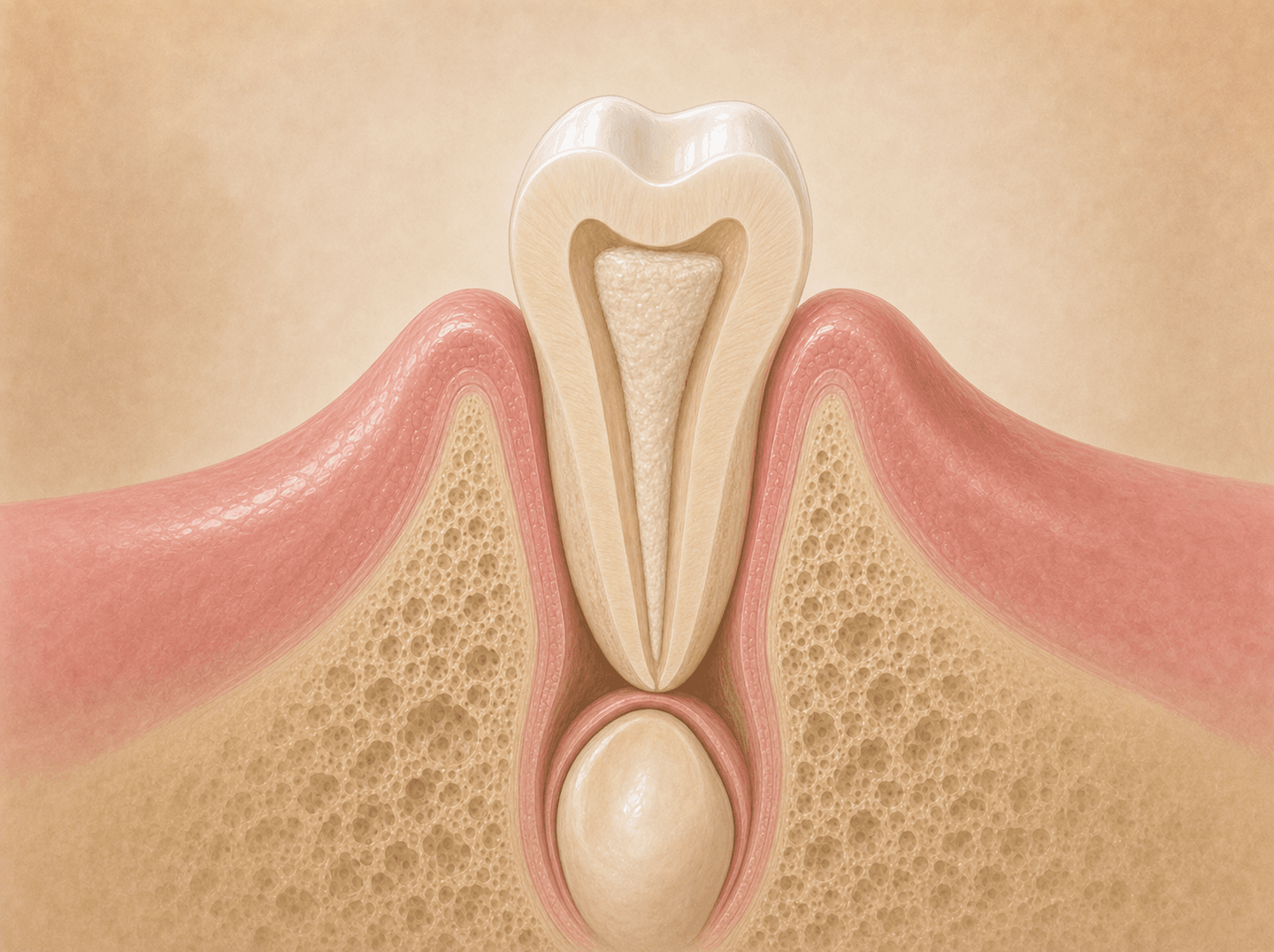
What D3230 covers
D3230 reports pulpal therapy on a primary incisor or canine: the pulp is removed from the chamber and the root canal, the canal is cleaned, and it is filled with a material the body can resorb as the tooth’s root dissolves. The resorbable fill matters because the permanent tooth underneath needs the primary root to resorb normally on its way in.
The descriptor excludes the final restoration. The access opening still needs a filling or crown, and that is billed separately.
How D3230 differs from the pulpotomy and molar codes
Two questions settle the code on a primary tooth:
- How much pulp came out? If only the coronal pulp was removed and the root pulp was left alive under a medicament, it is a pulpotomy, D3220. If the canal was emptied and filled, it is a pulpectomy.
- Which tooth? Primary incisors and canines are D3230. Primary first and second molars are D3240.
Emergency pulp removal to stop pain, with the definitive treatment left for another day, is pulpal debridement, D3221, not D3230.
When a primary front tooth gets a root canal code instead
The primary-tooth pulpectomy codes assume a permanent successor is developing under the tooth. CDT places primary teeth without a successor in the regular root canal family, with permanent teeth.
The front-tooth case where this comes up is a retained primary canine whose permanent canine is congenitally missing or will not erupt, and the plan is to keep the primary canine long-term. That tooth gets a conventional root canal with a permanent filling material, billed as D3310 (anterior). Send a narrative and a radiograph showing the absent or impacted successor, because a primary tooth letter on a root canal code invites a review.
Restoring the tooth after D3230
Front primary teeth after a pulpectomy are usually restored with a full-coverage crown. The common options, each billed as its own line on the same tooth letter:
- Resin-based composite crown, anterior: D2390. This is where strip crowns are usually coded.
- Prefabricated porcelain or ceramic crown on a primary tooth: D2929.
- Prefabricated esthetic coated stainless steel crown on a primary tooth: D2934.
A smaller access can take a composite filling instead, coded by surface count. Whatever goes in, the chart note should name it, so the reviewer sees two procedures and not one.
Example: a toddler’s front tooth after a fall
A 3-year-old falls against a coffee table and bumps the upper right primary central incisor (tooth E). Six weeks later the tooth has turned gray and a small swelling sits on the gum above it. The periapical image shows a radiolucency at the root tip and the permanent incisor developing normally beneath it. The dentist diagnoses pulp necrosis, removes the pulp, cleans the canal, fills it with a resorbable paste, and places a composite strip crown.
Billing:
- D3230, tooth E.
- D2390, tooth E, same date.
- Attach the periapical image and a short narrative: trauma date, discoloration, swelling, necrotic pulp, resorbable fill placed.
The trauma history earns its place in the narrative. Without it, a pulpectomy on a front tooth with no visible decay can read as unexplained, and some reviewers ask why.
What reviewers look for
- A primary tooth letter. Primary procedures billed with a permanent tooth number are likely to be rejected by clearinghouse edits or denied by the payer.
- A pre-op radiograph showing the pulp involvement and the successor tooth. Many plans want one for any pulp therapy claim.
- A diagnosis that fits a pulpectomy. Necrosis, abscess, or inflammation that has reached the root pulp. If the chart describes healthy root pulp that was kept, the reviewer will expect D3220.
- The patient’s age against the plan’s limits. Coverage for primary-tooth pulp therapy varies, and some plans cap it by age.
FAQs
- Which teeth can be billed with D3230?
- Primary incisors and primary canines. That is primary tooth letters C through H on the upper arch and M through R on the lower. Primary first and second molars take D3240 instead, and a permanent front tooth takes D3310.
- Is D3230 the same as a pulpectomy?
- Yes, for a primary front tooth. The CDT family that D3230 sits in describes the work as a pulpectomy plus cleaning and filling the canals with a resorbable material. Offices often chart it as a pulpectomy, which is fine, as long as the claim carries D3230 and a primary tooth letter.
- Can D3230 and the crown go on the same claim?
- Yes. D3230 excludes the final restoration, so the crown or filling is its own line on the same date and tooth letter. Front-tooth choices include a resin composite crown (D2390), a prefabricated ceramic crown (D2929), or an esthetic coated stainless steel crown (D2934).
- Why did the plan deny D3230 on a tooth that had a pulpotomy last year?
- Often a per-tooth limit that groups pulp therapy codes together. Some plans allow only one procedure from the pulp cap, pulpotomy, and primary pulpectomy range per tooth, so a second pulp procedure on the same primary tooth denies. Check the plan's limitation language before treatment and tell the parent if the second procedure may be out of pocket.
Related codes
Need help billing this code?
We handle D3230 claims daily.
If your team is spending time on denials, narratives, or carrier follow-up for this code, our outsourced dental insurance billing service can take it off your plate. We submit the claims, post what comes back, and follow up on anything unpaid. Already sitting on older claims that never paid? Our AR cleanup project works the backlog.
“Claims, posting, denials, all of it gets handled, and it costs far less than hiring another employee. My front desk got hours of their week back, and honestly I just don't think about billing anymore.”
CDT codes are maintained by the American Dental Association. This page is an editorial billing guide, not the official ADA code descriptor. Verify current coverage policies with each carrier before submitting claims.