D3240 is the CDT code for a pulpectomy on a primary molar, removing all the pulp and filling the root canals with a resorbable material.
- When to use: A primary first or second molar needs its root pulp removed, usually because the pulp is necrotic or bleeds uncontrollably after the crown pulp comes out.
- When not to use: If the root pulp stays vital under a medicament it is D3220, a primary front tooth is D3230, and a molar with no premolar beneath it gets D3330.
- Billing note: Some plans allow one pulp therapy procedure per primary tooth for life, so a pulpectomy after an earlier pulpotomy on that molar may deny.
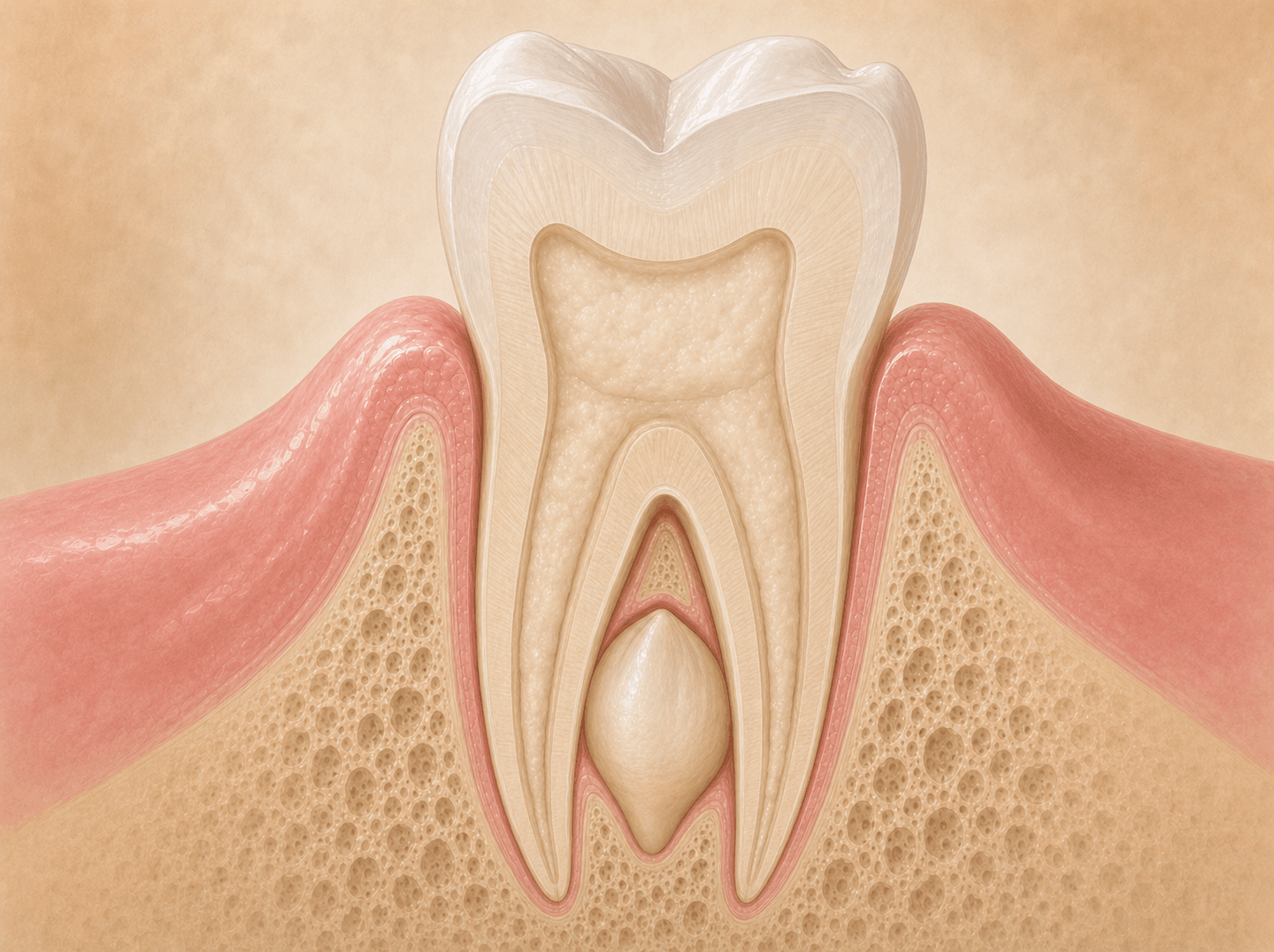
What D3240 covers
D3240 reports pulpal therapy on a primary first or second molar. The dentist removes the pulp from the chamber and from every canal, cleans the canals, and fills them with a resorbable material. The filling has to resorb because the premolar forming between the roots will push the primary molar out on its own schedule, and a non-resorbable fill can interfere with that.
The final restoration is excluded from the code. On primary molars that is almost always a stainless steel crown, D2930, billed as a separate line.
Pulpotomy or pulpectomy: what the chart has to show
The real decision on a primary molar is between D3240 and the pulpotomy, D3220. The tooth is the same; the depth of treatment is not.
- D3220: only the coronal pulp is removed. The radicular pulp is vital, bleeding stops, and a medicament is placed over it so the root pulp stays alive.
- D3240: the radicular pulp is removed too. The chart typically shows necrosis, an abscess or furcation radiolucency, or bleeding from the root canals that would not stop after the coronal pulp came out.
That last situation is common: the dentist plans a pulpotomy, sees the root pulp is not healthy, and converts to a pulpectomy in the same visit. Only D3240 is billed. The chart note should record why the plan changed, because the treatment plan on file said pulpotomy.
Front primary teeth use the sibling code, D3230.
The lifetime-limit denial
Some plans limit pulp therapy to one procedure per primary tooth per lifetime and count a pulpotomy and a pulpectomy against the same allowance. Under that rule, a molar that had D3220 two years ago and now needs D3240 for a failed pulpotomy can deny, even though both procedures were clinically correct.
What to do:
- Check the plan’s limitation language when a molar with prior pulp therapy is scheduled for retreatment.
- If the limit applies, tell the parent before the visit that the pulpectomy may be patient responsibility.
- Where the plan allows appeals on clinical grounds, send the prior and current radiographs with a narrative describing the failure. Plans differ on whether they will make an exception.
Example: a second molar with no premolar beneath it
A 12-year-old has a retained primary lower left second molar (tooth K). The panoramic image shows no lower left second premolar forming. The tooth has deep decay and a necrotic pulp, and the plan is to keep it as long as possible.
This molar does not take D3240. CDT groups primary teeth without a successor with permanent teeth under the regular root canal codes, so it is treated with a conventional root canal and billed as D3330, molar. Send the narrative stating the congenitally missing second premolar, with the panoramic image, so the reviewer understands why a molar root canal is billed on a primary tooth letter.
Had the premolar been present and developing, the same tooth would have been a D3240 candidate, or an extraction if too little root remained.
When extraction is the better claim
A primary molar near natural exfoliation, with most of its roots already resorbed, is a weak pulpectomy candidate. Reviewers who see a short-rooted molar on the pre-op image may question D3240 and ask why the tooth was not extracted (D7140). If the dentist chose pulpectomy anyway, say why in the narrative, for example to hold space while the premolar is still deep in bone.
Emergency pulp removal on a primary molar, with the definitive treatment deferred, is D3221 rather than D3240.
FAQs
- What is the dental code for a pulpectomy on a baby molar?
- D3240. It covers primary first and second molars: the pulp is removed from the chamber and all the canals, and the canals are filled with a material that resorbs along with the roots. The crown placed afterward is billed on its own line.
- The dentist started a pulpotomy but finished with a pulpectomy. Which code goes on the claim?
- D3240, alone. Bill the procedure that was completed. A pulpotomy that converts to a pulpectomy at the same visit is one procedure, so don't add D3220 for the first step.
- Why is D3240 paid less often than D3220?
- Mostly because of limits, not because the code is invalid. Some plans cap pulp therapy at one procedure per primary tooth for life, some cap it by age, and a molar close to shedding may be questioned as better extracted. Check the plan's limitation language and attach a pre-op radiograph showing the remaining root length.
- Can D3240 be billed with a stainless steel crown on the same day?
- Yes. D3240 excludes the final restoration, so the stainless steel crown (D2930) goes on its own line with the same tooth letter and date. That pairing is the usual way a primary molar is finished after a pulpectomy.
- Is D3240 used for permanent molars?
- No. A permanent molar root canal is D3330. D3240 is limited to primary molars that still have a premolar developing beneath them.
Related codes
Need help billing this code?
We handle D3240 claims daily.
If your team is spending time on denials, narratives, or carrier follow-up for this code, our outsourced dental insurance billing service can take it off your plate. We submit the claims, post what comes back, and follow up on anything unpaid. Already sitting on older claims that never paid? Our AR cleanup project works the backlog.
“Claims, posting, denials, all of it gets handled, and it costs far less than hiring another employee. My front desk got hours of their week back, and honestly I just don't think about billing anymore.”
CDT codes are maintained by the American Dental Association. This page is an editorial billing guide, not the official ADA code descriptor. Verify current coverage policies with each carrier before submitting claims.