D6242 is the CDT code for a bridge pontic of porcelain fused to a noble alloy, usually palladium-based, that falls short of high noble.
- When to use: The alloy certificate shows at least 25% noble content but fails the high noble test, either under 60% noble or under 40% gold.
- When not to use: A high noble PFM pontic is D6240, a base metal one is D6241, an all-metal noble pontic is D6212, and noble PFM abutment crowns are D6752.
- Billing note: Keep the lab's alloy certificate with the chart, since a noble pontic billed as D6240 is an overpayment if a carrier audits the invoice.
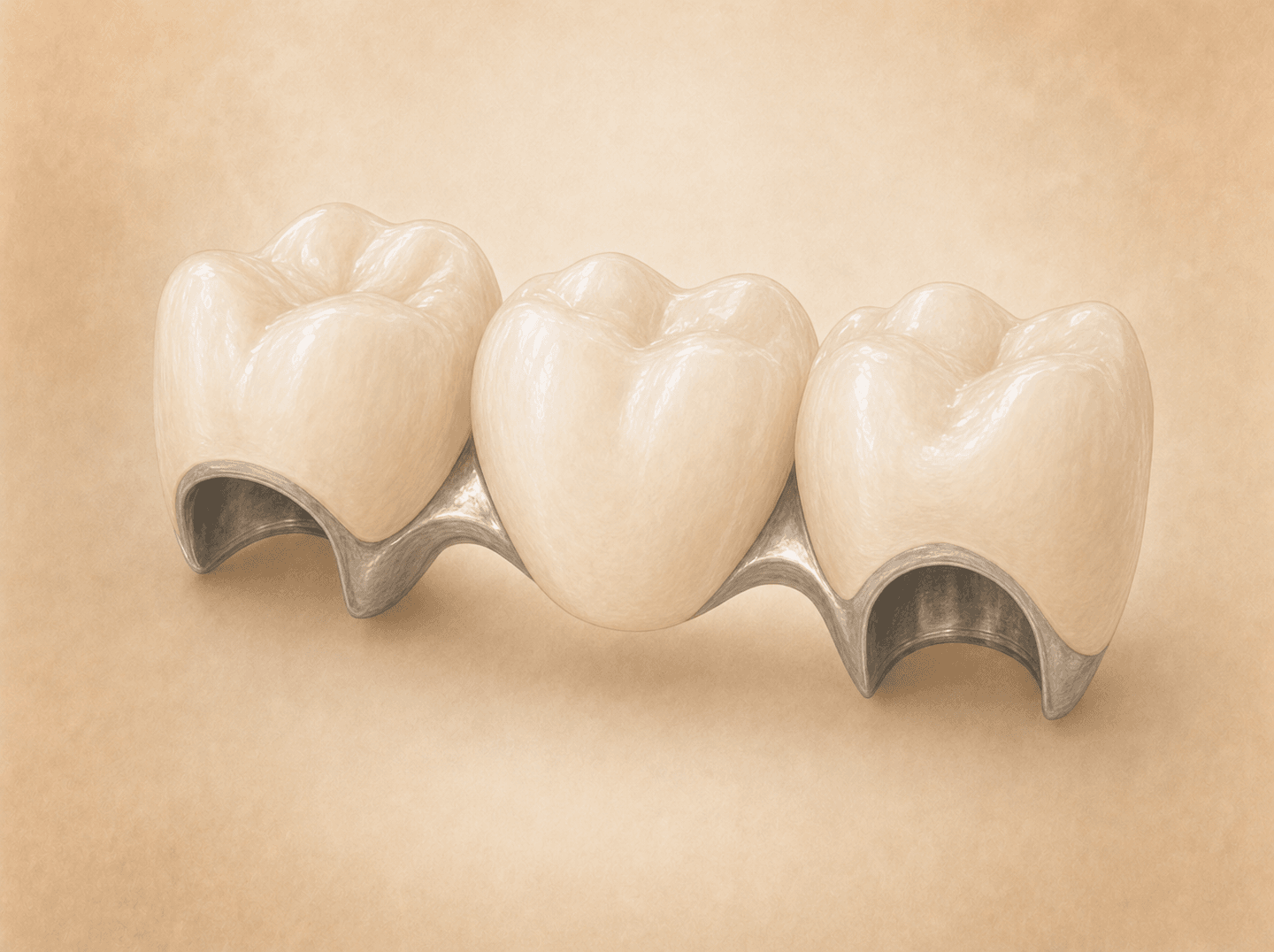
What D6242 reports
D6242 reports one pontic in a fixed bridge when porcelain is fused over a noble metal frame. It covers the replacement tooth only. The abutment crowns bill as retainers, usually D6752 when they are porcelain over the same noble alloy.
Noble is the middle of the three noble-content classes for PFM work (titanium is classified separately). Most of the alloys in it are palladium-based, sometimes with silver, gallium, or a small amount of gold.
The two-part test that separates D6242 from D6240
High noble is not just “more noble metal.” Under the ADA’s alloy classification, a high noble alloy needs at least 60% noble content and at least 40% gold. Fail either part and the alloy drops to noble, provided it still has 25% or more noble content.
Run the lab certificate’s numbers through both parts:
- 80% palladium, 2% gold. 82% noble, but only 2% gold. Noble: D6242.
- 52% gold, 38% palladium. 90% noble with 52% gold. High noble: D6240.
- 58% palladium, 30% silver, no gold. 58% noble. Noble: D6242.
- Nickel-chromium, no noble metal. Under 25% noble. Base metal: D6241.
The first line is the one that gets miscoded. A “high palladium” alloy sounds premium and has a high noble percentage, so it is easy to read it as high noble. The gold requirement says otherwise.
Audit scenario: noble alloy billed as high noble
A practice routinely enters D6240 for every PFM pontic because that is what the fee schedule template defaults to. Its lab switched to a high-palladium alloy a year ago to control cost. A carrier’s post-payment review compares six bridge claims to the lab invoices, finds the noble alloy on each, and requests a refund of the difference on every pontic.
The per-unit gap can be small. South Dakota Medicaid’s adult fee schedule effective July 1, 2026, for example, lists D6240 at $811.30 and D6242 at $792.85, an $18.45 difference. The cost of the review is not the gap: it is the refund across every affected claim, the staff time, and a practice flagged for future audits.
The fix is procedural. Map each lab alloy to its class once, store the certificate in the chart, and code the pontic and retainers from that record. If the lab changes alloys, update the mapping before the next bridge is billed.
Claim lines for a noble PFM bridge
A patient is missing #12. #11 and #13 are prepared as abutments, and the lab fabricates all three units in porcelain over a palladium-silver alloy. On the cementation date:
- D6752 on #11.
- D6242 on #12.
- D6752 on #13.
If the patient had chosen an all-ceramic pontic instead, that unit would be D6245, while the noble PFM retainers stay D6752. Each unit is coded by its own material. For a single PFM crown on noble metal, not part of a bridge, the code is D2752. The bridge dental codes guide lays out the full material matrix.
FAQs
- Does palladium count as noble metal for D6242?
- Yes. The ADA's classification counts gold and the platinum group metals as noble, and palladium is a platinum group metal. That is why palladium-heavy alloys usually land in D6242: they clear 25% noble easily but carry little or no gold.
- Does silver count toward the noble percentage?
- No. Silver is not in the gold-plus-platinum-group count, so a palladium-silver alloy's noble content is its palladium plus any gold or platinum, not its total precious-metal content. An alloy that is 50% palladium and 40% silver is 50% noble, with no gold, and codes as D6242.
- What's the difference between D6242 and D6212?
- The porcelain. Both pontics use a noble alloy. D6242 has porcelain fused over the noble frame, while D6212 is cast entirely in noble metal with no facing.
- Do carriers ask for x-rays on D6242?
- Often. Delta Dental of Minnesota's 2026 prepayment review list, for example, marks D6242 and the other pontic codes as requiring a radiograph. Send a pre-op image showing the missing tooth and both abutments with the claim to avoid a records request.
Related codes
Need help billing this code?
We handle D6242 claims daily.
If your team is spending time on denials, narratives, or carrier follow-up for this code, our outsourced dental insurance billing service can take it off your plate. We submit the claims, post what comes back, and follow up on anything unpaid. Already sitting on older claims that never paid? Our AR cleanup project works the backlog.
“Claims, posting, denials, all of it gets handled, and it costs far less than hiring another employee. My front desk got hours of their week back, and honestly I just don't think about billing anymore.”
CDT codes are maintained by the American Dental Association. This page is an editorial billing guide, not the official ADA code descriptor. Verify current coverage policies with each carrier before submitting claims.