D1575 is the CDT code for a distal shoe, a fixed one-sided appliance that guides an unerupted first permanent molar into place, billed per quadrant.
- When to use: A second primary molar is lost before the first permanent molar erupts, and a fixed appliance extends into the gap to guide that molar in.
- When not to use: Once the first permanent molar is in, a band-and-loop is D1510, and removing the distal shoe for that swap fits D1556 by descriptor.
- Billing note: Many plans cover a distal shoe only for that one indication, so attach a radiograph showing the unerupted first permanent molar.
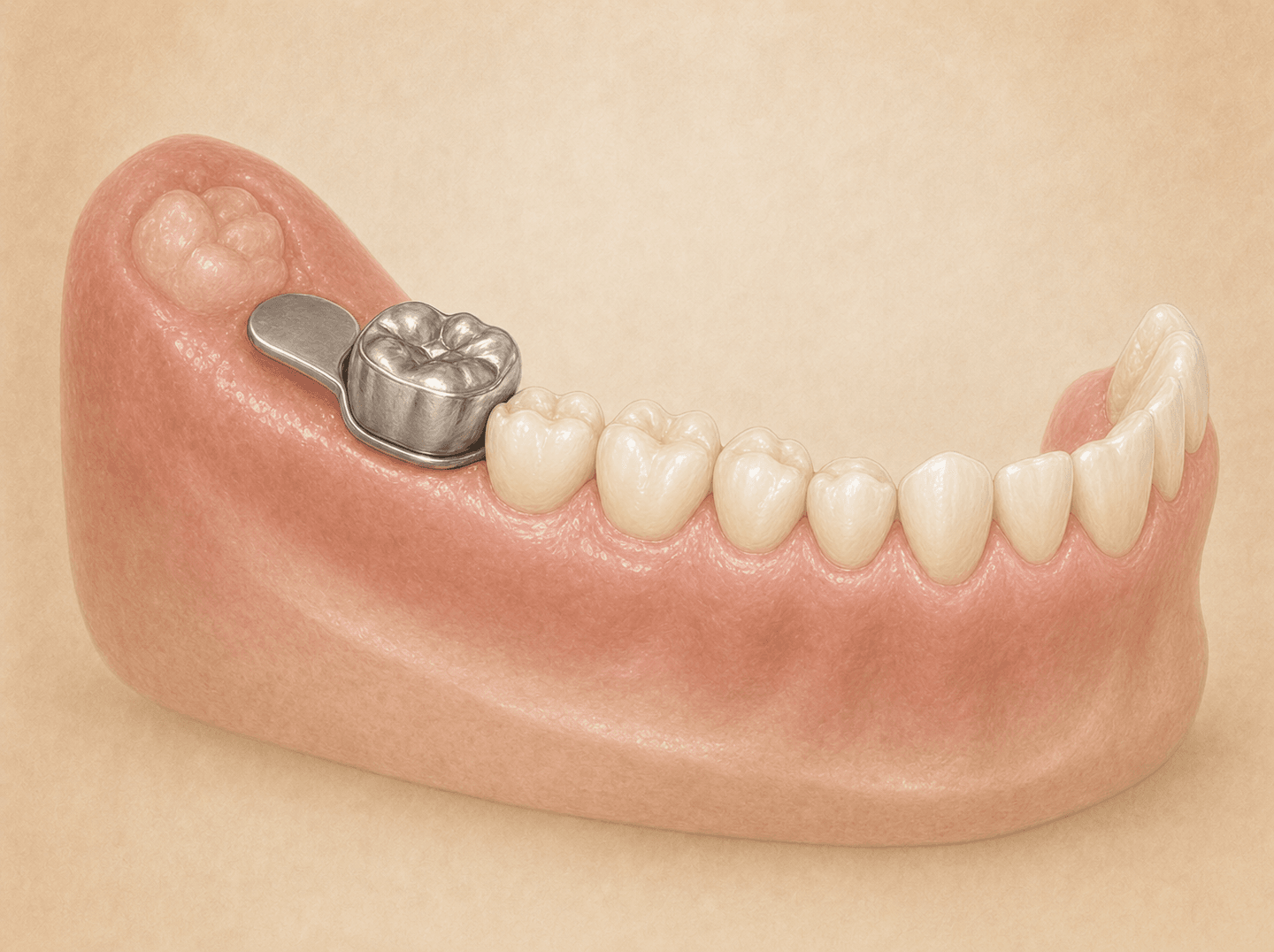
What D1575 reports
D1575 reports a distal shoe: a fixed appliance on one side of one arch, reported per quadrant. It is used when a second primary molar is lost before the first permanent molar behind it has erupted. A band or crown goes on the first primary molar, and a metal extension runs back and down into the gum where the lost tooth was. That extension sits just in front of the unerupted first permanent molar and guides it into position as it comes in.
The point is the guide. Without it, the first permanent molar tends to drift forward as it erupts and take up the space the second premolar will need.
Why D1510 doesn’t cover it
Since CDT 2020, the fixed unilateral code D1510 excludes the distal shoe, and D1575 carries the same fixed, unilateral, per-quadrant scope. The two codes describe different appliances for different stages:
- D1575, distal shoe. The first permanent molar has not erupted. The appliance reaches under the gum to guide it.
- D1510, band-and-loop or crown-and-loop. The teeth on both sides of the gap are in the mouth. A wire loop rests on the gum and holds the space.
Billing a distal shoe as D1510 is a miscode, even though both are fixed and one-sided. The descriptor difference is the eruption status of the first permanent molar, so that fact has to be in the chart.
The one indication most plans pay
Coverage for D1575 is narrow. Delta Dental of Michigan’s 2026 space maintenance criteria cover a distal shoe only to hold space for a second primary molar lost before the associated first permanent molar erupts. Blue Cross Blue Shield of Arizona Health Choice (policy D0019, reviewed October 2026) uses the same single criterion.
The Arizona policy adds one contraindication specific to the distal shoe: a patient who is medically compromised or needs antibiotic prophylaxis for bacterial endocarditis. If the medical history flags either, expect the plan to question D1575 and consider whether another approach fits.
On plans with that criterion, a distal shoe for any other situation, such as a first primary molar loss or a case where the first permanent molar is already in, will usually be denied as the wrong appliance.
Placing it at the extraction visit
A distal shoe is often placed the day the second primary molar comes out. Bill the extraction on its own line, for example D7140 for an erupted tooth, and D1575 for the same quadrant. Blue Cross Blue Shield of Arizona Health Choice normally requires prior authorization for space maintainers but waives it when the appliance goes in on the same date as an emergency extraction of a primary posterior tooth and the criteria are met. Other plans handle same-day placement differently, so check whether the plan wants authorization first.
When the first permanent molar erupts: the swap
A distal shoe has a planned end. Once the first permanent molar has erupted, many dentists remove the distal shoe and, if the second premolar is still not ready, place a band-and-loop to keep holding the space. That conversion creates two billing events, and neither is part of D1575. As coding references report it, the D1575 descriptor stops at building and seating the distal shoe. Later checks and adjustments, and whatever appliance takes over once the molar is in, fall outside it.
How to bill the swap:
- Removal of the distal shoe. D1556, removal of a fixed unilateral maintainer, per quadrant. No removal code names the distal shoe, and none of the payer documents we checked addresses it, but D1575 is a fixed unilateral appliance, so this is the removal code that fits its descriptor.
- The new appliance. D1510 for the band-and-loop in that quadrant.
Expect plan rules to shape what pays. DC 37’s Delta Dental code list (effective February 2024) treats D1556 as included in the placement fee, with special consideration when a different office does the removal. Plans with per-quadrant frequency limits may also treat the band-and-loop as a second maintainer in the same quadrant. Blue Cross Blue Shield of Arizona Health Choice, for instance, won’t reimburse the placing provider for replacing a lost or damaged space maintainer. A planned conversion is not a lost or damaged appliance, but the narrative should say so.
Re-cementing a loose distal shoe
A loose distal shoe is re-cemented under D1553, the unilateral re-cement or re-bond code, per quadrant, since the distal shoe is a unilateral appliance and no re-cement code names it. It is not another D1575. Separate payment for re-cementing varies by plan.
Common denials
- First permanent molar already erupted. The appliance is the wrong one for the stage, or the claim should have been D1510.
- Wrong tooth lost. The lost tooth was a first primary molar, not a second.
- No radiograph. Nothing on the claim shows the unerupted molar.
- Medical history. The patient needs endocarditis prophylaxis, which at least one plan lists as a contraindication.
- Age or frequency. Limits vary by plan, and a later band-and-loop in the same quadrant can hit them.
The bilateral codes D1516 and D1517 are a different stage again: they anchor on permanent first molars that have already erupted.
FAQs
- What is the CDT code for a distal shoe space maintainer?
- D1575. It is a fixed, unilateral appliance reported per quadrant. Since CDT 2020 the band-and-loop code, D1510, excludes the distal shoe, so a distal shoe billed as D1510 is miscoded.
- When will insurance pay for D1575?
- Mainly when a second primary molar is lost before the first permanent molar in that quadrant has erupted. Delta Dental of Michigan covers a distal shoe only in that situation, and Blue Cross Blue Shield of Arizona Health Choice uses the same criterion. Age limits, frequency, and prior authorization rules vary by plan.
- Can the distal shoe be billed on the same day as the extraction?
- Yes, as separate lines. The extraction is billed under its own code, such as D7140, and the distal shoe is D1575 for that quadrant. Placing the appliance at the extraction visit is common. Blue Cross Blue Shield of Arizona Health Choice waives its prior authorization requirement when the maintainer is placed on the same date as an emergency extraction of a primary posterior tooth.
- How do we bill replacing a distal shoe with a band-and-loop?
- Bill the removal and the new appliance on their own codes. The band-and-loop is D1510 for that quadrant. For the removal, D1556 is the removal code for a fixed unilateral maintainer, and the distal shoe is fixed and unilateral, so it fits; we found no payer document that names it, so confirm with the plan. D1575 does not cover the later replacement appliance. Some plans include removal in the original placement fee when the same office does both, and a second appliance in the same quadrant can run into frequency limits, so check the plan first.
- What code is used to re-cement a loose distal shoe?
- D1553, the re-cement or re-bond code for a unilateral space maintainer, per quadrant. No code names the distal shoe for re-cementing, but it is a unilateral appliance, so the unilateral code fits rather than the bilateral ones. Separate payment for re-cementing varies by plan.
Related codes
Need help billing this code?
We handle D1575 claims daily.
If your team is spending time on denials, narratives, or carrier follow-up for this code, our dental insurance verification service can take it off your plate. We submit the claims, post what comes back, and follow up on anything unpaid.
“Claims, posting, denials, all of it gets handled, and it costs far less than hiring another employee. My front desk got hours of their week back, and honestly I just don't think about billing anymore.”
CDT codes are maintained by the American Dental Association. This page is an editorial billing guide, not the official ADA code descriptor. Verify current coverage policies with each carrier before submitting claims.