D3332 is the CDT code for incomplete endodontic therapy, a root canal started and then stopped because the tooth proved fractured, unrestorable, or inoperable.
- When to use: Real diagnostic or treatment time went into a root canal before a fracture or other finding showed the tooth could not be saved.
- When not to use: Pain-relief pulp removal with the root canal still planned is D3221, and a finished root canal is D3310, D3320, or D3330.
- Billing note: Many plans review D3332 by report, so send the radiographs and a narrative naming the finding that stopped treatment.
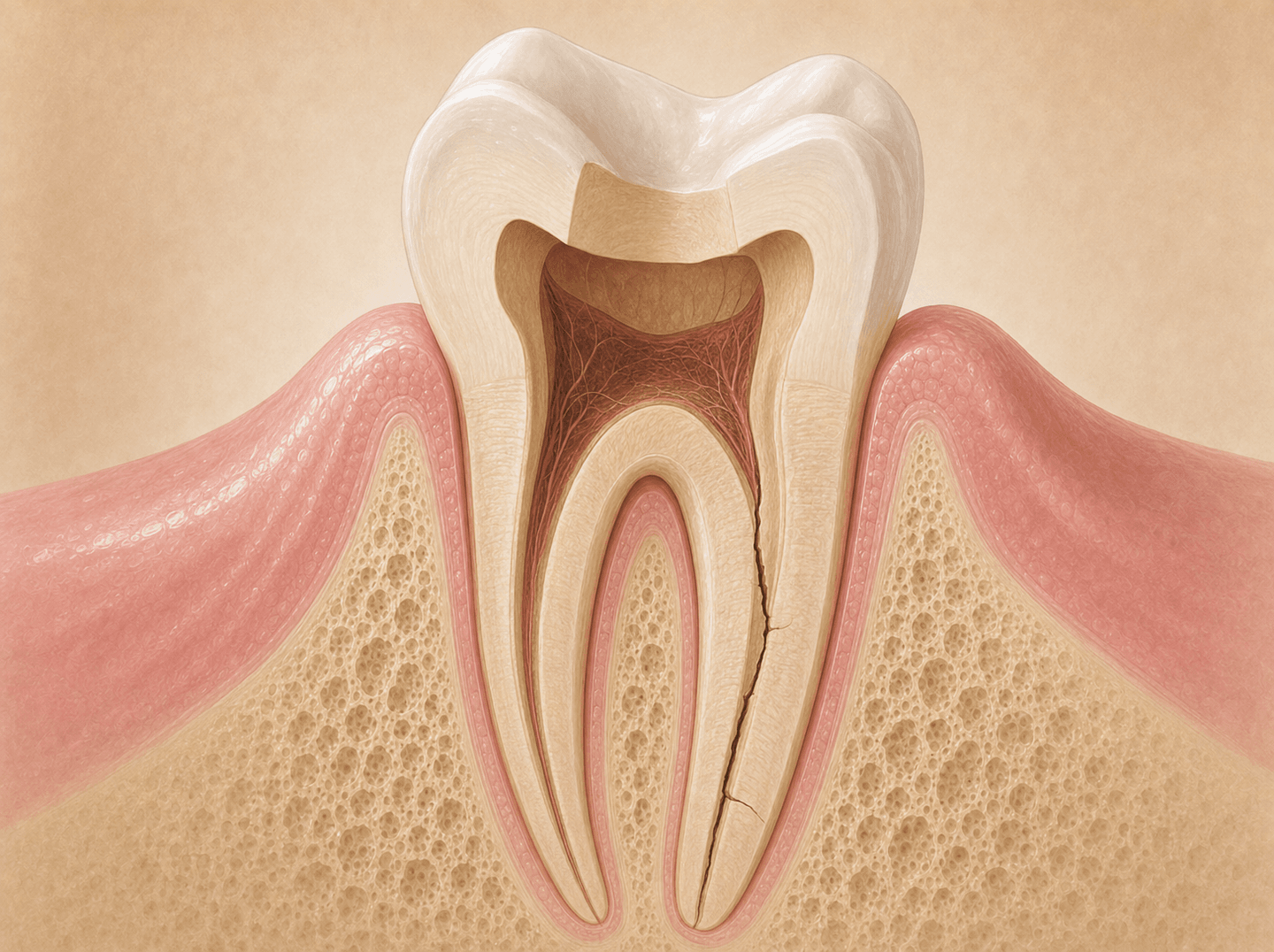
What D3332 reports
D3332 is for the root canal that ends early because of what the dentist found, not because of scheduling or the patient. The descriptor names three findings: the tooth is inoperable, unrestorable, or fractured. It also expects that considerable time was spent reaching the diagnosis or starting treatment before the problem made the tooth unsavable.
That time element is the reason the code exists. Opening a tooth, locating canals, and instrumenting them before a crack becomes visible is real work. Without D3332 there would be no honest code for it: the completed root canal codes require a finished, obturated tooth.
D3332, D3221, or a completed root canal
The three get confused because all three can start the same way, with an opened tooth.
| Situation | Code |
|---|---|
| Pulp removed to relieve acute pain; root canal still planned for later | D3221 |
| Root canal started, then stopped because the tooth is fractured, unrestorable, or untreatable | D3332 |
| Canals cleaned, shaped, and filled | D3310 anterior, D3320 premolar, D3330 molar |
The question that separates D3221 from D3332 is intent at the end of the visit. After D3221 the tooth is expected to be saved. After D3332 it is not.
Two neighbors are also not D3332. A blocked or calcified canal that the dentist works through is treatment of a root canal obstruction, D3331. Non-surgical repair of a perforation from resorption or decay is D3333. In both, treatment continues rather than stops.
The root canal dental codes guide sets D3332 beside D3221 and the patient-never-returned case, with how individual carriers limit each.
Example: a crack found under the microscope
A patient is referred for a root canal on the lower right first molar (#30) after lingering cold sensitivity. Pre-op periapicals show no periapical lesion and no obvious fracture. The endodontist accesses the tooth, locates four canals, and begins instrumentation. Under magnification, a crack is visible running from the pulp floor down the distal root, and probing finds a narrow deep pocket on the distal surface. The diagnosis is a vertical root fracture, and the tooth has a hopeless prognosis.
The endodontist stops, places a temporary, and refers the patient back for extraction.
Billing:
- D3332, tooth #30, date of the endodontic visit.
- Narrative: indication for treatment, the number of canals located and instrumented, the fracture found under magnification, the probing depth, and why the tooth cannot be retained.
- Attach the pre-op periapical and an intraoperative image or clinical photo of the fracture if one exists.
- The general dentist later bills the extraction, D7140 or a surgical extraction code depending on the procedure, on the extraction date.
A photo of the crack is the strongest attachment a D3332 claim can carry. Fractures are often invisible on a radiograph, which is exactly why the tooth was opened in the first place.
Why D3332 claims stall
- No narrative. Many plans pend or deny D3332 without a report, since the code by itself does not say what went wrong. Coverage and review rules vary by plan.
- The narrative describes pain relief. If the note reads like an emergency opening with the root canal still planned, the reviewer will recode it as D3221 or deny it.
- The finding is missing. “Treatment discontinued” is not a reason. Name the fracture, the unrestorable caries, or the anatomy that made the tooth untreatable.
- Billed alongside a completed root canal on the same tooth. D3332 means treatment was not completed, so a completed code for the same tooth contradicts it.
FAQs
- When should D3332 be billed instead of a completed root canal code?
- When treatment stopped because of the tooth itself. D3332 fits a root canal that was started, with real time already spent diagnosing the tooth or beginning treatment, and then abandoned because the tooth was found to be fractured, unrestorable, or impossible to treat. A completed root canal code requires the canals to be finished and filled.
- Does D3332 depend on whether the tooth is a molar, premolar, or front tooth?
- No. Unlike D3310, D3320, and D3330, D3332 has no tooth-type split. One code covers any tooth, and the fee usually sits below a completed molar root canal.
- The patient never came back to finish the root canal. Is that D3332?
- Not by the descriptor. D3332 names a tooth that is inoperable, unrestorable, or fractured. A patient who simply stopped coming has a tooth that could have been finished, so report what was actually done with a narrative. The root canal dental codes guide covers that case.
- Can the extraction be billed after D3332?
- Yes. If the abandoned tooth is extracted, the extraction is its own procedure, typically D7140 for an erupted tooth, billed on the date it happens. D3332 covers only the endodontic work done before treatment stopped.
Related codes
Need help billing this code?
We handle D3332 claims daily.
If your team is spending time on denials, narratives, or carrier follow-up for this code, our outsourced dental insurance billing service can take it off your plate. We submit the claims, post what comes back, and follow up on anything unpaid. Already sitting on older claims that never paid? Our AR cleanup project works the backlog.
“Claims, posting, denials, all of it gets handled, and it costs far less than hiring another employee. My front desk got hours of their week back, and honestly I just don't think about billing anymore.”
CDT codes are maintained by the American Dental Association. This page is an editorial billing guide, not the official ADA code descriptor. Verify current coverage policies with each carrier before submitting claims.